Evagrius and Gregory: Mind, Soul and Body in the 4th Century (Studies in Philosophy and Theology in Late Antiquity)
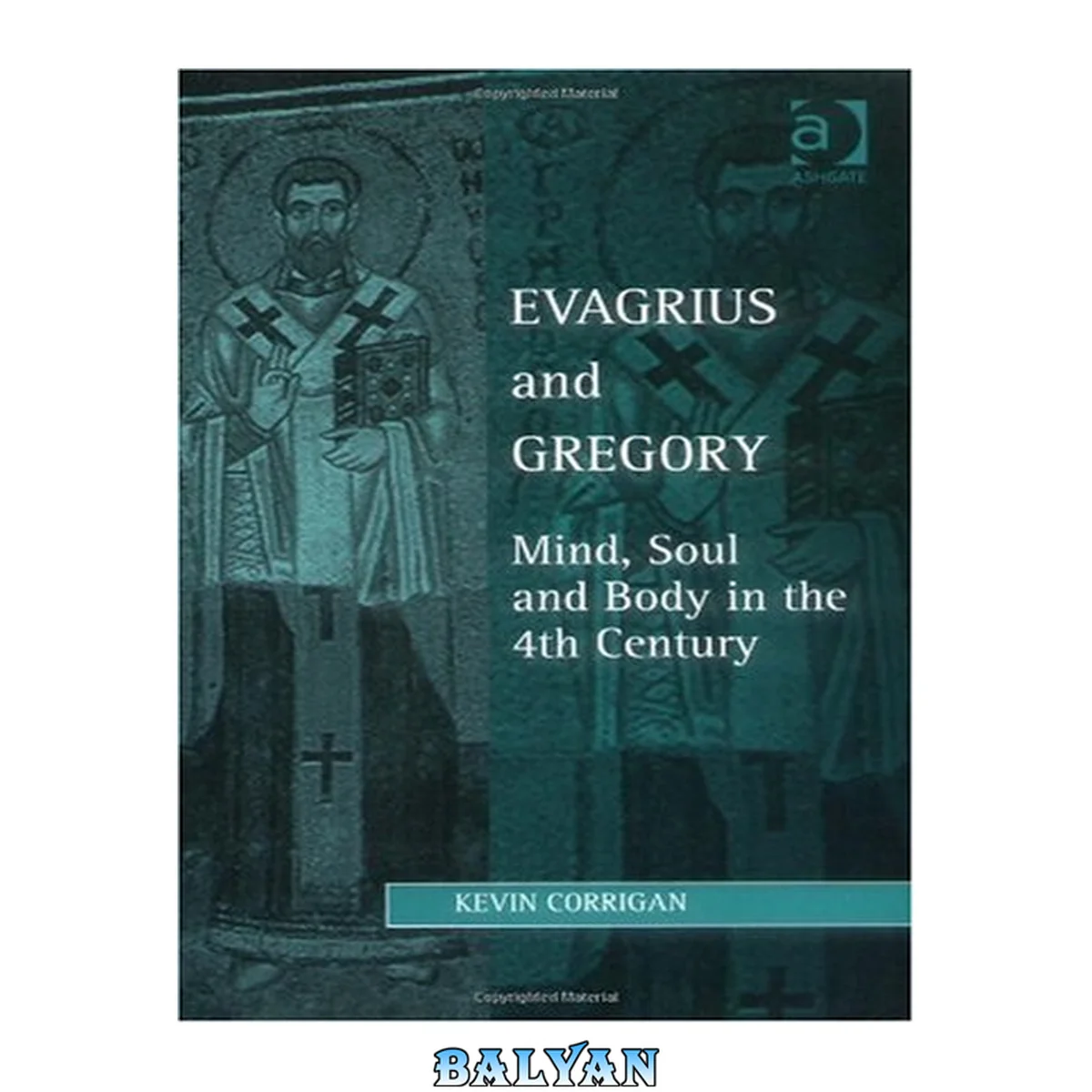
معرفی کتاب «Evagrius and Gregory: Mind, Soul and Body in the 4th Century (Studies in Philosophy and Theology in Late Antiquity)» نوشتهٔ Kevin Corrigan، منتشرشده توسط نشر Ashgate Publishing Limited در سال 2009. این کتاب در فرمت pdf، زبان انگلیسی ارائه شده است.
Evagrius of Pontus and Gregory of Nyssa have either been overlooked by philosophers and theologians in modern times, or overshadowed by their prominent friend and brother (respectively), Basil the Great. Yet they are major figures in the development of Christian thoughts in late antiquity and their works express a unique combination of desert and urban spiritualities in the lived and somewhat turbulent experience of an entire age. They provide a significant link between the great ancient thinkers of the past - Plato, Aristotle, the Stoics, Clement and others - and the birth and transmission of the early Medieval period - associated with Boethius, Cassian and Augustine. This book makes accessible, to a wide audience, the thought of Evagrius and Gregory on the soul, in the context of ancient philosophy/theology and the Cappadocians generally. Corrigan argues that in these two figures we witness the birth of new forms of thought and of empirical science in a new key. Evagrius and Gregory are no mere receivers of a monolithic pagan and Christian tradition, but innovative, critical interpreters on the range and limits of cognitive psychology, the soul-body relation, reflexive self-knowledge, personal and human identity and the soul's practical relation to goodness in the context of human experience and divine self-disclosure. This book provides a critical evaluation of their thought on these major issues and argues that in Evagrius and Gregory we see the important integration of many different concerns that later Christian thought was not always able to balance including: mysticism, asceticism, cognitive science, philosophy, and theology. Evagrius and Gregory : ascetic master, pastoral father Why Evagrius and Gregory? Evagrius The character of Evagrius' writings Gregory Origins of basilian monasticism Messalianism : Gregory and pseudo-macarius Christian upheavals Background to the upheavals of the 3rd and 4th centuries : arianism, origenism, hellenism, and platonism Mind, soul, body : an overview of Evagrius' and Gregory's thought Opening up the question : ancient terms, contemporary problems Critical context : Evagrius and Gregory The meaning and scope of impassibility or purity of heart in Evagrius and Gregory Apatheia : the broader background Plato Aristotle Evagrius and Gregory : from stillness to purity of heart Gregory and Plotinus Degrees of impassibility and purity of heart The expansion of the tripartite soul Uncovering the origins and structure of the 7 deadly sins tradition : Evagrius and the 8 reasonings The 8 reasonings Noêmata (representations or concepts) Thought not based on intellect Noêmata and demons At the origins of the deadly sins tradition : the strange structure of matter and thought Evagrius and republic 8-9 A new reading of the Logismoi Platonic tripartition-aristotelian bipartition : the republic in Evagrius and Gregory Demonic suggestion Evagrius' demonology : classification, demonic action, and cognitive psychology Classification of demons and the spiritual life Gregory and the fall of intellect Plotinus and the fall of intellect in matter Evil : Gregory and Plotinus/Iamblichus Body into mind : the scientific eye in Evagrius Reading the body : the problem of the intelligible body Body-conception and self-knowledge Body, soul, and scientific cognition Mind/soul-body : the classic desert formulation Transmigration and Evagrius' extended world The spiritual senses : transformation from above Is Evagrius' metaphysics monistic? Gregory's anthropology : Trinity, humanity, and body-soul formation Introduction : the problems Trinitarian thought Humanity Gender and the unity of humanity Substance and passion Whole-formation Intelligible body-soul Medicine and bodily structure The resurrection-body : continuity, identity and transformation The human in the divine : the dialogical expansion of mind and heart in Evagrius Reintegration Gnostikos : the gnostic life Theology and prayer Experience of prayer Pathways into infinity : Gregory of Nyssa and the mystical life Individuals Individual and substance : human beings and the Trinity Substance : persons and community Pathways : divine/human being-with Mystical theology : kataphatic and apophatic on the pathway into being Identity and continuity : heart, thought, and mind The role of faith Unity, aloneness, self-identity, and form Testing the boundaries of language Conclusion: Neither boundary nor distance. Evagrius of Pontus and Gregory of Nyssa have either been overlooked by philosophers and theologians in modern times, or overshadowed by their prominent friend and brother (respectively), Gregory Nazianzus and Basil the Great. Yet they are major figures in the development of Christian thought in late antiquity and their works express a unique combination of desert and urban spiritualities in the lived and somewhat turbulent experience of an entire age. They also provide a significant link between the great ancient thinkers of the past - Plato, Aristotle, the Stoics, Clement and others - and the birth and transmission of the early Medieval period - associated with Boethius, Cassian and Augustine. This book makes accessible, to a wide audience, the thought of Evagrius and Gregory on the mind, soul and body, in the context of ancient philosophy/theology and the Cappadocians generally. Corrigan argues that in these two figures we witness the birth of new forms of thought and science. Evagrius and Gregory are no mere receivers of a monolithic pagan and Christian tradition, but innovative, critical interpreters of the range and limits of cognitive psychology, the soul-body relation, reflexive self-knowledge, personal and human identity and the soul's practical relation to goodness in the context of human experience and divine self-disclosure. This book provides a critical evaluation of their thought on these major issues and argues that in Evagrius and Gregory we see the important integration of many different concerns that later Christian thought was not always able to balance including: mysticism, asceticism, cognitive science, philosophy, and theology. Contents......Page 6 Preface......Page 8 Abbreviations......Page 10 1 Evagrius and Gregory: Ascetic Master, Pastoral Father......Page 12 2 Christian Upheavals......Page 32 3 Mind, Soul, Body: an Overview of Evagrius' and Gregory's Thought......Page 48 4 The Meaning and Scope of Impassibility or Purity of Heart in Evagrius and Gregory......Page 64 5 Uncovering the Origins and Structure of the Seven Deadly Sins Tradition: Evagrius and the Eight "Reasonings"......Page 84 6 Gregory and the Fall of Intellect......Page 114 7 Body into Mind: the Scientific Eye in Evagrius......Page 124 8 Gregory's Anthropology: Trinity, Humanity and Body-Soul Formation......Page 144 9 The Human in the Divine: the Dialogical Expansion of Mind and Heart in Evagrius......Page 168 10 Pathways into Infinity: Gregory of Nyssa and the Mystical Life......Page 186 11 General Conclusion......Page 208 Bibliography......Page 220 Index......Page 242
دانلود کتاب Evagrius and Gregory: Mind, Soul and Body in the 4th Century (Studies in Philosophy and Theology in Late Antiquity)