ECONOMIC BACKWARDNESS IN HISTORICAL PERSPECTIVE. A BOOK OF ESSAYS. BY ALEXANDER GERSCHENKRON. 4. PRINT. CAMBRIDGE, MASS.: BELKNAP PR. OF HARVARD UNIV. PR. 1979. 456 S
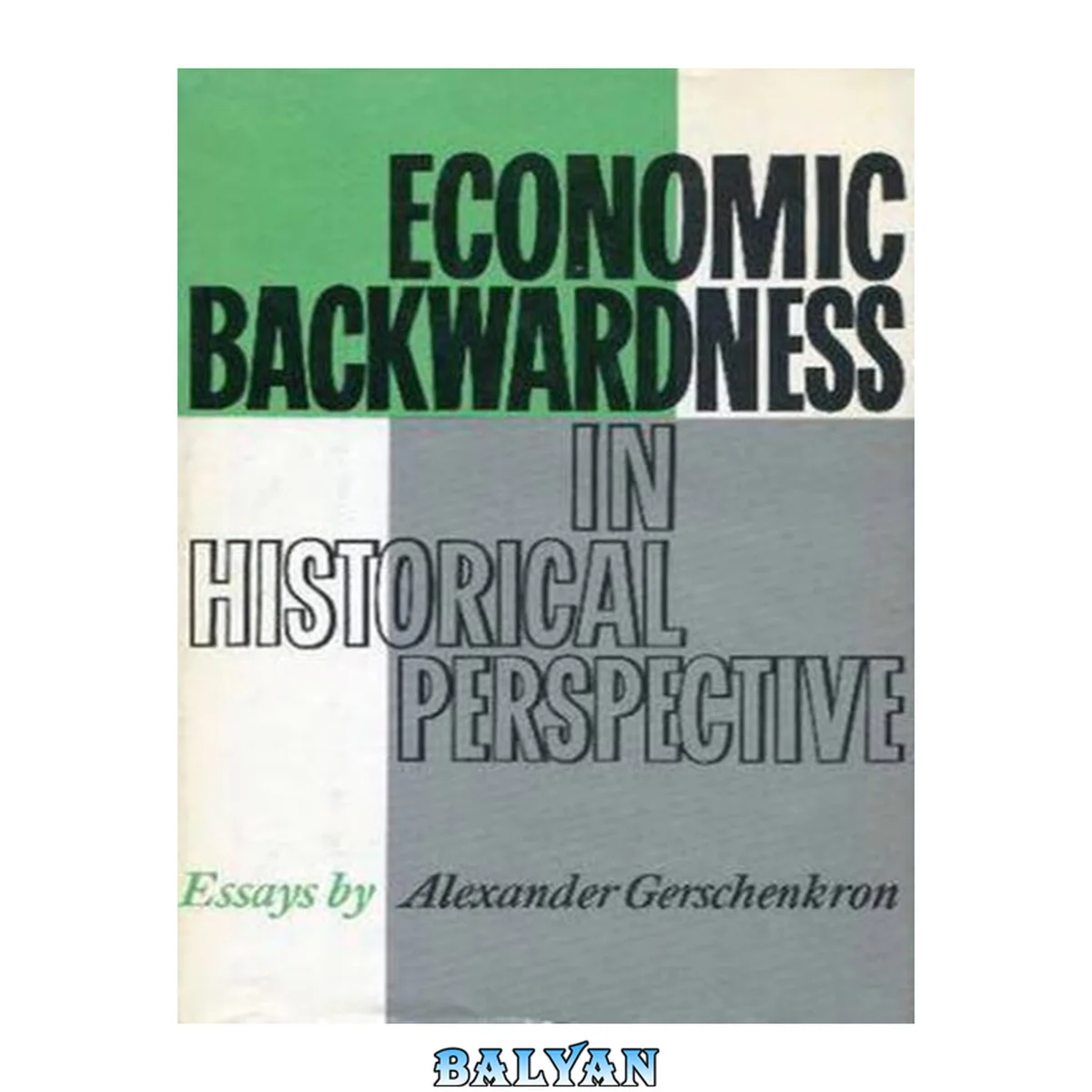
معرفی کتاب «ECONOMIC BACKWARDNESS IN HISTORICAL PERSPECTIVE. A BOOK OF ESSAYS. BY ALEXANDER GERSCHENKRON. 4. PRINT. CAMBRIDGE, MASS.: BELKNAP PR. OF HARVARD UNIV. PR. 1979. 456 S» نوشتهٔ Alexander Gerschenkron، منتشرشده توسط نشر Belknap Press: An Imprint of Harvard University Press در سال 1962. این کتاب در 456 صفحه، فرمت pdf، زبان انگلیسی ارائه شده است.
These fourteen essays covering a wide range of subjects of great current interest reflect the continuous evolution of the author’s thought from 1951 to 1961. Range and flexibility characterize Alexander Gerschenkron’s dynamic approach to Europe’s industrial history. Connecting evolution in individual countries with their degree of economic backwardness, he presents the industrialization of the continent as a “case of unity in diversity,” thus offering a cogent alternative, supported by case studies, to the traditional view of industrialization as monotonous repetition of the same process from country to country. Brought together for the first time, these essays were originally published in specialized periodicals in the United States and abroad. Explaining and systematizing the elements of creative innovation in industrial history, Gerschenkron opens new paths of research and poses a number of pertinent questions for the problem of economic development in backward countries. His versatile analysis not only includes construction of ingenious industrial output indices and fruitful historical hypotheses on the index-number problem, but also original insights gleaned from a study of Soviet novels and a brilliant critique of Doctor Zhivago. Contents Introduction Economic Backwardness in Historical Perspective The Elements of Backwardness The Banks The State The Gradations of Backwardness Ideologies of Delayed Industrializations Conclusions Reflections on the Concept of “Prerequisites” of Modern Industrialisation I II III IV Social A*ttitudes. Entrepreneurship, and Economic Development Notes on the Rate of Industrial Growth in Italy, 1881—1913 I II Ill Rosario Romeo and the Original Accumulation of Capital I II III Russia: Patterns and Problems of Economic Development, 1861—1958 I II III Economic Development in Russian Intellectual History of the Nineteenth Century I II III Realism and Utopia in Russian Economic 'Thought A Review Some Aspects of Industrialisation in Bulgaria, 1878—1939 I II Soviet Heavy Industry: A Dollar Index of Output, 1927-1937 I II III IV Notes on the Rate of Industrial Growth in Soviet Russia I II III IV Industrial Enterprise, in Soviet Russia A Neglected Source of Economic Information on Soviet Russia Reflections on Soviet Novels I II III -Notes on Doctor Zhivago The Approach to European Industrialization: A postscript APPENDIX IDescription of an Index of Italian Industrial Development, 1881-1913 Two Previous Attempts The Present Index: General Characteristics The Present Index: Subseries Mining Textiles Engineering Foodstuff's Industry Chemical industry Employment Horsepowers Value-added estimates, 1903—04 Metalmaking Textiles Engineering Foodstuff's industry Chemical industry An Appraisal of the Index Tagliacarne’s Index and the Present Index: Comparison of the Component Series The Index of Silvio GolzioThe Index of Silvio Golzio APPENDIX IIIndustrialization in Bulgaria: Basic Data and Calculations APPENDIX IIIProblems in Measuring Long-Term Growth in Income and Wealth Index These fourteen essays covering a wide range of subjects of great current interest reflect the continuous evolution of the authors thought from 1951 to 1961. Range and flexibility characterize Alexander Gerschenkrons dynamic approach to Europes industrial history. Connecting evolution in individual countries with their degree of economic backwardness, he presents the industrialization of the continent as a case of unity in diversity, thus offering a cogent alternative, supported by case studies, to the traditional view of industrialization as monotonous repetition of the same process from country to country. Brought together for the first time, these essays were originally published in specialized periodicals in the United States and abroad. Explaining and systematizing the elements of creative innovation in industrial history, Gerschenkron opens new paths of research and poses a number of pertinent questions for the problem of economic development in backward countries. His versatile analysis not only includes construction of ingenious industrial output indices and fruitful historical hypotheses on the index-number problem, but also original insights gleaned from a study of Soviet novels and a brilliant critique of Doctor Zhivago . Economic backwardness in historical perspective Reflections on the concept of "prerequisites" of modern industrialization Social attitudes, entrepreneurship, and economic development Notes on the rate of industrial growth in Italy, 1881-1913 Rosario Romeo and the original accumulation of capital Russia: patterns and problems of economic development, 1861-1958 Economic development in Russian intellectual history of the nineteenth century. Annex: realism and Utopia in Russian economic thought, a review Some aspects of industrialization in Bulgaria, 1878-1939 Soviet heavy industry: a dollar index of output, 1927-1937 Notes on the rate of industrial growth in Soviet Russia Industrial enterprise in Soviet Russia A neglected source of economic information on Soviet Russia Reflections on Soviet novels Notes on Doctor Zhivago. Explores the problems of European industrial development in the 19th century, and of economic and social change in Soviet Russia.
دانلود کتاب ECONOMIC BACKWARDNESS IN HISTORICAL PERSPECTIVE. A BOOK OF ESSAYS. BY ALEXANDER GERSCHENKRON. 4. PRINT. CAMBRIDGE, MASS.: BELKNAP PR. OF HARVARD UNIV. PR. 1979. 456 S