Death, Time and Mortality in the Later Novels of Don DeLillo
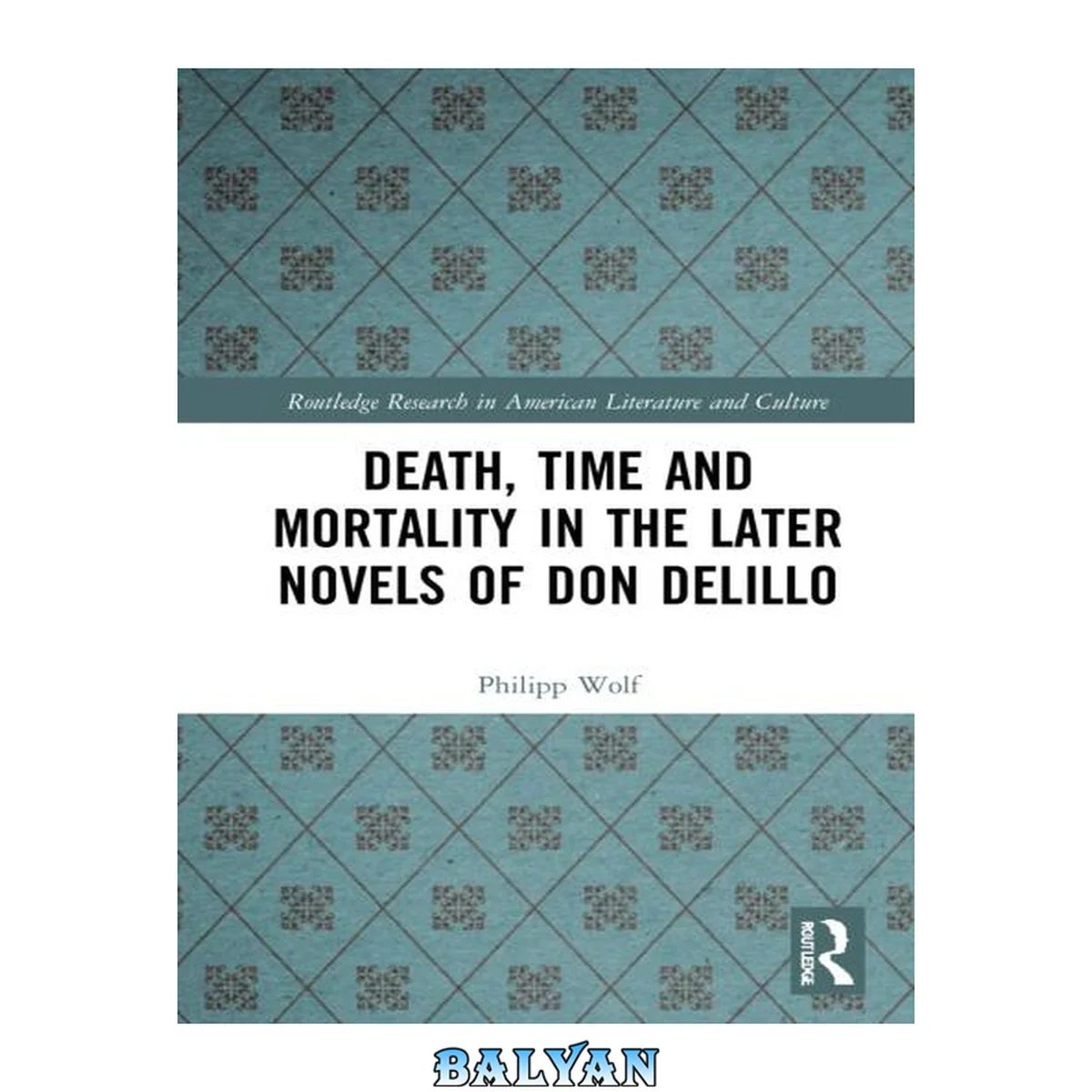
معرفی کتاب «Death, Time and Mortality in the Later Novels of Don DeLillo» نوشتهٔ Philipp Wolf، منتشرشده توسط نشر Routledge در سال 2022. این کتاب در فرمت pdf، زبان انگلیسی ارائه شده است.
This book offers the first systematic study of death in the later novels of Don DeLillo. It focuses on __Underworld__ to __The Silence__, along with his 1984 novel __White Noise__, in which the fear of death dominates the protagonists most hauntingly. The study covers eight novels, which mark the development of one of the most philosophical and prestigious novelists writing in English. Death, in its close relation to time, temporality and transience, has been an ongoing subject or motif in Don DeLillo’s oeuvre. His later work is shot through with the cultural and sociopsychological symptoms and responses death elicits. His "reflection on dying" revolves around defensive mechanisms and destruction fantasies, immortalism and cryonics, covert and overt surrogates, consumerism and media, and the mortification of the body. His characters give themselves to mourning and are afflicted with psychosis, depression and the looming of emptiness. Yet writing about death also means facing the ambiguity and failing representability of "death." The book considers DeLillo’s use of language in which temporality and something like "death" may become manifest. It deals with the transfiguration of time and death into art, with apocalypse as a central and recurring subject, and, as a kind of antithesis, epiphany. The study eventually proposes some reflections on the meaning of death in an age fully contingent on media and technology and dominated by financial capitalism and consumerism. Despite all the distractions, death remains a sinister presence, which has beset the minds not only of DeLillo’s protagonists. This book offers the first systematic study of death in the later novels of Don DeLillo. It focusses on Underworld to The Silence along with his 1984 novel White Noise, in which the fear of death dominates the protagonists most hauntingly. Cover 1 Half Title 2 Series Page 3 Title Page 4 Copyright Page 5 Dedication 6 Table of Contents 8 Chapter 1: Introduction 12 The Culture of Death: Fear of Death, Responses to Death and the Management of Death, or “Terror Management” 13 Methodological Problems 18 Notes 21 Chapter 2: White Noise: The Inconceivability of Death, Hitler and the Supermarket 23 Consummatum Est 23 “Why Can’t We Be Intelligent About Death?” Capitals in Quotation? 27 “Hitler Studies” 31 The Fearful Beauty of Apocalypse: Apparition 37 Notes 38 Chapter 3: Underworld and “Terror Management”: Apocalypse, the Bomb, Cold War, Crowds 42 “Terror Management”: Apocalypse 42 Socio-Cultural and Anthropological Contexts 43 The Bomb and the Cold War 46 Crowds 52 Pop and Consumption: “Rejoice, Redeemed Flock” (J. S. Bach) or “Cocksucker Blues” 54 Consumerism and Waste 56 Media, Killing, Death 59 Moment of Moments: Apparition 61 Notes 63 Chapter 4: The Body Artist: Death, Mourning, Time and the “Humanity of Man” 67 Mindfulness and Emptiness: Lived and Dead Time 67 The Provo-care of the Death of the Other: The “Humanity of Man” 71 “Body Time” and the Sublation of Death (“Trauerspiel” or “Play of Mourning”) 78 Redeeming Moment 80 Notes 81 Chapter 5: Cosmopolis: Cybercapitalism, Alienation and Death 84 The Tenacity of Capitalism and Alienation 84 Alienation, (Auto-)Aggression, Death 87 “He Died so You Can Live” 87 De-Individuation and Disembodiment 89 Data, Acceleration, and the Disappearance of the Presence 92 Temporal Alienation 94 Monetary Alienation 98 Physical Alienation 102 The Journey to Self-Destruction and Death: “The Desolation of Reality” (W. B. Yeats) 104 A “Smart” Epiphany of Death 108 Notes 109 Chapter 6: Falling Man 113 Relating Unspeakable Loss 113 Images of Loss, Two Victims, Two Terrorists and Death Dealers 114 Shirts 114 Shrapnels 115 Still Lives 116 Falling Man: Performing Death and Mourning 118 Keith: Trauma and Lethargy 121 Lianne: Mourning, Care and an Epiphanic Moment 123 Hammad and Amir: Terrorist Cult of Death 126 Notes 128 Chapter 7: Point Omega: “When Time Stops, so Do We”: The Aesthetics of Disappearance 131 Temporality and Death 131 The Anonymous “Man,” Caillois and Lacan: “But Imagination Was Itself a Natural Force, Unmanageable.” (P 81) 132 Murder or Not? 137 Elster, Teilhard, “Dead Matter” and the Epiphany of a “Handful of Mucus” 138 Notes 144 Chapter 8: Zero K: The Ideology and Aesthetics of Immortality 146 Cryonics and a Tale of Two Worlds 146 End Time: Apocalypse and Eschatology 149 The Aesthetics of Apocalypse and Eschatology 151 Video and Corridors 151 Architecture and Sculpture 154 Heidegger and the Cryonic Transhumanists: “Man Alone Exists” 157 Heidegger as Antithesis: Existentialism 157 The Rock as Art 161 Art as Untruth 166 Art in Pods 169 Moment of Moments: The Affirmation of Life 174 Notes 176 Chapter 9: The Silence and the Death of Civilization 180 The End of “Being-in-the-World” 180 An Electricity Failure 180 The Endgame 181 Notes 189 Chapter 10: Epilog 191 Index 192 Cosmopolis;,dead,time;,death,elicits;,Don,DeLillo’s,fiction;,Falling,Man;,literal,immortality;,Point,Omega;,terror,management;,The,Body,Artist;,The,Silence;,Underworld;,White,Noise;,Zero,K Cosmopolis,dead time,death elicits,Don DeLillo’s fiction,Falling Man,literal immortality,Point Omega,terror management,The Body Artist,The Silence,Underworld,White Noise,Zero K "This book offers the first systematic study of death in the later novels of Don DeLillo. It focusses on Underworld to The Silence along with his 1984 novel White Noise, in which the fear of death dominates the protagonists most hauntingly. The study covers eight novels which mark the development of one of the most philosophical and prestigious novelists writing in English"-- Provided by publisher
دانلود کتاب Death, Time and Mortality in the Later Novels of Don DeLillo