Cybercartography in a Reconciliation Community: Engaging Intersecting Perspectives (Volume 8) (Modern Cartography Series, Volume 8)
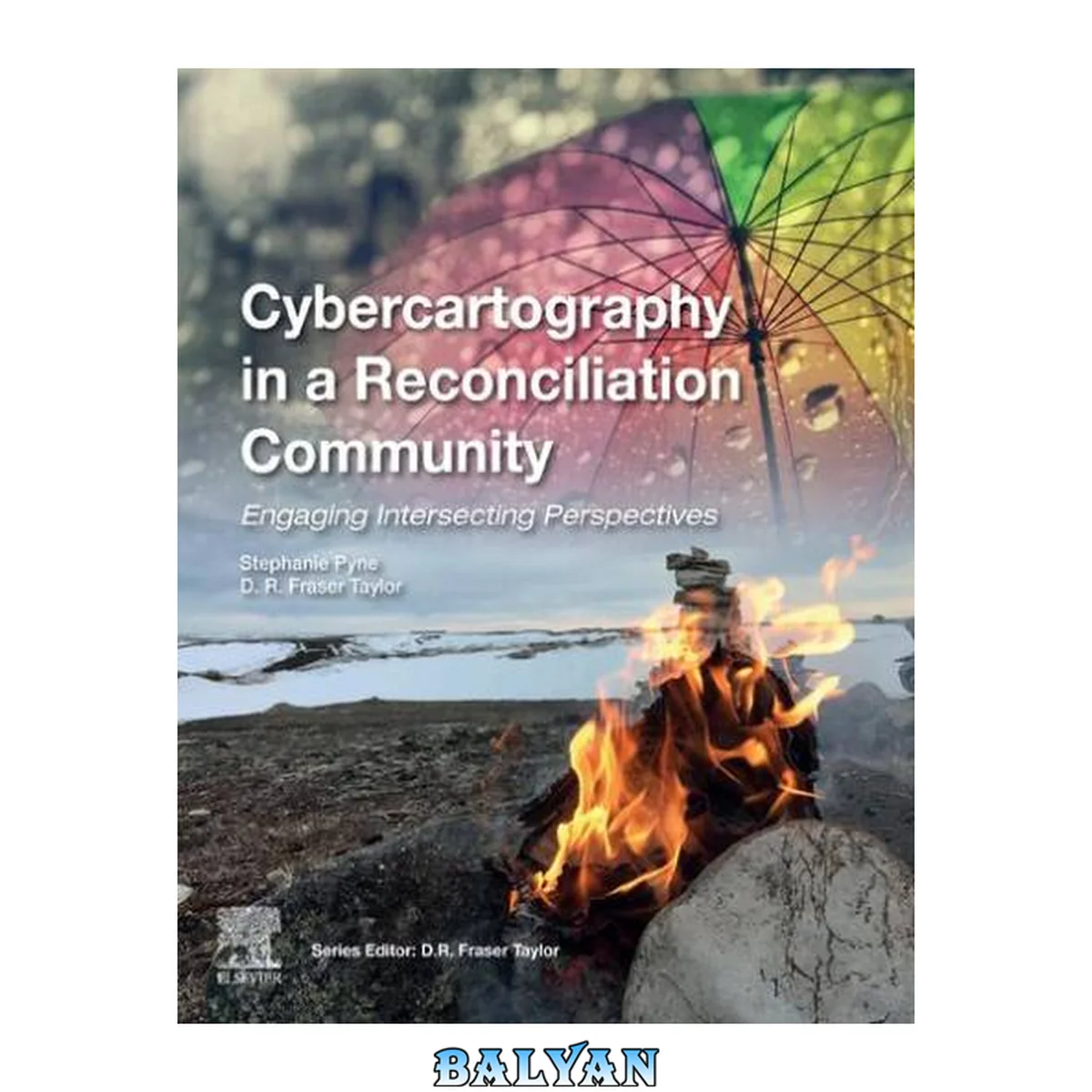
معرفی کتاب «Cybercartography in a Reconciliation Community: Engaging Intersecting Perspectives (Volume 8) (Modern Cartography Series, Volume 8)» نوشتهٔ Stephanie Pyne (editor), D. R. Fraser Taylor (editor)، منتشرشده توسط نشر Elsevier Elsevier Science & Technology [Distributor در سال 2019. این کتاب در 4 صفحه، فرمت pdf، زبان انگلیسی ارائه شده است.
__Cybercartography in a Reconciliation Community: Engaging Intersecting Perspectives__, Volume Eight gathers perspectives on issues related to reconciliation-primarily in a residential / boarding school context-and demonstrates the unifying power of Cybercartography by identifying intersections among different knowledge perspectives. Concerned with understanding approaches toward reconciliation and education, preference is given to reflexivity in research and knowledge dissemination. The positionality aspect of reflexivity is reflected in the chapter contributions concerning various aspects of cybercartographic atlas design and development research, and related activities. In this regard, the book offers theoretical and practical knowledge of collaborative transdisciplinary research through its reflexive assessment of the relationships, processes and knowledge involved in cybercartographic research. Using, most specifically, the Residential Schools Land Memory Mapping Project for context, __Cybercartography in a Reconciliation Community__ provides a high speed tour through the project's innovative collaborative approach to mapping institutional material and volunteered geographic information. Exploring Cybercartography through the lens of this atlas project provides for a comprehensive understanding of both Cybercartography and transdisciplinary research, while informing the reader of education and reconciliation initiatives in Canada, the U.S., the U.K. and Italy. Front Cover Cybercartography in a Reconciliation Community CYBERCARTOGRAPHY IN A RECONCILIATION COMMUNITY: ENGAGING INTERSECTING PERSPECTIVES Copyright Dedication Contents Contributors Foreword Preface References Acknowledgements 1 - Introduction 1.1 Opening words 1.2 Multidisciplinary research in a reconciliation context 1.3 Nature and purpose 1.3.1 A residential schools reconciliation context 1.3.2 Reconciliation in a transitional justice framework 1.3.3 Reflexivity 1.3.4 Talk, templates and tradition: An iterative approach to research and education 1.3.5 Implicit and explicit cartography 1.4 Book contents 1.5 Conclusion References 2 - Cybercartography, emergence and iterative development: The Residential Schools Land Memory Project (RSLMMP) 2.1 Introduction 2.2 Cybercartography: Evolution of a theoretical and practical framework 2.3 The Lake Huron Treaty Atlas: A high-speed tour 2.4 Residential Schools Land Memory Mapping Project, SSHRC Insight Grant, 2015–20 2.5 Conclusion References 3 - Mapping Jeff Thomas mapping: Exploring the reflexive relationship between art, written narrative and Cybercarto ... 3.1 Introduction 3.2 Jeff Thomas: Mapping and art/art and mapping 3.3 Jeff Thomas and Cybercartography: A high-speed tour 3.3.1 The Cybercartographic Atlas of Indigenous Perspectives and Knowledge (Great Lakes Region-St. Lawrence Region, GLSL Atlas) 3.3.2 The Jeff Thomas Atlas: Journey with the Champlain monument 3.3.3 Travels Map of Residential Schools Land Memory Atlas 3.3.4 The Jeff Thomas 2015 Road Trip overlay 3.3.5 Mapping the family camera and visitor information exhibits: Geo-locating composite photograph components 3.3.6 Residential schools volunteered geographic information: Battleford Indian Residential School 3.3.7 Transposing the Jeff Thomas Cahokia Mounds Journey overlay onto the Residential Schools Map 3.3.8 Jeff Thomas Mapping Thomas Moore overlay in the Nenboozhoo Mindemoye Map of the Lake Huron Treaty Atlas 3.3.9 The ‘I Have a Right to be Heard’ overlay in the Where Are the Children Exhibition Map Module 3.4 Zooming in on Jeff Thomas’ narrative mapping of the Where Are the Children Exhibit: ‘I Have a Right to be Heard’ (by Jeff T ... 3.4.1 Personal Bill of Rights (Fig. 3.4.1.1) 3.4.2 Meeting Thomas Moore 3.4.3 Silenced witnesses 3.4.4 Listening to survivors 3.4.5 Repurposing history 3.4.6 Connecting the dots 3.4.7 Is This Thomas Moore? 3.5 Discussion and conclusion: Reflexive interplay between implicit and explicit Cartographic approaches References 4 - Reimagining archival practice and place-based history at the Shingwauk Residential Schools Centre 4.1 Introduction 4.2 Positionality of the SRSC 4.3 Place-based learning 4.4 Constructing narratives in archival-based Cybercartography 4.5 Photographic narratives 4.6 Written archival narratives 4.7 Survivor voices 4.8 Conclusion References 5 - The Carlisle Indian Industrial School: Mapping resources to support an important conversation 5.1 Introduction 5.2 Building accessible resources to support sharing and scholarship 5.3 Mapping to support teaching 5.4 Mapping to tell a story 5.5 Mapping to answer research questions 5.6 Conclusion Appendix (see Fig. 5.1.1) References 6 - Charting the intimate terrain of Indigenous Boarding Schools in Canada and the United States 6.1 Introduction 6.2 The settler colonial mesh 6.3 Indigenous Boarding Schools in Canada and the United States 6.4 Assimilative education and genocide 6.5 Modular and mobile maps: Representing intimate colonialisms in Indigenous Boarding Schools 6.6 Conclusion References 7 - Workhouses and residential schools: From institutional models to museums 7.1 Introduction: A reconciliatory museology 7.2 Rupture, difficult history and reconciliatory museology 7.3 Workhouses and industrial schools in the United Kingdom and Ireland 7.4 Constructions of the child at risk 7.5 Toward industrial schooling 7.6 Indian Residential Schools in Canada 7.7 Three sites of difficult history musealized: Portumna, Southwell, Shingwauk 7.8 Site intervention and use 7.8.1 Portumna 7.8.2 Southwell 7.8.3 Shingwauk 7.9 Interpretation design 7.9.1 Portumna 7.9.2 Southwell 7.9.3 Shingwauk 7.10 Animation and programming 7.10.1 Portumna 7.10.2 Southwell 7.10.3 Shingwauk 7.11 Discussion and conclusion: Toward a reconciliatory museology References 8 - Talk, templates and developing a geospatial archives tradition: Stories in the making of the Residential School ... 8.1 Introduction 8.2 Relational space, performance and community approaches to cartography 8.3 Relationality and community in new approaches to archives 8.4 Reflections on the iterative development of a geospatial archive: Putting theory into practice 8.5 Discussion and conclusion References 9 - Site-based storytelling, cybercartographic mapping and the Assiniboia Indian Residential School Reunion 9.1 Introduction: Community-based research, mapping and site-based storytelling 9.2 Building transdisciplinary research strength: Early development of the Assiniboia Residential Schools module 9.3 The Assiniboia Indian Residential School survivor association (AIRSSA) project: On the ground with survivor-led commemorati ... 9.4 Mapping media coverage in the Assiniboia Residential Schools Reunion 9.5 Mapping media related to the AIRS Reunion 9.6 Conclusion: Theory and practice in reflexive development References 10 - Bridging institutional and participatory ethics: A rationality of care perspective 10.1 Introduction 10.2 Institutional and participatory research ethics 10.3 Discussion and conclusion: Community, research and ethics of care References 11 - Broadening the cybercartographic research and education network: From Indian residential/boarding schools to B ... 11.1 Introduction 11.2 Birth of a research and education network 11.3 Mapping Beltrami's journey to America 11.4 Tilly Laskey and Beltrami 11.5 Minnesota's first tourist? Giacomo Costantino Beltrami's ‘transatlantic promenades’ of 1823 (by Tilly Laskey): Introduction 11.5.1 Who was Giacomo Costantino Beltrami? 11.5.2 Minnesota's first tourist? Giacomo Costantino Beltrami's ‘transatlantic promenades’ of 1823 (by Tilly Laskey): Conclusion 11.6 Mapping the Mississippi: 2018 class workshop 11.7 Transposing Beltrami's Journey to America onto the Residential Schools Map 11.8 Discussion and conclusion: Research, teaching and the emergence of the Beltrami Research network project References 12 - Conclusion: building awareness to bridge relationships 12.1 Introductory words 12.2 Reflexivity, intersections and implicit and explicit approaches to cartography 12.3 Talk, templates and tradition 12.4 Development for reconciliation in a transitional justice context 12.5 Concluding words References Index A B C D E F G H I J K L M N O P Q R S T U V W Back Cover Cybercartography in a Reconciliation Community: Engaging Intersecting Perspectives, Volume Eight gathers perspectives on issues related to reconciliation—primarily in a residential / boarding school context—and demonstrates the unifying power of Cybercartography by identifying intersections among different knowledge perspectives. Concerned with understanding approaches toward reconciliation and education, preference is given to reflexivity in research and knowledge dissemination. The positionality aspect of reflexivity is reflected in the chapter contributions concerning various aspects of cybercartographic atlas design and development research, and related activities. In this regard, the book offers theoretical and practical knowledge of collaborative transdisciplinary research through its reflexive assessment of the relationships, processes and knowledge involved in cybercartographic research. Using, most specifically, the Residential Schools Land Memory Mapping Project for context, Cybercartography in a Reconciliation Community provides a high speed tour through the project's innovative collaborative approach to mapping institutional material and volunteered geographic information. Exploring Cybercartography through the lens of this atlas project provides for a comprehensive understanding of both Cybercartography and transdisciplinary research, while informing the reader of education and reconciliation initiatives in Canada, the U.S., the U.K. and Italy. Includes a variety of examples of reconciliation work, especially related to residential / boarding schools, and examines common themes in the issues discussed Offers both conceptual and applied dimensions, and provides a good example of a reflexive approach to both research and knowledge dissemination Addresses a modern application for Cybercartography that is of considerable societal importance Provides historiographical accounts of atlas-making processes, multidisciplinary perspectives on research issues and conceptual explorations "Cybercartography in a reconciliation community: engaging intersecting perspectives ... gathers perspectives on issues related to reconciliation - primarily in a residential/boarding school context - and demonstrates the unifying power of cybercartography by identifying intersections among different knowledge perspectives. Concerned with understanding approaches toward reconciliation and education, preference is give to reflexivity in research and knowledge dissemination. The positionality aspect of reflexivity is reflected in the chapter contributions concerning various aspects of cybercartographic atlas design and development research, and related activities. In this regard, the book offers theoretical and practical knowledge of collaborative transdisciplinary research through its reflexive assessment of the relationships and knowledge involved in cybercartographic research."--Back cover
دانلود کتاب Cybercartography in a Reconciliation Community: Engaging Intersecting Perspectives (Volume 8) (Modern Cartography Series, Volume 8)