Crisis in North Korea: The Failure of De-Stalinization, 1956 (Hawai'i Studies on Korea) (Hawai'i Studies on Korea)
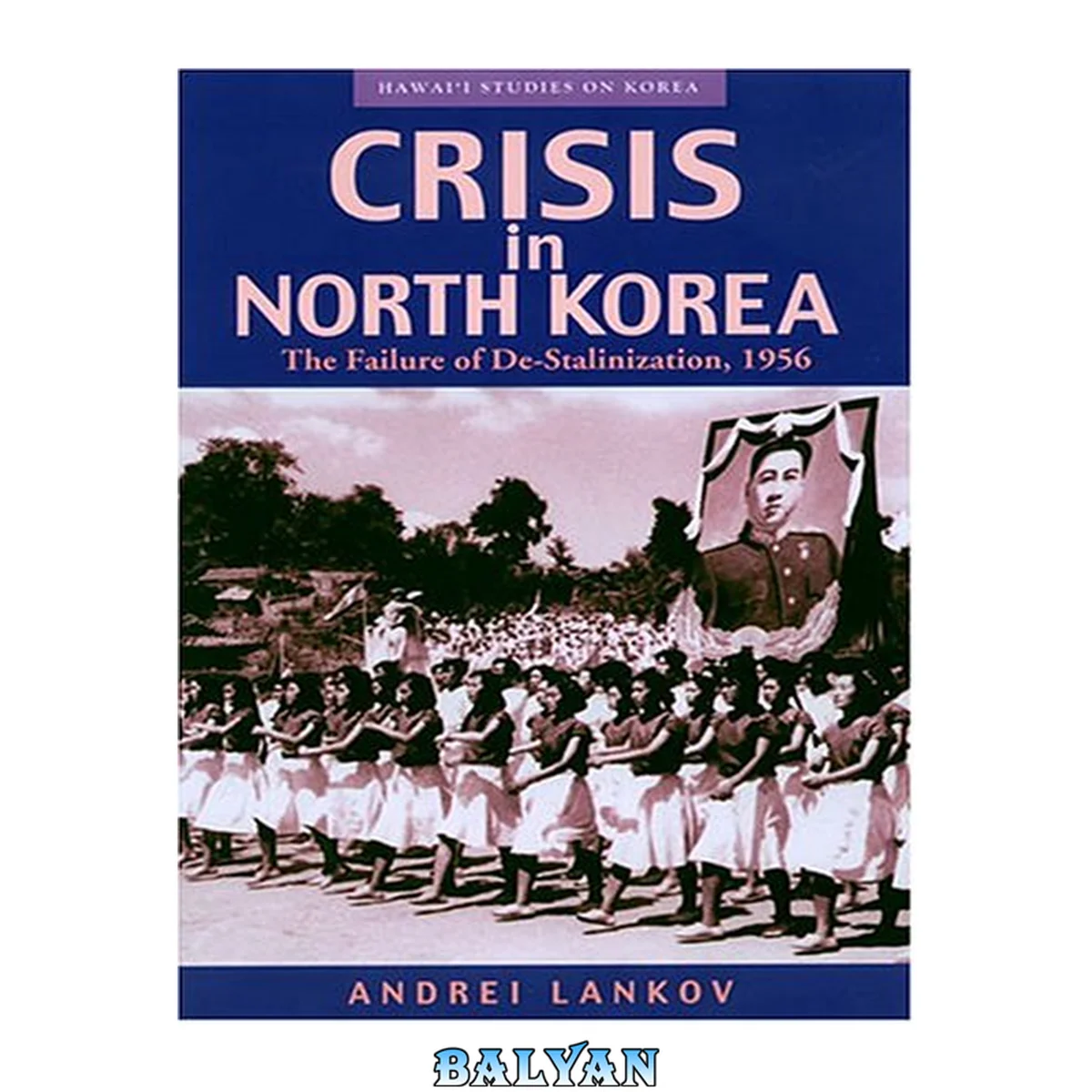
معرفی کتاب «Crisis in North Korea: The Failure of De-Stalinization, 1956 (Hawai'i Studies on Korea) (Hawai'i Studies on Korea)» نوشتهٔ Andrei N. Lankov, A. N. Lankov، منتشرشده توسط نشر University of Hawaiʻi Press; Center for Korean Studies در سال 2004. این کتاب در فرمت pdf، زبان انگلیسی ارائه شده است.
North Korea remains the most mysterious of all Communist countries. The acute shortage of available sources has made it a difficult subject of scholarship. Through his access to Soviet archival material made available only a decade ago, contemporary North Korean press accounts, and personal interviews, Andrei Lankov presents for the first time a detailed look at one of the turning points in North Korean history: the country's unsuccessful attempts to de-Stalinize in the mid-1950s. He demonstrates that, contrary to common perception, North Korea was not a realm of undisturbed Stalinism; Kim Il Sung had to deal with a reformist opposition that was weak but present nevertheless. Lankov traces the impact of Soviet reforms on North Korea, placing them in the context of contemporaneous political crises in Poland and Hungary. He documents the dissent among various social groups (intellectuals, students, party cadres) and their attempts to oust Kim in the unsuccessful "August plot" of 1956. His reconstruction of the Peng-Mikoyan visit of that year--the most dramatic Sino-Soviet intervention into Pyongyang politics--shows how it helped bring an end to purges of the opposition. The purges, however, resumed in less than a year as Kim skillfully began to distance himself from both Moscow and Beijing. The final chapters of this fascinating and revealing study deal with events of the late 1950s that eventually led to Kim's version of "national Stalinism." Lankov unearths data that, for the first time, allows us to estimate the scale and character of North Korea's Great Purge. Meticulously researched and cogently argued, Crisis in North Korea is a must-read for students and scholars of Korea and anyone interested in political leadership and personality cults, regime transition, and communist politics. "North Korea remains the most mysterious of all Communist countries, and the acute shortage of available sources has made it a difficult subject of scholarship. Through his access to Soviet archival material made available only a decade ago, contemporary North Korean press accounts, and personal interviews, Andrei Lankov presents for the first time a detailed look at one of the turning points in North Korean history: the country's unsuccessful attempts to de-Stalinize in the mid-1950s. He demonstrates that, contrary to common perception, North Korea was not a realm of undisturbed Stalinism; Kim Il Song had to deal with a reformist opposition that was weak but present nevertheless." "Researched and cogently argued, Crisis in North Korea is a must-read for students and scholars of Korea and anyone interested in political leadership and personality cults, regime transition, and communist politics."--BOOK JACKET. Title Summary field provided by Blackwell North America, Inc. All Rights Reserved Contents ......Page 6 Preface......Page 8 Acknowledgments......Page 14 Note on Romanization......Page 16 Introduction......Page 18 1. North Korea and Its Leadership in the Mid-1950s......Page 24 2. The Soviet Faction under Attack......Page 43 3. The Third KWP Congress......Page 77 4. The Conspiracy......Page 90 5. The "August Group" before August......Page 110 6. The August Plenum......Page 138 7. The Soviet-Chinese Delegation and the September Plenum......Page 153 8. The Purges......Page 160 9. North Korea Changes Course......Page 192 10. The Inception of the "Guerrilla State"......Page 219 Conclusion: Why the "August Group" Failed......Page 228 Notes......Page 242 Bibliography......Page 274 Index......Page 284 1. Background: North Korea and the North korean leadership in the mid-1950s 2. 1955: the Soviet faction under attack 3. The third KWP congress 4. The conspiracy 5. The August group' before August: members, goals, methods, and connections 6. The August plenum 7. The Soviet-Chinese delegation and the September Plenum 8. The purges 9. North Korea changes course 10 The inception of the 'guerrilla state 11. Conclusion. the reasons for the failure: the Opposition, Kim Il Song, and the North Korean ruling elite in the.
دانلود کتاب Crisis in North Korea: The Failure of De-Stalinization, 1956 (Hawai'i Studies on Korea) (Hawai'i Studies on Korea)