Craniofacial Anatomy and Forensic Identification
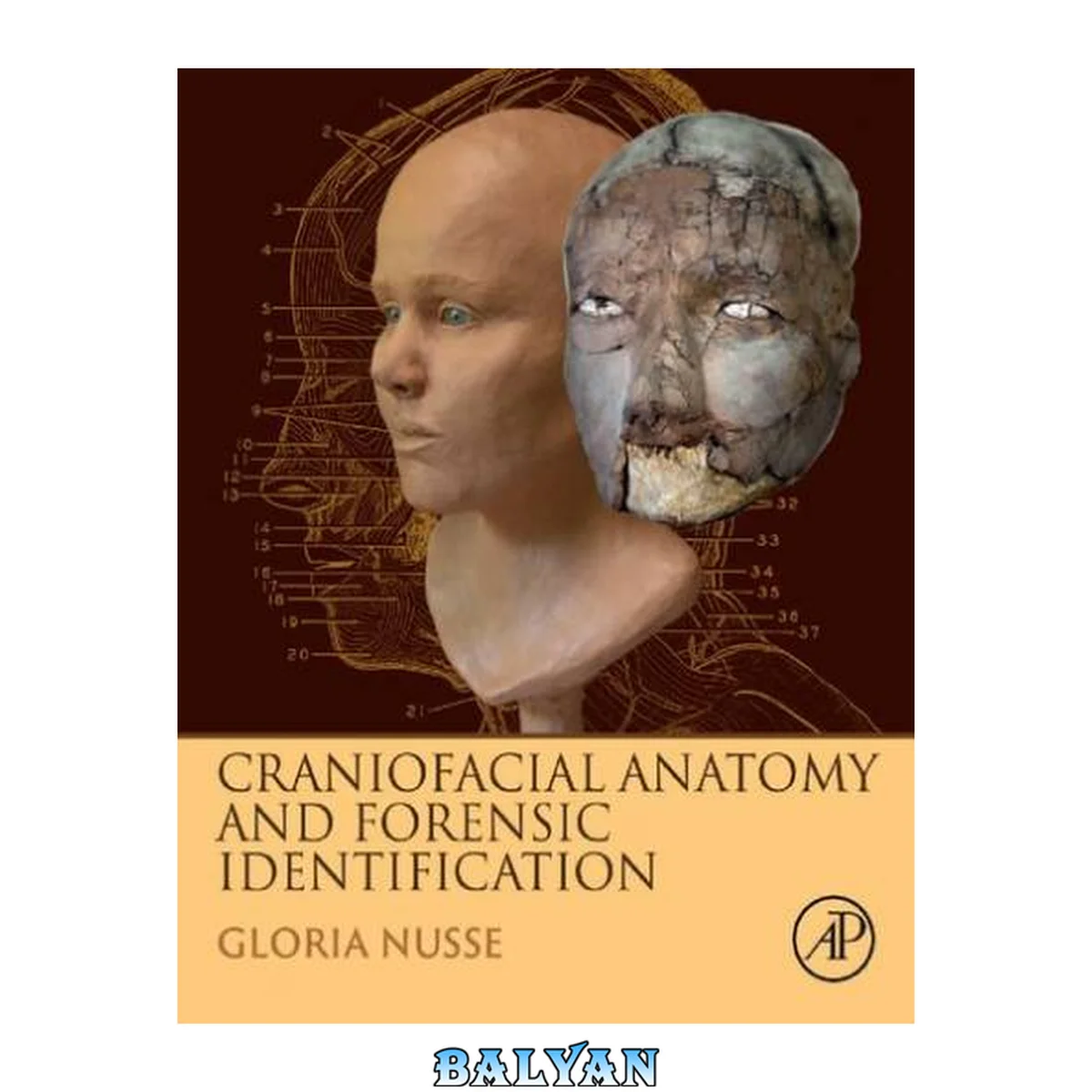
معرفی کتاب «Craniofacial Anatomy and Forensic Identification» نوشتهٔ Gloria Nusse، منتشرشده توسط نشر Academic Press در سال 2022. این کتاب در فرمت pdf، زبان انگلیسی ارائه شده است.
Our bodies record what happens to us physically throughout our lives. This is illustrated by the simple appearance of scars from injuries sustained years, and even decades ago. Evidence such as scars also tells us how we used our joints or may have injured them as children and adults. Our bodies conform to the environment in which we live, both outside and inside. By examining and observing these key clues, a forensic investigator can reveal the unique character that tells the story of a person's life and death. Craniofacial Anatomy and Forensic Identification is an atlas that covers all aspects of facial reconstruction and anatomy of the head and neck, such as facial expression and the anatomic basis for facial development, along with the effects of muscle movement. Written by a world-renowned forensic artist with decades of experience as a scientific illustrator as well as a portraitist, anthropologist, and lecturer in anatomy and biology, the author is as much a scientist as an artist. Comprehensively addresses the history o facial reconstruction, facial development, muscle movements, and bone physiology used by forensic artists and forensic anthropologists Demonstrates techniques in mold making and sculpting to bring the body to life Includes images from cadaver labs and recent case studies Provides detailed anatomy of vessels and nerves found in the face including the eyes Details the muscles, ligaments and tissues down to the skull Describes the changing face as it ages Front Cover CRANIOFACIAL ANATOMY AND FORENSIC IDENTIFICATION CRANIOFACIAL ANATOMY AND FORENSIC IDENTIFICATION Copyright Contents Preface Acknowledgments 1 - Introduction and identity from the skull's perspective Chapter 1 Citations 2 - History and research of facial identification American contribution Tissue depth studies Case study history The faces of Dilmun Chapter 2 Citations – History of Facial Reconstruction and Identification 3 - Bones, muscles, and tissues Introduction The skull as a whole Frankfort horizontal Anatomical directional terms Bone surface markings Depressions and openings Projections A statement on race and structure Individual bones of the skull Parietal Temporal bone Zygomatic bone Maxilla, vomer, palatine, and nasal The nasal aperture of the maxilla The orbital part of the maxilla Teeth of the maxilla Mandible Frontal bone Sphenoid bone Ethmoid bone Occipital Frontal bone Muscles Integument Other tissues Vessels Nerves Adipose Chapter 3 Citations 4 - Facial features Introduction The ear Uniqueness The orbital unit and the eye Retina Iris The infraorbital region and nose The zygomatic unit of the mouth, lips and tongue The chin and cheek unit The chin and cheek unit The submental chin, cervical units, and neck Tongue Chapter 4. References cited Further reading 5 - Analysis and interpretation The Body's Story - One, a cadaver in the lab Story two—coroner case of unidentified remains Analysis Anatomical observation Bone biology Endochondral ossification Metric measurements and nonmetric structures Cultural aspects The silhouette Cultural analysis—case studies Case study—hair Chapter 5 citations 6 - Age, archetype, and expression Age and archetype How the face ages Zones of facial aging Wrinkles Juvenile skulls Case study of Marin County juvenile skull—is it a girl . . . or a boy?! Case study—old man of Bahrain References 7 - Grave goods and artifacts Can you see the story emerging? Coupled for eternity, an artist's reconstruction of an Ohlone double burial The dig Ohlone life pre-European contact Dress and adornment Burial customs Unique burials Shamanism Conclusion References 8 - Mold making and reproduction Introduction Skull preparation Working with a badly damaged skull Normal skull preparation Mold preparation Flexible mold Mother molds Opening the molds Cleaning up the skull Assemble and cast the skull 9 - Clay work and finishing The technical phases–Molding and casting Mounting the skull Tissue depth placement Landmarks and tissue charts Descriptions of anatomic landmarks Eyes Nose Ears Artistic phase Finishing skin Wigs and hair Accessories, clothing, and jewelry Managing trauma in facial reconstructions Case 1 Case 2 Case 3 Case 4 Fragmentation, missing pieces, and reconstruction Summary References 10 - Lefty, An exemplar Forensic Anthropology Report Individual 1 Sex: male Age: younger adult, mostly likely 25–35 years Ancestry: probably South/Southeast Asian Stature: 156.9–172.4 cm Pathological and anomalous conditions Individual 2 Individual 3 Individual 4 Summary Facial Reconstruction of Lefty References Index A B C D E F G H I J K L M N O P R S T U V W Z Back Cover "Our bodies record what happens to us physically throughout our lives. This is illustrated by the simple appearance of scars from injuries sustained years, and even decades ago. Evidence such as scars also tells us how we used our joints or may have injured them as children and adults. Our bodies conform to the environment in which we live, both outside and inside. By examining and observing these key clues, a forensic investigator can reveal the unique character that tells the story of a person's life and death. Craniofacial Anatomy and Forensic Identification is an atlas that covers all aspects of facial reconstruction and anatomy of the head and neck, such as facial expression and the anatomic basis for facial development, along with the effects of muscle movement. Written by a world-renowned forensic artist with decades of experience as a scientific illustrator as well as a portraitist, anthropologist, and lecturer in anatomy and biology, the author is as much a scientist as an artist."-- Provided by publisher
دانلود کتاب Craniofacial Anatomy and Forensic Identification