Coping With Trauma : Hope Through Understanding
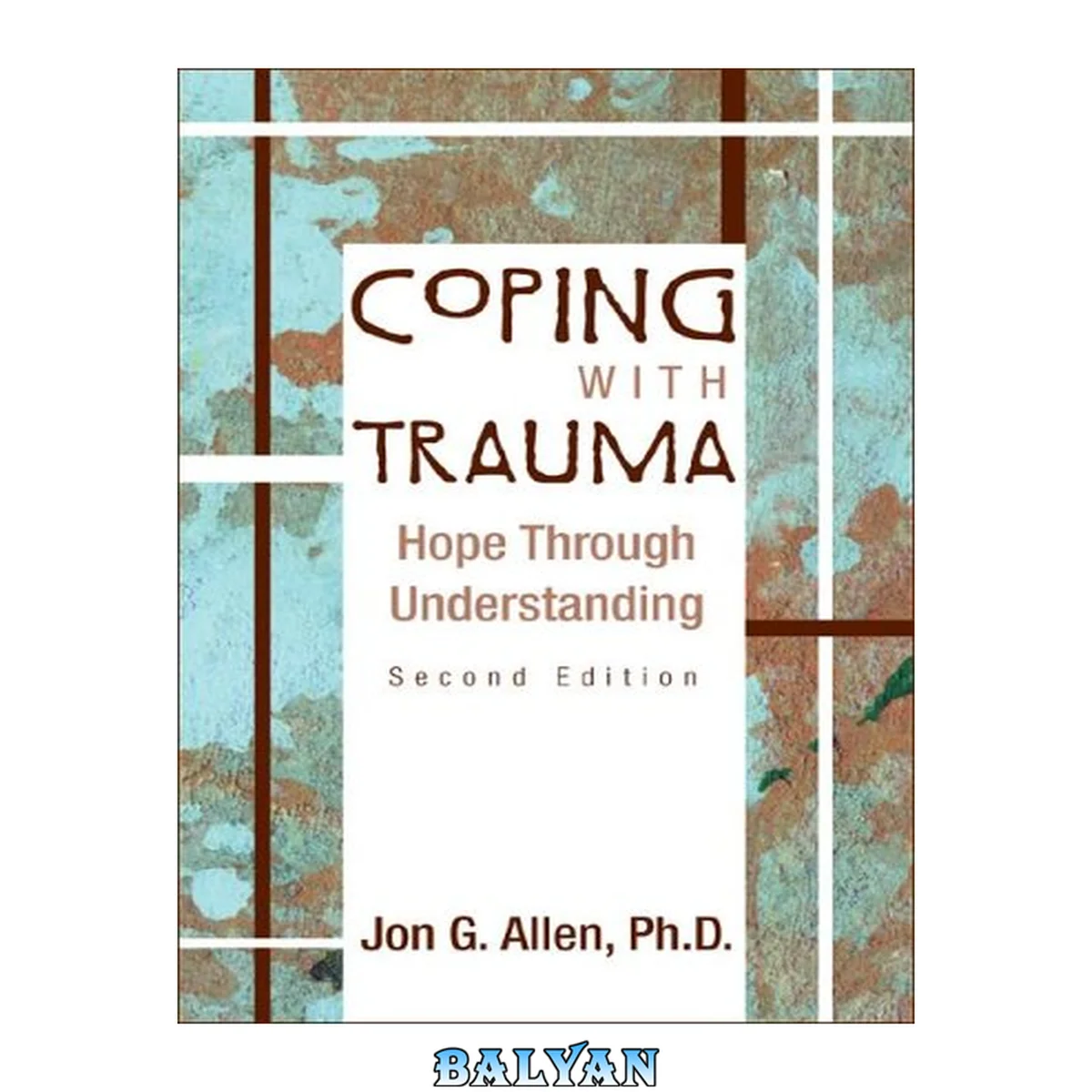
معرفی کتاب «Coping With Trauma : Hope Through Understanding» نوشتهٔ Jon G. Allen، منتشرشده توسط نشر American Psychiatric Association Publishing در سال 2004. این کتاب در فرمت pdf، زبان انگلیسی ارائه شده است.
Combining years of research, teaching, and experience treating trauma survivors, Dr. Jon G. Allen offers compassionate and practical guidance to understanding trauma and its effects on the self and relationships. Coping With Trauma is based on more than a decade of Dr. Allen's experience conducting educational groups for persons struggling with psychiatric disorders stemming from trauma. Written for a general audience, this book does not require a background in psychology. Readers will gain essential knowledge to embark on the process of healing from the complex wounds of trauma, along with a guide to current treatment approaches.
In this supportive and informative work, readers will be introduced to and encouraged in the process of healing by an author who is both witness and guide. This clearly written, insightful book not only teaches clinicians about trauma but also, equally important, teaches clinicians how to educate their patients about trauma.
Reshaped by recent developments in attachment theory, including the importance of cumulative stress over a lifetime, this compelling work retains the author's initial focus on attachment as he looks at trauma from two perspectives. From the psychological perspective, the author discusses the impact of trauma on emotion, memory, the self, and relationships, incorporating research from neuroscience to argue that trauma is a physical illness. From the psychiatric perspective, the author discusses various trauma-related disorders and symptoms: depression, posttraumatic stress disorder, and dissociative disorders, along with a range of self-destructive behaviors to which trauma can make a contribution.
Important updates include substantive and practical information on
• Emotion and emotion regulation, prompted by extensive contemporary research on emotion—which is becoming a science unto itself.
• Illness, based on current developments in the neurobiological understanding of trauma.
• Depression, a pervasive trauma-related problem that poses a number of catch-22s for recovery.
• Various forms of self-destructiveness—substance abuse, eating disorders, and deliberate self-harm—all construed as coping strategies that backfire.
• Suicidal states and self-defeating aspects of personality disorders.
The author addresses the challenges of healing by reviewing strategies of emotion regulation as well as a wide range of sound treatment approaches. He concludes with a new chapter on the foundation of all healing: maintaining hope.
This exceptionally comprehensive overview of a wide range of traumatic experiences, written in nontechnical language with extensive references to both classic and contemporary theoretical, clinical, and research literature, offers a uniquely useful guide for victims of trauma, their family members, and mental health care professionals alike.
Doody Review Services
Reviewer:Patricia E. Murphy, PhD(Rush University Medical Center)
Description:Building on classes, the author has provided this book for groups of persons who have experienced trauma. The chapters stand on their own and form a coherent guide through understanding and healing the impact of trauma.
Purpose:Awareness of new information about the biology of trauma and the treatment of trauma and its effects, the impact of a new kind of trauma in the form of terrorism, and a growing understanding of attachment theory, led the author to rewrite the 1995 edition of this book. Both books offer a path to healing through self-understanding.
Audience:The primary audience are people seeking healing. The breadth of content suggests it might be a helpful book for students in counseling or psychiatry. Clinicians might find it helpful for their patients, but would, probably, want something more academic for their own reading.
Features:The book includes a personal address to the victim of trauma. The tone of respect and support for the person who might be reading emotionally-laden material reflects the author's theoretical approach of attachment theory as a basis for understanding and healing the ruptures a traumatized person has experienced. The quality of material taken from the foremost authors in the field reflects a belief in the self-efficacy of the reader, who will be able to incorporate a wealth of knowledge into growth and healing.
Assessment:A closing chapter on hope reaches beyond the goal of the previous edition, self-understanding. There is enough new material in this book to make it worth the purchase. I can imagine those helped by the first edition will find comfort in information that takes into account even the unthinkable new trauma of terrorism.
Combining years of research, teaching, and experience treating trauma survivors, Dr. Jon G. Allen offers compassionate and practical guidance to understanding trauma and its effects on the self and relationships. Coping With Trauma is based on more than a decade of Dr. Allen's experience conducting educational groups for persons struggling with psychiatric disorders stemming from trauma. Written for a general audience, this book does not require a background in psychology. Readers will gain essential knowledge to embark on the process of healing from the complex wounds of trauma, along with a guide to current treatment approaches.
In this supportive and informative work, readers will be introduced to and encouraged in the process of healing by an author who is both witness and guide. This clearly written, insightful book not only teaches clinicians about trauma but also, equally important, teaches clinicians how to educate their patients about trauma.
Reshaped by recent developments in attachment theory, including the importance of cumulative stress over a lifetime, this compelling work retains the author's initial focus on attachment as he looks at trauma from two perspectives. From the psychological perspective, the author discusses the impact of trauma on emotion, memory, the self, and relationships, incorporating research from neuroscience to argue that trauma is a physical illness. From the psychiatric perspective, the author discusses various trauma-related disorders and symptoms: depression, posttraumatic stress disorder, and dissociative disorders, along with a range of self-destructive behaviors to which trauma can make a contribution.
Important updates include substantive and practical information on Emotion and emotion regulation, prompted by extensive contemporary research on emotion -- which is becoming a science unto itself. Illness, based on current developments in the neurobiological understanding of trauma. Depression, a pervasive trauma-related problem that poses a number of catch-22s for recovery. Various forms of self-destructiveness -- substance abuse, eating disorders, and deliberate self-harm -- all construed as coping strategies that backfire. Suicidal states and self-defeating aspects of personality disorders.
The author addresses the challenges of healing by reviewing strategies of emotion regulation as well as a wide range of sound treatment approaches. He concludes with a new chapter on the foundation of all healing: maintaining hope.
This exceptionally comprehensive overview of a wide range of traumatic experiences, written in nontechnical language with extensive references to both classic and contemporary theoretical, clinical, and research literature, offers a uniquely useful guide for victims of trauma, their family members, and mental health care professionals alike.
Combining years of research, teaching, and experience treating trauma survivors, Dr. Jon G. Allen offers compassionate and practical guidance to understanding trauma and its effects on the self and relationships. Coping With Trauma is based on more than a decade of Dr. Allen's experience conducting educational groups for persons struggling with psychiatric disorders stemming from trauma. Written for a general audience, this book does not require a background in psychology. Readers will gain essential knowledge to embark on the process of healing from the complex wounds of trauma, along with a guide to current treatment approaches. In this supportive and informative work, readers will be introduced to and encouraged in the process of healing by an author who is both witness and guide. This clearly written, insightful book not only teaches clinicians about trauma but also, equally important, teaches clinicians how to educate their patients about trauma. Reshaped by recent developments in attachment theory, including the importance of cumulative stress over a lifetime, this compelling work retains the author's initial focus on attachment as he looks at trauma from two perspectives. From the psychological perspective, the author discusses the impact of trauma on emotion, memory, the self, and relationships, incorporating research from neuroscience to argue that trauma is a physical illness. From the psychiatric perspective, the author discusses various trauma-related disorders and symptoms: depression, posttraumatic stress disorder, and dissociative disorders, along with a range of self-destructive behaviors to which trauma can make a contribution. Important updates include substantive and practical information on Emotion and emotion regulation, prompted by extensive contemporary research on emotion — which is becoming a science unto itself. Illness, based on current developments in the neurobiological understanding of trauma. Depression, a pervasive trauma-related problem that poses a number of catch-22s for recovery. Various forms of self-destructiveness — substance abuse, eating disorders, and deliberate self-harm — all construed as coping strategies that backfire. Suicidal states and self-defeating aspects of personality disorders. The author addresses the challenges of healing by reviewing strategies of emotion regulation as well as a wide range of sound treatment approaches. He concludes with a new chapter on the foundation of all healing: maintaining hope. This exceptionally comprehensive overview of a wide range of traumatic experiences, written in nontechnical language with extensive references to both classic and contemporary theoretical, clinical, and research literature, offers a uniquely useful guide for victims of trauma, their family members, and mental health care professionals alike. Contents......Page 8 About the Author......Page 10 Foreword......Page 12 Preface......Page 14 Introduction......Page 18 A Guide to Reading This Book......Page 20 Part I: FOUNDATIONS......Page 22 1 Trauma......Page 24 2 Attachment......Page 46 Part II: EFFECTS OF TRAUMA......Page 64 3 Emotion......Page 66 4 Memory......Page 100 5 Self......Page 120 6 Relationships......Page 136 7 Illness......Page 154 Part III: TRAUMA-RELATED PSYCHIATRIC DISORDERS......Page 172 8 Depression......Page 174 9 Posttraumatic Stress Disorder......Page 192 10 Dissociative Disorders......Page 208 11 Self-Destructiveness......Page 226 Part IV: HEALING......Page 240 12 Emotion Regulation......Page 242 13 Treatment Approaches......Page 270 14 Hope......Page 300 A......Page 316 E......Page 317 I......Page 318 P......Page 319 S......Page 320 V......Page 321 References......Page 322 Suggested Readings......Page 358 A......Page 362 C......Page 364 D......Page 365 F......Page 367 I......Page 368 M......Page 369 P......Page 370 R......Page 371 S......Page 372 T......Page 374 Y......Page 375 Contents 8 About the Author 10 Foreword 12 Preface 14 Introduction 18 A Guide to Reading This Book 20 Part I: FOUNDATIONS 22 1 Trauma 24 2 Attachment 46 Part II: EFFECTS OF TRAUMA 64 3 Emotion 66 4 Memory 100 5 Self 120 6 Relationships 136 7 Illness 154 Part III: TRAUMA-RELATED PSYCHIATRIC DISORDERS 172 8 Depression 174 9 Posttraumatic Stress Disorder 192 10 Dissociative Disorders 208 11 Self-Destructiveness 226 Part IV: HEALING 240 12 Emotion Regulation 242 13 Treatment Approaches 270 14 Hope 300 Glossary 316 A 316 B 317 C 317 D 317 E 317 F 318 G 318 H 318 I 318 L 319 M 319 P 319 R 320 S 320 T 321 U 321 V 321 References 322 Suggested Readings 358 Index 362 A 362 B 364 C 364 D 365 E 367 F 367 G 368 H 368 I 368 J 369 K 369 L 369 M 369 N 370 O 370 P 370 Q 371 R 371 S 372 T 374 U 375 V 375 W 375 Y 375 "For clinicians, this work includes broad discussions of trauma from both psychological and psychiatric perspectives. New developments in attachment theory have reshaped the whole book. Important updates from the first edition include new chapters on illness and depression, including suicidal states; self-defeating aspects of personality disorders and self-destructiveness; emotion and emotion regulation; and - most crucial - maintaining hope, the foundation of healing." "This comprehensive overview of a wide range of traumatic experiences offers a useful guide for patients, their loved ones, and mental health care professionals alike."--Jacket This book is based on more than a decade of Dr. Allen's experience conducting educational groups for persons struggling with psychiatric disorders stemming from trauma. Readers will gain essential knowledge to embark on the process of healing from the complex wounds of trauma, along with a guide to current treatment approaches