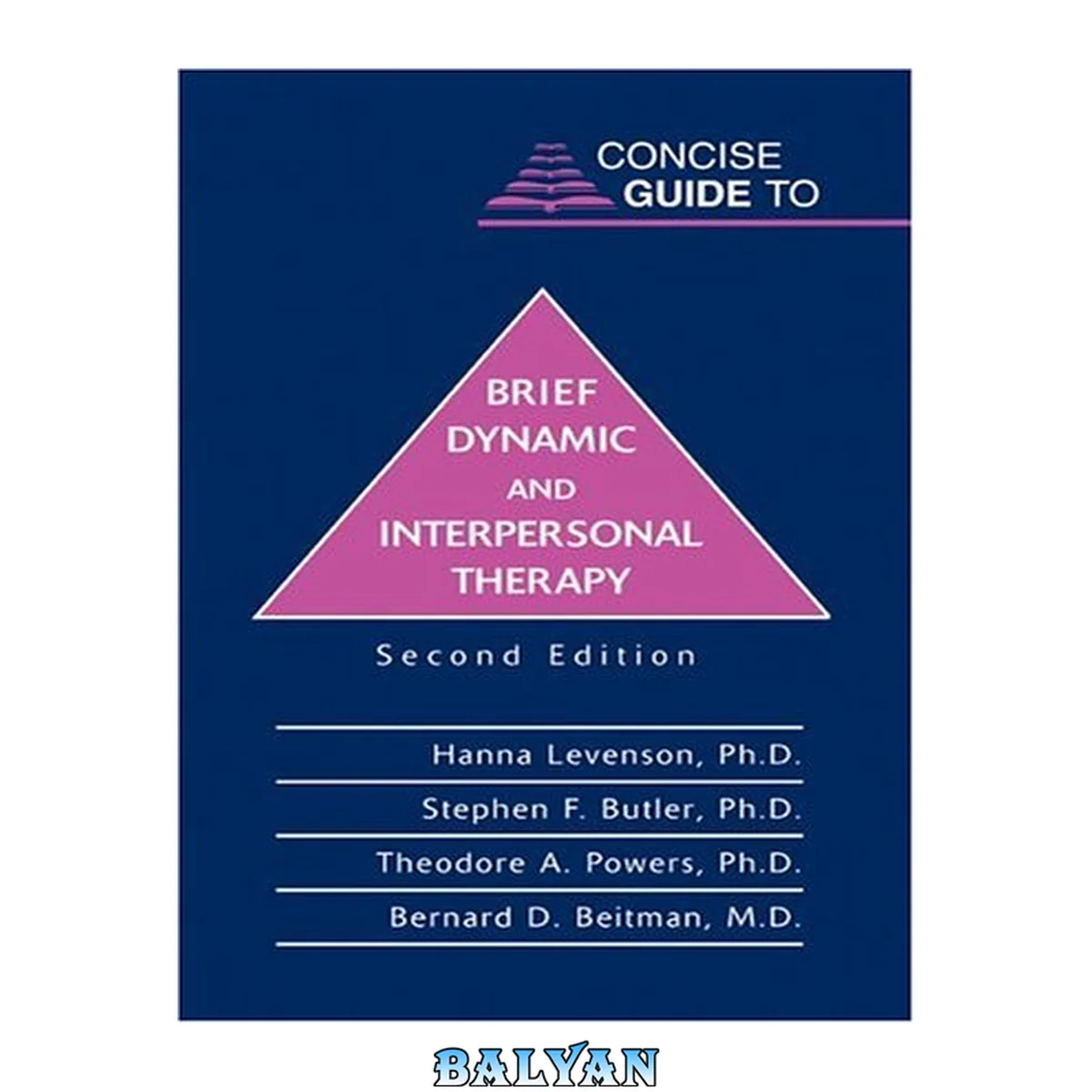
معرفی کتاب «Concise Guide to Brief Dynamic and Interpersonal Therapy, 2nd edition (Concise Guides)» نوشتهٔ Hanna Levenson; Stephen F Butler; Theodore A Powers; Bernard D Beitman; American Psychiatric Association، منتشرشده توسط نشر American Psychiatric Press در سال 2002. این کتاب در فرمت pdf، زبان انگلیسی ارائه شده است.
In todayAs world of managed careAcharacterized by limited mental health resources, emphasis on accountability, concerns of third-party payers, and consumer needAthe demand for mental health professionals to use briefer therapeutic approaches is on the rise. Fully 84% of all clinicians are doing some form of planned brief therapy (6A20 sessions per year per patient). Yet despite clinical advances and outcome data that demonstrate the effectiveness of short-term therapy, many therapistsAin fact, 90% of those whose theoretical orientation is psychodynamic rather than cognitive-behavioralAare reluctant to learn briefer interventions, seeing value only in long-term, depth-oriented work. The second edition of this Concise Guide is intended to help educate both beginning and experienced clinicians in the strategies and techniques of time-attentive models and to foster more positive and optimistic attitudes toward using these important therapies. -The seven therapeutic models presented hereAincluding an entirely new chapter on time-limited group therapyAhighlight the importance of the interpersonal perspective. -The seven models, one per chapter, represent well-established short-term approaches to clinical issues that therapists commonly encounter in their clinical practices. These models also have clearly defined intervention techniques and formulation strategies and can be used within the 10- to 20-session time frame of most managed care settings. -The first part of each chapter dealing with a therapeutic model lists the various presenting problems the authors deem most suitable for treatment by that particular approach. The authors discuss the overall framework of each model, selection criteria, goals, therapeutic tasks and strategies, empirical support, and relevance for managed care, with clinical cases to illustrate the application of each model. The authors include updated chapters on supportive, time-limited, and interpersonal therapies; time-limited dynamic psychotherapy; short-term dynamic therapy for patients with posttraumatic stress disorder; brief dynamic therapy for patients with substance abuse disorders; an entirely new chapter on time-limited group therapy; and a final chapter on the reciprocal relationship between pharmacotherapy and psychotherapy. Meant to complement the more detailed information found in lengthier psychiatric texts, this Concise Guide (it is designed to fit into a jacket or lab coat pocket) is a practical and convenient reference for psychiatrists, psychiatric residents, and medical students working in a variety of treatment settings, such as inpatient psychiatry units, outpatient clinics, consultation-liaison services, and private offices. Contents 6 About the Authors 16 Introduction to the Concise Guides Series 18 1 Introduction 20 Focus of the Book 20 Psychodynamic Orientation 20 Interpersonal Focus 21 Brief Psychotherapy 22 Brief Dynamic Approaches 23 Qualities That Define Brief Dynamic Therapy 25 Values and Attitudes 25 Specific Models Presented 28 2 Supportive Therapy: Treatment for Lower-Functioning Patients...and Others? 34 Definition of Supportive Psychotherapy 37 Selection of Patients 37 Goals of Treatment 38 The Therapeutic Alliance 39 Techniques of Supportive Therapy 40 Reducing Anxiety 40 Enhancing Self-Esteem 41 Respecting Defenses 42 Clarification, Confrontation, and Interpretation 43 Rationalization 44 Reframing 45 Encouragement 45 Advising 46 Rehearsal or Anticipation 47 Responding to Ventilation 47 Attention to, Not Interpretation of, Transference 48 Conclusion 49 Clinical Illustration 50 Empirical Findings 51 Relevance for Managed Care 53 3 Time-Limited Therapy 56 Basic Framework 56 Theory and Technique 57 Phases of Treatment 59 Intake/Selection 59 Honeymoon Phase 60 Negative Transference Phase 61 Termination Phase 62 Reverberations for the Therapist 63 Clinical Illustration 64 Empirical Findings 71 Relevance for Managed Care 71 4 Interpersonal Psychotherapy for Patients With Depression 74 Basic Principles 75 Selection Criteria 77 Goals 77 Strategies and Phases of Treatment 78 Initial Sessions 78 Intermediate Phase 81 Termination Phase 84 Clinical Illustration 86 Psychoeducation About the Sick Role 87 Here-and-Now Framework 87 Interpersonal Formulation 87 Exploring Options 88 Problem Areas 88 Therapist Confidence 90 Termination 91 Empirical Findings 91 Relevance for Managed Care 93 5 Time-Limited Dynamic Psychotherapy 96 Conceptual Framework 97 Assumptions 97 Goals 99 The Cyclical Maladaptive Pattern 100 Inclusion and Exclusion Criteria 102 Treatment 103 Clinical Illustration 106 Empirical Findings 112 Relevance for Managed Care 112 6 Short-Term Dynamic Therapy for Patients With Posttraumatic Stress Disorder 116 Theory of Change 116 Patient Selection 118 Goals of Treatment 120 Acknowledging and Accepting the Traumatized Self 121 Regaining Mastery 121 Integrating the Traumatic Information 121 Viewing Trauma as a Challenge 122 Techniques of Therapy for Patients With Stress Response Syndromes 123 Intrusion-Denial Phases 123 Content Themes 129 Personality Styles 130 Transference and Countertransference 130 Clinical Illustration 132 Empirical Findings 136 Relevance for Managed Care 137 7 Brief Dynamic Psychotherapy for Patients With Substance Abuse Disorders 140 Conceptualizing Substance Abuse as a Psychiatric Disorder 141 Patient Selection 145 Therapist’s Attitude Toward Patients With Substance Abuse Disorders 145 Twelve-Step Programs and Group Counseling 146 Role of Various Psychoactive Substances 148 Supportive-Expressive Therapy for Cocaine Abuse 151 Core Conflictual Relationship Theme 151 Treatment Goals 153 Transference and Countertransference 157 Clinical Illustration 159 Transference Implications 159 Mr. H’s Core Conflictual Relationship Theme 160 Empirical Findings 162 Relevance for Managed Care 164 8 Time-Limited Group Therapy 168 Why Groups? 169 Why Time-Limited Groups? 171 Group Dynamics and Group Therapy 172 Types of Groups and Theoretical Perspectives 172 An Illustrative Model of Time-Limited Group Psychotherapy 175 Interpersonal-Developmental-Existential Approach to Time-Limited Group Psychotherapy 175 Focus 176 Screening and Pregroup Preparation 177 Technical Considerations 182 Stages of Group Development 183 Empirical Findings 189 Relevance for Managed Care 191 9 The Reciprocal Relationship Between Pharmacotherapy and Psychotherapy 196 Obsessive-Compulsive Disorder and the “Worry Circuit” 198 Psychopharmacology During the Stages of Psychotherapy 199 Pharmacotherapy Highlights Key Dysfunctional Patterns 200 Medication Compliance and a Key Cognitive Pattern 200 As-Needed Ingestion Illustrates a Key Interpersonal Pattern 203 Transference and Countertransference 204 Benzodiazepine Disinhibition Reveals Dysfunctional Patterns 204 Pharmacotherapy Alters Marital and Family Dynamics 206 Medication Helps to Save Family Integrity 206 Medications as Markers for Marital Difficulties 207 Request for Pharmacotherapy for Spouse Helps Highlight a Marital Pattern 207 Catalysts for Change 208 Combined Treatment in the Era of Managed Care 209 Index 214 A 214 B 214 C 215 D 217 E 217 F 218 G 218 H 218 I 218 L 219 M 219 N 220 O 221 P 221 R 222 S 222 T 224 U 226 V 226 W 226 X 226 Y 226 Contents......Page 6 About the Authors......Page 16 Introduction to the Concise Guides Series......Page 18 Psychodynamic Orientation......Page 20 Interpersonal Focus......Page 21 Brief Psychotherapy......Page 22 Brief Dynamic Approaches......Page 23 Values and Attitudes......Page 25 Specific Models Presented......Page 28 2 Supportive Therapy: Treatment for Lower-Functioning Patients...and Others?......Page 34 Selection of Patients......Page 37 Goals of Treatment......Page 38 The Therapeutic Alliance......Page 39 Reducing Anxiety......Page 40 Enhancing Self-Esteem......Page 41 Respecting Defenses......Page 42 Clarification, Confrontation, and Interpretation......Page 43 Rationalization......Page 44 Encouragement......Page 45 Advising......Page 46 Responding to Ventilation......Page 47 Attention to, Not Interpretation of, Transference......Page 48 Conclusion......Page 49 Clinical Illustration......Page 50 Empirical Findings......Page 51 Relevance for Managed Care......Page 53 Basic Framework......Page 56 Theory and Technique......Page 57 Intake/Selection......Page 59 Honeymoon Phase......Page 60 Negative Transference Phase......Page 61 Termination Phase......Page 62 Reverberations for the Therapist......Page 63 Clinical Illustration......Page 64 Relevance for Managed Care......Page 71 4 Interpersonal Psychotherapy for Patients With Depression......Page 74 Basic Principles......Page 75 Goals......Page 77 Initial Sessions......Page 78 Intermediate Phase......Page 81 Termination Phase......Page 84 Clinical Illustration......Page 86 Interpersonal Formulation......Page 87 Problem Areas......Page 88 Therapist Confidence......Page 90 Empirical Findings......Page 91 Relevance for Managed Care......Page 93 5 Time-Limited Dynamic Psychotherapy......Page 96 Assumptions......Page 97 Goals......Page 99 The Cyclical Maladaptive Pattern......Page 100 Inclusion and Exclusion Criteria......Page 102 Treatment......Page 103 Clinical Illustration......Page 106 Relevance for Managed Care......Page 112 Theory of Change......Page 116 Patient Selection......Page 118 Goals of Treatment......Page 120 Integrating the Traumatic Information......Page 121 Viewing Trauma as a Challenge......Page 122 Intrusion-Denial Phases......Page 123 Content Themes......Page 129 Transference and Countertransference......Page 130 Clinical Illustration......Page 132 Empirical Findings......Page 136 Relevance for Managed Care......Page 137 7 Brief Dynamic Psychotherapy for Patients With Substance Abuse Disorders......Page 140 Conceptualizing Substance Abuse as a Psychiatric Disorder......Page 141 Therapist’s Attitude Toward Patients With Substance Abuse Disorders......Page 145 Twelve-Step Programs and Group Counseling......Page 146 Role of Various Psychoactive Substances......Page 148 Core Conflictual Relationship Theme......Page 151 Treatment Goals......Page 153 Transference and Countertransference......Page 157 Transference Implications......Page 159 Mr. H’s Core Conflictual Relationship Theme......Page 160 Empirical Findings......Page 162 Relevance for Managed Care......Page 164 8 Time-Limited Group Therapy......Page 168 Why Groups?......Page 169 Why Time-Limited Groups?......Page 171 Types of Groups and Theoretical Perspectives......Page 172 Interpersonal-Developmental-Existential Approach to Time-Limited Group Psychotherapy......Page 175 Focus......Page 176 Screening and Pregroup Preparation......Page 177 Technical Considerations......Page 182 Stages of Group Development......Page 183 Empirical Findings......Page 189 Relevance for Managed Care......Page 191 9 The Reciprocal Relationship Between Pharmacotherapy and Psychotherapy......Page 196 Obsessive-Compulsive Disorder and the “Worry Circuit”......Page 198 Psychopharmacology During the Stages of Psychotherapy......Page 199 Medication Compliance and a Key Cognitive Pattern......Page 200 As-Needed Ingestion Illustrates a Key Interpersonal Pattern......Page 203 Benzodiazepine Disinhibition Reveals Dysfunctional Patterns......Page 204 Medication Helps to Save Family Integrity......Page 206 Request for Pharmacotherapy for Spouse Helps Highlight a Marital Pattern......Page 207 Catalysts for Change......Page 208 Combined Treatment in the Era of Managed Care......Page 209 B......Page 214 C......Page 215 E......Page 217 I......Page 218 M......Page 219 N......Page 220 P......Page 221 S......Page 222 T......Page 224 Y......Page 226
in Today’s World Of Managed Care—characterized By Limited Mental Health Resources, Emphasis On Accountability, Concerns Of Third-party Payers, And Consumer Need—the Demand For Mental Health Professionals To Use Briefer Therapeutic Approaches Is On The Rise. Fully 84% Of All Clinicians Are Doing Some Form Of Planned Brief Therapy (6--20 Sessions Per Year Per Patient).
yet Despite Clinical Advances And Outcome Data That Demonstrate The Effectiveness Of Short-term Therapy, Many Therapists—in Fact, 90% Of Those Whose Theoretical Orientation Is Psychodynamic Rather Than Cognitive-behavioral—are Reluctant To Learn Briefer Interventions, Seeing Value Only In Long-term, Depth-oriented Work. The Second Edition Of This Concise Guide Is Intended To Help Educate Both Beginning And Experienced Clinicians In The Strategies And Techniques Of Time-attentive Models And To Foster More Positive And Optimistic Attitudes Toward Using These Important Therapies.
• The Seven Therapeutic Models Presented Here—including An Entirely New Chapter On Time-limited Group Therapy—highlight The Importance Of The Interpersonal Perspective.• The Seven Models, One Per Chapter, Represent Well-established Short-term Approaches To Clinical Issues That Therapists Commonly Encounter In Their Clinical Practices. These Models Also Have Clearly Defined Intervention Techniques And Formulation Strategies And Can Be Used Within The 10- To 20-session Time Frame Of Most Managed Care Settings.
• The First Part Of Each Chapter Dealing With A Therapeutic Model Lists The Various Presenting Problems The Authors Deem Most Suitable For Treatment By That Particular Approach. The Authors Discuss The Overall Framework Of Each Model, Selection Criteria, Goals, Therapeutic Tasks And Strategies, Empirical Support, And Relevance For Managed Care, With Clinical Cases To Illustrate The Application Of Each Model.
the Authors Include Updated Chapters On Supportive, Time-limited, And Interpersonal Therapies; Time-limited Dynamic Psychotherapy; Short-term Dynamic Therapy For Patients With Posttraumatic Stress Disorder; Brief Dynamic Therapy For Patients With Substance Abuse Disorders; An Entirely New Chapter On Time-limited Group Therapy; And A Final Chapter On The Reciprocal Relationship Between Pharmacotherapy And Psychotherapy.
meant To Complement The More Detailed Information Found In Lengthier Psychiatric Texts, This Concise Guide (it Is Designed To Fit Into A Jacket Or Lab Coat Pocket) Is A Practical And Convenient Reference For Psychiatrists, Psychiatric Residents, And Medical Students Working In A Variety Of Treatment Settings, Such As Inpatient Psychiatry Units, Outpatient Clinics, Consultation-liaison Services, And Private Offices.
In today's world of managed care -- characterized by limited mental health resources, emphasis on accountability, concerns of third-party payers, and consumer need -- the demand for mental health professionals to use briefer therapeutic approaches is on the rise. Fully 84% of all clinicians are doing some form of planned brief therapy (6-20 sessions per year per patient).
Yet despite clinical advances and outcome data that demonstrate the effectiveness of short-term therapy, many therapists -- in fact, 90% of those whose theoretical orientation is psychodynamic rather than cognitive-behavioral -- are reluctant to learn briefer interventions, seeing value only in long-term, depth-oriented work. The second edition of this Concise Guide is intended to help educate both beginning and experienced clinicians in the strategies and techniques of time-attentive models and to foster more positive and optimistic attitudes toward using these important therapies. The seven therapeutic models presented here -- including an entirely new chapter on time-limited group therapy -- highlight the importance of the interpersonal perspective.
The seven models, one per chapter, represent well-established short-term approaches to clinical issues that therapists commonly encounter in their clinical practices. These models also have clearly defined intervention techniques and formulation strategies and can be used within the 10- to 20-session time frame of most managed care settings.
The first part of each chapter dealing with a therapeutic model lists the various presenting problems the authors deem most suitable for treatment by that particular approach. The authors discuss the overall framework of each model, selection criteria, goals, therapeutic tasks and strategies, empirical support, and relevance for managed care, with clinical cases to illustrate the application of each model.
The authors include updated chapters on supportive, time-limited, and interpersonal therapies; time-limited dynamic psychotherapy; short-term dynamic therapy for patients with posttraumatic stress disorder; brief dynamic therapy for patients with substance abuse disorders; an entirely new chapter on time-limited group therapy; and a final chapter on the reciprocal relationship between pharmacotherapy and psychotherapy.
Meant to complement the more detailed information found in lengthier psychiatric texts, this Concise Guide (it is designed to fit into a jacket or lab coat pocket) is a practical and convenient reference for psychiatrists, psychiatric residents, and medical students working in a variety of treatment settings, such as inpatient psychiatry units, outpatient clinics, consultation-liaison services, and private offices.
TABLE OF CONTENTS: 1 Introduction. 2 Supportive Therapy: Treatment for Lower-Functioning Patients...and Others? 3 Time-Limited Therapy. 4 Interpersonal Psychotherapy for Patients with Depression. 5 Time-Limited Dynamic Psychotherapy. 6 Short-Term Dynamic Therapy for Patients with Posttraumatic Stress Disorder. 7 Brief Dynamic Psychotherapy for Patients with Substance Abuse Disorders. 8 Time-Limited Group Therapy. 9 The Reciprocal Relationship Between Pharmacotherapy and Psychotherapy. Index