Colonial Justice: Justice, Morality, and Crime in the Niagara District, 1791-1849 (Osgoode Society for Canadian Legal History)
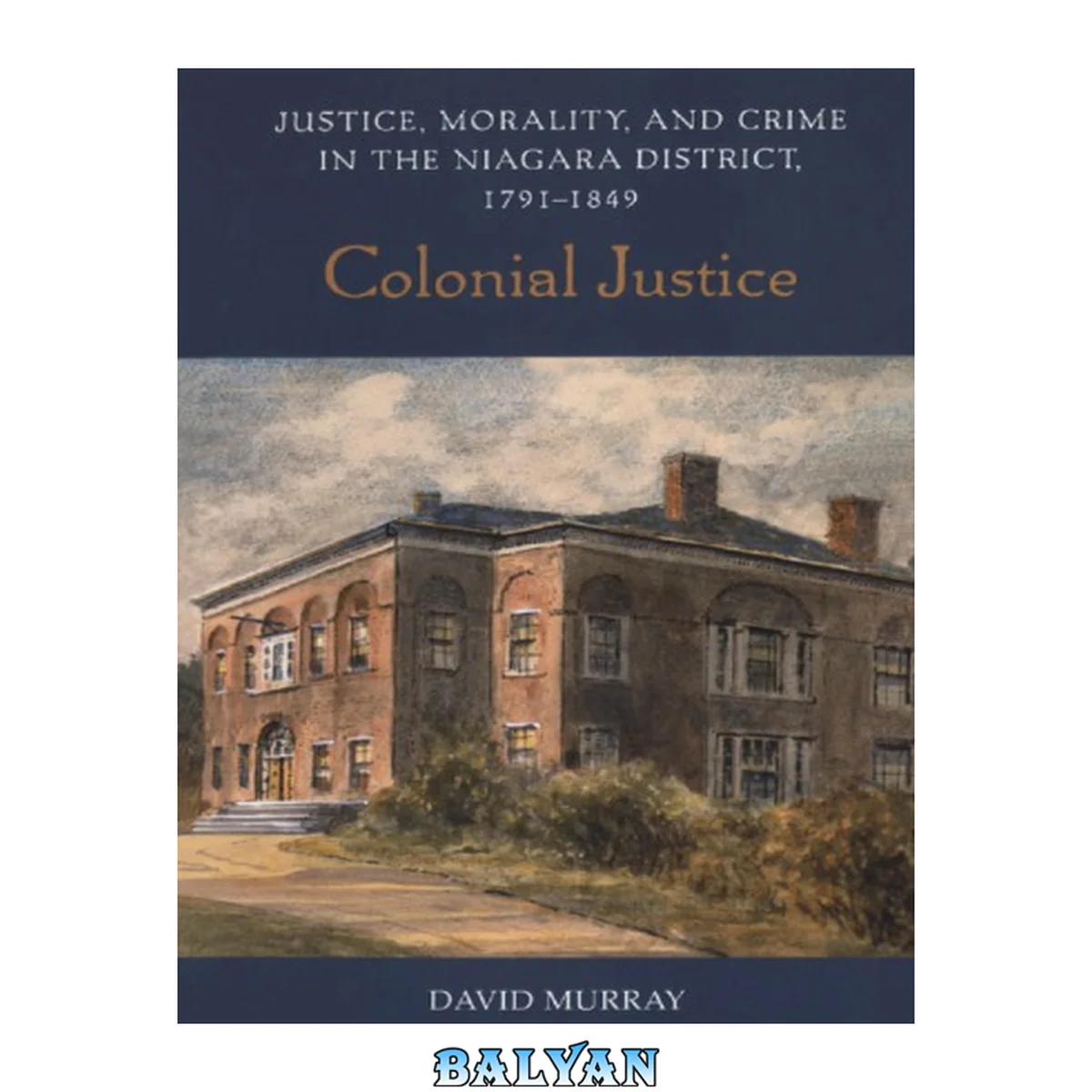
معرفی کتاب «Colonial Justice: Justice, Morality, and Crime in the Niagara District, 1791-1849 (Osgoode Society for Canadian Legal History)» نوشتهٔ David R. Murray; Osgoode Society for Canadian Legal History، منتشرشده توسط نشر Published for the Osgoode Society for Canadian Legal History by University of Toronto Press در سال 2002. این کتاب در فرمت pdf، زبان انگلیسی ارائه شده است.
In 1791 when the Constitutional Act created a legislative assembly for Upper Canada, the colonists and their British rulers decreed that the operating criminal justice system in the area be adopted from England, to avoid any undue influence from the nearby United States. In this new study of early Canadian law, David Murray has delved into the court records of the Niagara District, one of the richest sets of criminal court records surviving from Upper Canada, to analyze the criminal justice system in the district during the first half of the nineteenth century. Murray explores how far local characteristics affected the operation of a criminal justice system transplanted from England; his analysis includes how legal processes affected Upper Canadian morality, the treatment of the insane, welfare cases, crimes committed in the district, and an examination of the roles of the Niagara magistrates, constables, and juries. Murray concludes by arguing that while the principles and culture of British justice were firmly implanted in the Niagara district, this did not prevent justice from being unequal, especially for women and visible minorities. Integrating the stories of the individuals caught up in the legal system, Murray explores law from a local perspective, and illuminates how the Niagara region's criminal justice system operated under hybrid influences from both Britain and the United States. Using the court records of the Niagara District, one of the richest sets of criminal court records surviving from Upper Canada, the author explores how far local characteristics affected the operation of a criminal justice system transplanted from England. His analysis includes: how legal processes affected Upper Canadian morality; the treatment of the insane; welfare cases; crimes committed in the district; and an examination of the roles of the Niagara magistrates, constables, and juries. The author concludes by arguing that while the principles and culture of British justice were firmly implanted in the Niagara district, this did not prevent justice from being unequal, especially for women and visible minorities. Integrating the stories of the individuals caught up in the legal system, the book explores law from a local perspective, and illuminates how the Niagara region's criminal justice system operated under hybrid influences from both Britain and the United States "In 1791, when the Constitutional Act created a legislative assembly for Upper Canada, the colonists and their British rulers decreed that the operating criminal justice system in the area be adopted from England, to avoid any undue influence from the nearby United States. In this study of early Canadian law, David Murray delves into the court records of the Niagara District, one of the richest sets of criminal court records surviving from Upper Canada, to analyse the criminal justice system in the district during the first half of the nineteenth century."--Jacket
دانلود کتاب Colonial Justice: Justice, Morality, and Crime in the Niagara District, 1791-1849 (Osgoode Society for Canadian Legal History)