Church - Paradox and Mystery
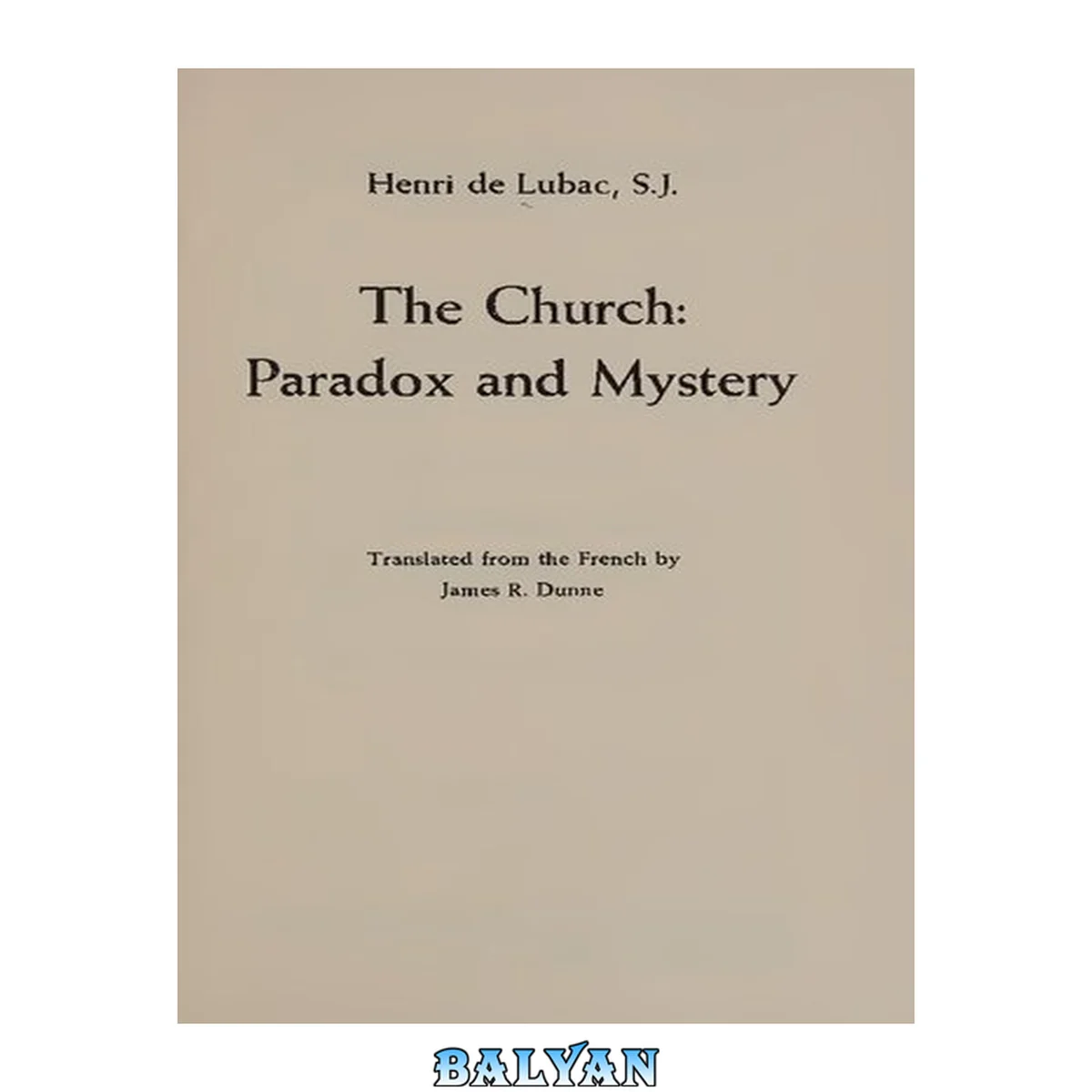
معرفی کتاب «Church - Paradox and Mystery» نوشتهٔ Charles، Dickens و Henri de Lubac، منتشرشده توسط نشر Alba House در سال 1969. این کتاب در فرمت pdf، زبان انگلیسی ارائه شده است.
Oliver nace y crece en un orfanato parroquial. Con nueve años es enviado a trabajar en una funeraria. Huye y cae en un grupo de ladronzuelos callejeros dirigidos por Fagin, un judío usurero, y unidos a un delincuente violento de nombre Sikes.
Publishers Weekly
The inimitable Martin Jarvis brings his talents to bear on Charles Dickens's classic in an audiobook that will delight listeners with its superb recreations of gritty 19th-century London. To escape Mr. Bumble and life in the workhouse, Oliver flees to London where he meets the Artful Dodger and becomes embroiled with Fagin's ragtag band of thieves. Jarvis simply dazzles: his performance captures both the humor and sorrow of the text, his narration is crisp, and his characterizations--his rendition of the terrifying district magistrate, Mr. Fang, is particularly memorable--are as varied as they are energetic, befitting, and enjoyable. (June)
One of the great novelist's most popular works, Oliver Twist is also the purest distillation of Dickens's genius. This tale of the orphan who is reared in a workhouse and runs away to London is a novel of social protest, a morality tale, and a detective story. Oliver Twist presents some of the most sinister characters in Dickens: the master thief, Fagin; the leering Artful Dodger; the murderer, Bill Sikes...along with some of his most sentimental and comical characters. Only Dickens can give us nightmare and daydream together. According to George Orwell, “in Oliver Twist...Dickens attacked English institutions with a ferocity that has never since been approached. Yet he managed to do it without making himself hated, and, more than this, the very people he attacked have welcomed him so completely that he has become a national institution himself.”With an Introduction by Frederick Buschand an Afterword by Edward Le Comte One of the great novelist's most popular works, Oliver 'Twist is also the purest distillation of Dickensk genius. This tale of the orphan who is reared in a workhouse and runs away to London is a noyel of social protest, a morality tale, and a detective story, Oliver "lil'ist presents some of the most sinister characters in Dickens—th nnster thief Fagin; the leering Artful Dodger; the murderer Sikes—along with some of his most sentimental and comiCal characters. Only Dickens can give us nightmare and da 'dream together. According to George Orv :il, "in Oliver Tivist... ickens attacked English institutions cith a ferocity that has never since been approached. Yet he managed to do it without making hilnself hated, and, more than this, the very people he attacked have welcolned hilli so conlpletely that he has become a national institution himself." SUMMARY: Nine-year-old Oliver has spent his life in a workhouse orphanage, where he becomes notorious for daring to ask for more food. Frustrated and hungry, he runs away to London, where he falls into the company of a gang of clever pickpockets, including Fagin, Bill Sykes, and the Artful Dodger. Oliver鈥檚 future looks uncertain, until a mysterious plot against him is unraveled by the kind Mr. Brownlow. What will become of poor Oliver Twist? Fiction,General,England,London (England),Europe,Classics,Juvenile Fiction,Children's Books,Children: Grades 4-6,Ages 9-12 Fiction,YA),People & Places,Family,Children's Fiction,Criminals,Classic fiction (Children's,Family - Orphans & Foster Homes,Orphans,Orphans & Foster Homes,Dickens; Charles; 1812-1870,Law & Crime,Robbers and outlaws AMONG other public buildings in a certain town, which for many reasons it will be prudent to refrain from mentioning, and to which I will assign no fictitious name, there is one anciently common to most towns, great or small: to wit, a work-house; and in this work-house was born-on a day and date which I need not trouble myself to repeat, inasmuch as it can be of no possible consequence to the reader, in this stage of the business at all events-the item of mortality whose name is prefixed to the head of this chapter. After Oliver Twist asks for more food, he has to flee the workhouse for the streets of London. Here he meets the Aftful Dodger, who leads him to Fagin and his gang of pickpockets. When a thieving mission goes wrong, Oliver narrowly avoids prison and finds himself in the care of kind Mr Brownlow. But Fagin and the brutal Bill Sikes go in search of the young orphan, determined to drag him back ... [from back cover] After orphan Oliver Twist asks for more food, he has to flee the workhouse and ends up on the streets of London. There he meets the Artful Dodger, who leads him to Fagin and his gang of pickpockets. When a thieving mission goes wrong, Oliver narrowly avoids prison and finds himself in the care of kind Mr. Brownlow. But Fagin and the brutal Bill Sikes go in search of the young orphan, determined to drag him back. The novel contains some of the author's most enduring characters, such as Oliver himself who dares to ask for more, the tyrannical Bumble, the diabolicat Fagin, Bill Sikes, Nancy and the 'Artful Dodger'. This is without doubt, one of the essential Dickens titles for any reader wishing to delve into the works of the great Victorian literary colossus Named a "national institution" by George Orwell, Dickens offers his most popular tale, of the orphan who is reared in a workhouse and runs away to London-a novel of social protest, a morality tale, and a detective story Presents the text to the Charles Dickens' classic novel "Oliver Twist" about an orphan who is raised in a workhouse and who eventually runs away to London A poor orphan's adventures in the criminal underworld of mid-nineteenth-century London are the central theme of Dickens's second major novel. Reissue. Portrays the adventures of poor orphan Oliver Twist in the criminal underworld of mid-nineteenth-century London Story of London underworld and a boy's struggle to escape from the environment of crime