Change and continuity in the prehistoric rock art of east Siberia : an archaeological and anthropological exploration into ethno-cultural identity, belonging, and symbolism
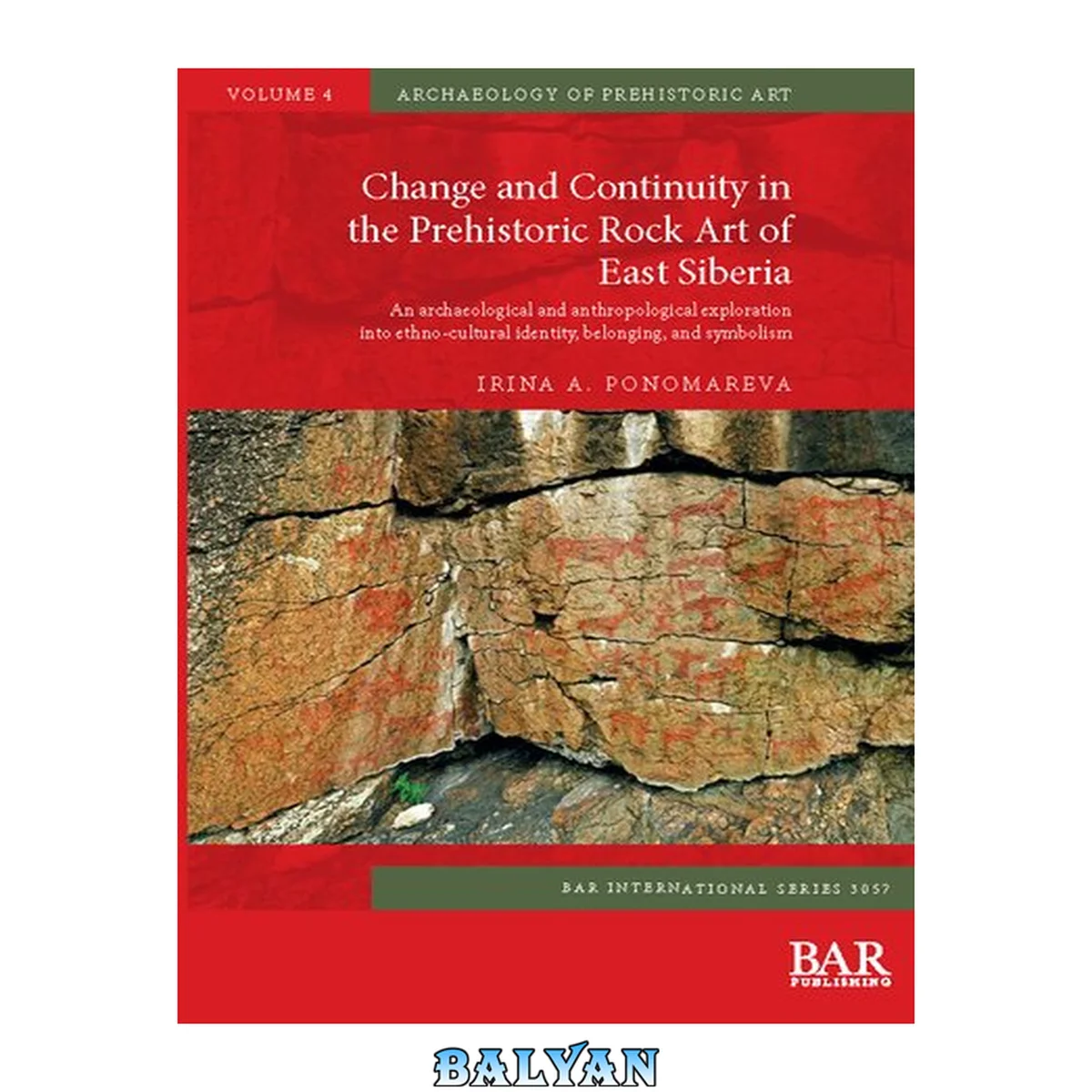
معرفی کتاب «Change and continuity in the prehistoric rock art of east Siberia : an archaeological and anthropological exploration into ethno-cultural identity, belonging, and symbolism» نوشتهٔ Irina Aleksandrovna Ponomareva، منتشرشده توسط نشر BaR Publishing. این کتاب در فرمت pdf، زبان انگلیسی ارائه شده است.
This book covers an extensive region of East Siberia, considering prehistoric ethno-cultural and social processes through the development of rock art styles and traditions. It addresses the questions of why rock art is created, why specific styles and traditions emerge and why changes in rock art occur. These questions are explored through anthropological perspectives on ethnicity, identity, and symbolism. A reader will find a comprehensive overview of the developments of rock art research in Siberia as well as detailed accounts of the regional archaeology in the Bronze/Iron ages, the Neolithic, and partially the Late Paleolithic. Importantly, this study is primarily fieldwork-based, presenting information on 108 rock art sites in Yakutia and Trans-Baikal. It is a major contribution to Siberian and global rock art research and suggests new directions for future rock art research. Front Cover Title Page Copyright Page Archaeology of Prehistoricart Titles in the Series Of Related Interest Acknowledgements Contents List of Figures List of Tables Abstract 1. Introduction 1.1. Research questions, methodology and relevance of study 1.2. Background and setting 1.3. Chronology and dates 1.4. Book structure 2. In Search of Rock Art Sites. Fieldwork, Results, Materials 2.1. Fieldwork 2.1.1. Fieldwork goals 2.1.2. Fieldwork overview 2.1.2.1. Route 1. Zabaykalsky Krai 2.1.2.2. Route 2. Yakutia 2.1.2.3. Route 3. Buryatia 2.1.3. Rock art recording 2.2. Initial data handling 2.2.1. Data processing 2.2.2. Primary data analysis 2.3. Results of rock art surveys in 2017 2.3.1. Yakutia 2.3.2. Zabaykalsky Krai 2.3.3. Buryatia 2.4. Conclusion 3. In Search of Rock Art In Siberia. History 3.1. Russian Empire period 3.2. Soviet/Russian period 3.2.1. The 1920s–1930s 3.2.2. The 1940s–1970s 3.2.3. The 1970s–1980s 3.2.4. The 1990s–2000s 3.3. Conclusion 4. In Search of Ethnic Groups and Ethnicity in Rock Art. Developments and Perspectives 4.1. Origin of the term and early categorisations of people entities 4.2. Soviet/Russian concepts 4.3 American and British concepts of ethnicity 4.4. Further relevant ideas and viewpoints about ethnicity 4.5. Style and identity in rock art studies 4.6. A new working definition of style 4.7. Conclusion 5. Ethno-cultural Continuity in the Rock Art of East Siberia: In Search of the Earliest Images 5.1. Debates on the Paleolithic rock art of Siberia: a review 5.2. Trans-Baikal rock art province 5.2.1. Discoveries and new perspectives 5.2.2. Shaman-Gora rock art site 5.2.2.1. Paleoenvironmental context 5.2.2.2. Attribution of motifs 5.2.2.3. Chronology 5.2.2.4. Archaeological context 5.2.2.5. Continuity vs. discontinuity in the rock art production at the Shaman-Gora rock art site 5.2.3. The ‘Byrka’ style 5.3. The Lower Amur Basin: the longest petroglyphic tradition 5.3.1. Motifs 5.3.2. Chronology 5.3.3. ‘Structuring structures’ in the Lower Amur petroglyphic tradition 5.4. Conclusion. Change is where continuity begins 6. Neolithic Rock Art and Negotiation of Ethno-Cultural Identities 6.1 East Siberia in the Neolithic Age 6.1.1. Cis-Baikal 6.1.1.1. Early Neolithic mortuary traditions 6.1.1.2. Late Neolithic mortuary traditions 6.1.1.3. Stratified habitation sites 6.1.1.4. The question of continuity/discontinuity in the Neolithic – Bronze Age history of the Cis-Baikal region 6.1.2. Yakutia 6.1.3. Trans-Baikal 6.1.4. Summary 6.2. Neolithic rock art of East Siberia: a review 6.2.1. Cis-Baikal 6.2.2. Yakutia 6.2.3. Trans-Baikal 6.3. Angara rock art style and the emergence of ethno-cultural identity 6.3.1. The Angara rock art style in time and space 6.3.2. The emergence of ethno-cultural identity 6.4. Conclusion 7. Bronze Age Rock Art of East Siberia. Unravelling Manifold Identities 7.1. East Siberia in the Bronze-Iron Ages 7.1.1. Eneolithic and Early Bronze Ages 7.1.1.1. Cis-Baikal 7.1.1.2. Yakutia in the 3rd -2nd Millennia BC 7.1.1.3. Trans-Baikal 7.1.2. Late Bronze – Iron Ages 7.1.3. Summary 7.2. The diversity of Bronze age rock art: an introduction 7.2.1. Taiga Early Bronze Age rock art 7.2.2. Steppe Bronze Age rock art of East Siberia 7.3. Painted rock art tradition of Trans-Baikal 7.3.1. Motifs, typology, and spatial distribution 7.3.1.1. Non-figurative 7.3.1.2. Anthropomorphs 7.3.1.3. Ornithomorphs 7.3.1.4. Enclosures 7.3.1.5. Zoomorphs (quadrupeds) 7.3.1.6. Selenga tradition defined 7.3.2. Selenga rock art tradition in time and space 7.3.2.1. Early Bronze Age components 7.3.2.2. Karasuk-period components 7.3.2.3. Mongolian-Trans-Baikal style 7.3.2.4. Scythian-period complex: zoomorphs 7.3.2.5. Autochthonous component: Ornithomorphs 7.4. Kyakhta group: preliminary approach 7.5. Early nomadic rock art of Trans-Baikal. Manifold identities unravelled 7.6. Conclusion 8. Conclusion 8.1. Summary 8.2. Key contribution to the field 8.3. Future directions and perspectives References Back Cover The volume covers a huge region of East Siberia, considering prehistoric ethno-cultural and social processes through the development of rock art styles and traditions. This study addresses the questions of why rock art is created, why specific styles and traditions emerge and why changes in rock art occur. These questions are explored through anthropological perspectives on ethnicity, identity, and symbolism. A reader will find a comprehensive overview of the developments of rock art research in Siberia as well as detailed accounts of the regional archaeology in the Bronze/Iron ages, the Neolithic, and partially the Late Paleolithic. Importantly, this study is primarily fieldwork-based, presenting information on 108 rock art sites in Yakutia and Trans-Baikal. This work makes a major contribution to Siberian and global rock art research and suggests new directions for future rock art research This title covers an extensive region of East Siberia, considering prehistoric ethno-cultural and social processes through the development of rock art styles and traditions. It addresses the questions of why rock art is created, why specific styles and traditions emerge and why changes in rock art occur. These questions are explored through anthropological perspectives on ethnicity, identity, and symbolism. A reader will find a comprehensive overview of the developments of rock art research in Siberia as well as detailed accounts of the regional archaeology in the Bronze/Iron ages, the Neolithic, and partially the Late Paleolithic. Importantly, this study is primarily fieldwork-based, presenting information on 108 rock art sites in Yakutia and Trans-Baikal. It is a major contribution to Siberian and global rock art research and suggests new directions for future rock art research The book offers a detailed study of large corpus of rock art which is little known to an international audience. The book covers not only a huge region of East Siberia but also a period spanning from Late Paleolithic to the Iron Age, providing detailed accounts of the regional archaeology and rock art through the perspective of ethnicity, identity, and symbolism.
دانلود کتاب Change and continuity in the prehistoric rock art of east Siberia : an archaeological and anthropological exploration into ethno-cultural identity, belonging, and symbolism