Cathedrals of steam : how London's great stations were built - and how they transformed the city
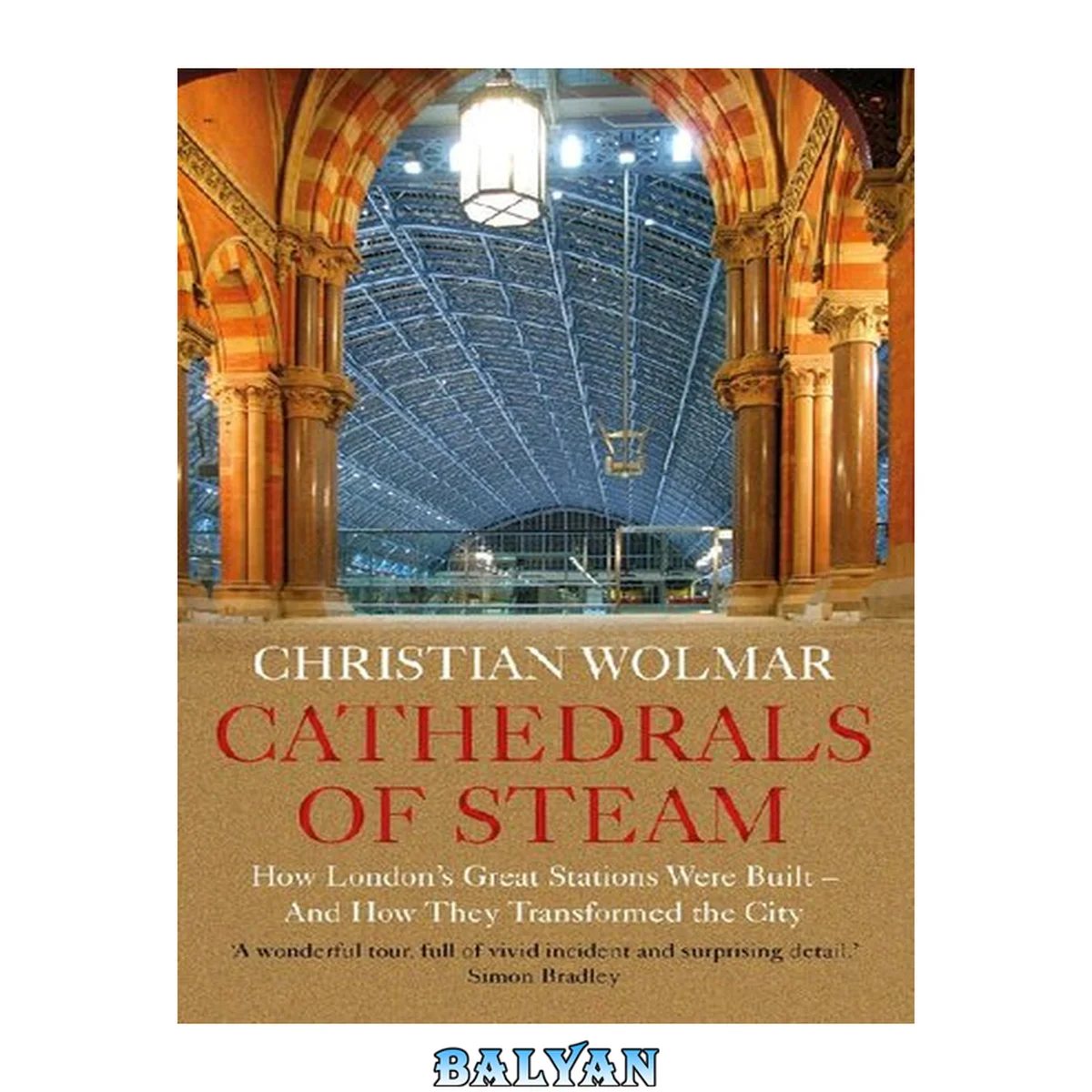
معرفی کتاب «Cathedrals of steam : how London's great stations were built - and how they transformed the city» نوشتهٔ Christian Wolmar، منتشرشده توسط نشر Atlantic Books در سال 2020. این کتاب در فرمت epub، زبان انگلیسی ارائه شده است.
**'London's twelve great rail termini are the epic survivors of the Victorian age... Wolmar brings them to life with the knowledge of an expert and the panache of a connoisseur.'** **Simon Jenkins** **'A wonderful tour, full of vivid incident and surprising detail.' Simon Bradley** London hosts twelve major railway stations, more than any other city in the world. They range from the grand and palatial, such as King's Cross and Paddington, to the modest and lesser known, such as Fenchurch Street and Cannon Street. These monuments to the railway age are the hub of London's transport system and their development, decline and recent renewal have determined the history of the capital in many ways. Built between 1836 and 1899 by competing private railway companies seeking to outdo one another, the construction of these terminuses caused tremendous upheaval and had a widespread impact on their local surroundings. What were once called 'slums' were demolished, green spaces and cemeteries were concreted over, and vast marshalling yards, engine sheds and carriage depots sprung up in their place. In a compelling and dramatic narrative, Christian Wolmar traces the development of these magnificent cathedrals of steam, provides unique insights into their history, with many entertaining anecdotes, and celebrates the recent transformation of several of these stations into wonderful blends of the old and the new. London hosts twelve major railway stations, more than any other city in the world. They range from the grand and palatial, such as King's Cross and Paddington, to the modest and lesser known, such as Fenchurch Street and Cannon Street. These monuments to the railway age are the hub of London's transport system and their development, decline and recent renewal have determined the history of the capital in many ways.0Built between 1836 and 1899 by competing private railway companies seeking to outdo one another, the construction of these terminuses caused tremendous upheaval and had a widespread impact on their local surroundings. What were once called 'slums' were demolished, green spaces and cemeteries were concreted over, and vast marshalling yards, engine sheds and carriage depots sprung up in their place.0In a compelling and dramatic narrative, Christian Wolmar traces the development of these magnificent cathedrals of steam, provides unique insights into their history, with many entertaining anecdotes, and celebrates the recent transformation of several of these stations into wonderful blends of the old and the new The eminent transport historian Christian Wolmar describes how London's great railway terminuses were built and how, as 'massive disruptive forces whose impact stretched well beyond their boundaries', they transformed the city. From the opening of London Bridge Station in 1836 to the completion of Marylebone in 1899, Wolmar describes the cutting-edge technology and the Gothic and classically inspired architecture that came together in the development of the city's twelve major railway stations. The epic story of London's major railway stations, by Britain's bestselling transport historian.
دانلود کتاب Cathedrals of steam : how London's great stations were built - and how they transformed the city