Carbon Composites : Composites with Nanotubes, Nanomaterials, and Graphene Oxide
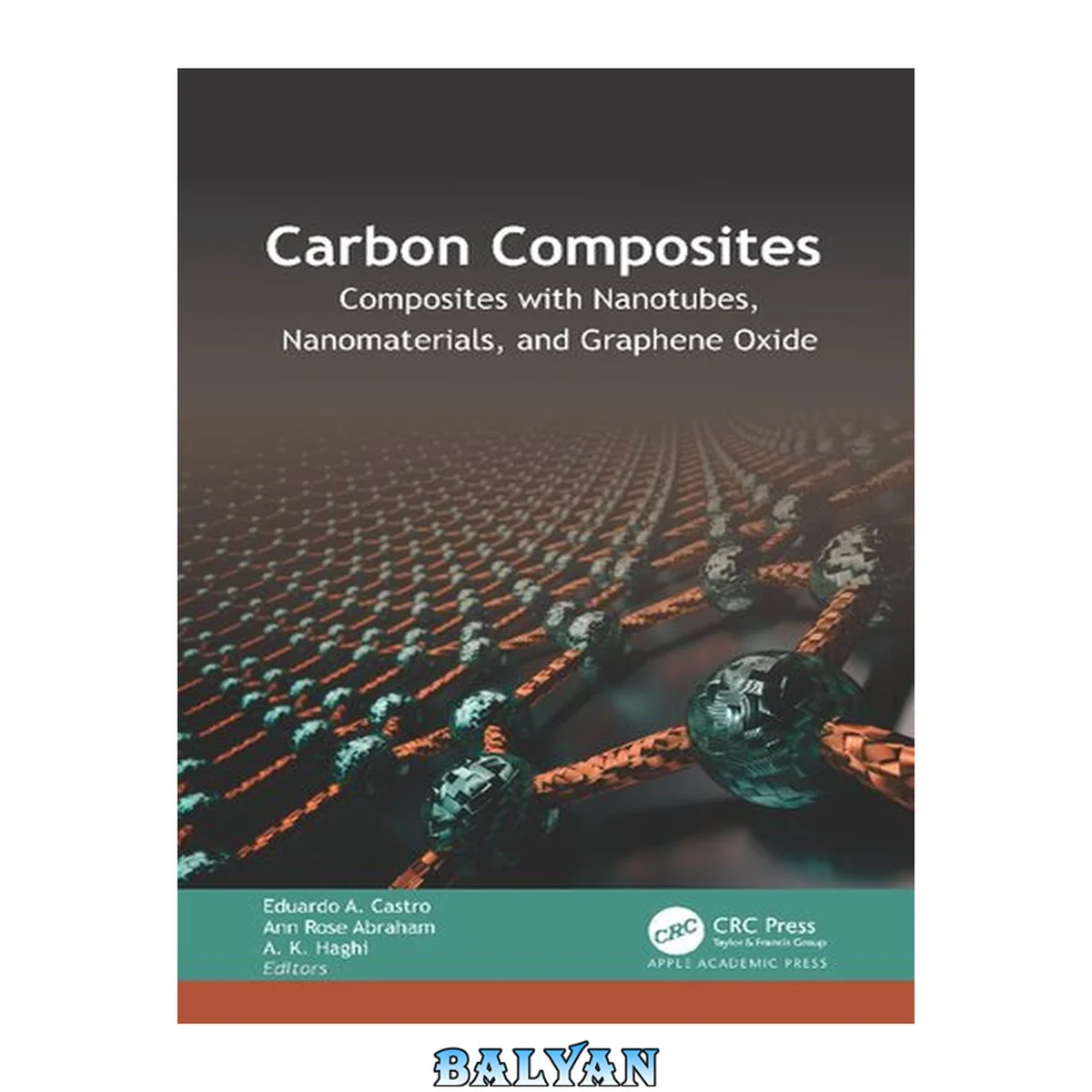
معرفی کتاب «Carbon Composites : Composites with Nanotubes, Nanomaterials, and Graphene Oxide» نوشتهٔ Eduardo Alberto Castro; Ann Rose Abraham; A. K. Haghi، منتشرشده توسط نشر Apple Academic Press در سال 2023. این کتاب در فرمت pdf، زبان انگلیسی ارائه شده است.
This volume demonstrates the unique place in nanotechnology and nanoscience that carbon nanomaterials occupy owing to their exceptional chemical, mechanical, thermal, and electrical properties. Carbon nanomaterials have diverse applications in super strong composite materials, smart sensors, energy storage and conversion, super-capacitors, and more. Focusing on materials rather than mechanics, this volume discusses the key roles of materials science and engineering in the development of composite materials. The result of research by many highly qualified experts in the field of experimental and theoretical research on graphene and its derivatives, the volume describes experimental methods for obtaining and characterizing samples of chemically modified graphene. It reviews the potential application areas and modifications of graphene-based composite materials and interprets the interesting physical effects discovered for the first time for graphene materials under consideration. This book covers the innovative methodologies and strategies adopted in carbon materials research area including: Synthesis, characterization, and functionalization of carbon nanotubes and graphene Surface modification of graphene Carbon-based nanostructured materials The use of carbon nanomaterials for energy applications Development of carbon nanotubes reinforced metal matrix composites and non-metallic composites and their myriad potential end-use applications Key challenges to the successful and widespread implementation of carbon nanotubes reinforced metal matrix composites and non-metallic composites Methods for quantification and improved control of carbon nanotubes distributions Recent research and design trends for carbon nanomaterials-based sensors for a variety of applications. Advances and potential applications in environmental monitoring and healthcare. The book will be useful for postgraduate students and researchers as well as for experts in industrial sectors. It will also appeal to those involved in materials science and nanotechnology. Demonstrates the unique place in nanotechnology and nanoscience that carbon nanomaterials occupy owing to their exceptional chemical, mechanical, thermal, and electrical properties. Focusing on materials rather than mechanics, it discusses the key roles of materials science and engineering in the development of composite materials. Cover Half Title Carbon Composites: Composites with Nanotubes, Nanomaterials, and Graphene Oxide Copyright About the Editors Contents Contributors Abbreviations Preface 1. Carbon Nanotubes as Metal-Free Catalysts ABSTRACT 1.1. INTRODUCTION 1.2. PREPARATION AND MORPHOLOGICAL STUDIES OF CARBON NANOTUBES (CNTS) 1.3. CARBON NANOTUBES (CNTS) AS CATALYSTS 1.3.1. PRISTINE CNTS AS CATALYSTS 1.3.2. MODIFIED CNTS AS CATALYSTS 1.4. CONCLUSION KEYWORDS REFERENCES 2. Carbon Nanomaterials for Sensing Applications ABSRTACT 2.1 INTRODUCTION 2.1.1. CARBON ALLOTROPES 2.1.2. UNIQUE PROPERTIES OF CARBON NANOMATERIALS 2.1.3. CARBON NANOMATERIALS: SYNTHESIS AND CHARACTERIZATIONS 2.2. TYPE OF CARBON-BASED NANOMATERIAL 2.2.1. CDS AND GQDS 2.2.2. GRAPHENE 2.2.3. CARBON NANOTUBES (CNTS) 2.3. TYPE OF CARBON NANOMATERIAL-BASED SENSORS 2.3.1. CARBON-DERIVED MATERIALS FOR OPTICAL SENSING 2.3.2. CARBON-BASED NANOMATERIALS FOR ELECTROCHEMICAL SENSORS 2.3.3. ENVIRONMENTAL POLLUTANT SENSORS 2.4. CONCLUSION KEYWORDS REFERENCES 3. Carbon Nanotubes and Their Environmental Applications ABSTRACT 3.1 INTRODUCTION 3.2. A BRIEF HISTORICAL CHEMICAL BACKGROUND OF SOME ALLOTROPES OF CARBON 3.2.1. GRAPHITE 3.2.2. DIAMOND 3.2.3. GRAPHENE AND GRAPHENE-DERIVED MATERIALS 3.2.4. ACTIVATED CARBON (AC) 3.3. CARBON NANOTUBES (CNTS) 3.3.1. PROPERTIES OF CARBON NANOTUBES (CNTS) 3.4. ENVIRONMENTAL APPLICATIONS OF CARBON NANOTUBES (CNTS) 3.4.1. ENERGY APPLICATIONS 3.4.2. WASTE WATER TREATMENT APPLICATION OF CNTS 3.4.3. CNTS FOR CONTROLLING AIR POLLUTION 3.4.4. ACTIVATED CARBON (AC) COATED WITH MULTI-WALLED CARBON NANOTUBES (MWCNTS) FOR REMOVING ANTIBIOTIC MATERIALS 3.4.5. CATALYTIC APPLICATIONS OF CNTS 3.5. CONCLUSION ACKNOWLEDGMENT KEYWORDS REFERENCES 4. Graphene Oxide-Based Nanocomposites for Wastewater Treatment 4.1. INTRODUCTION 4.2. PPCP REMOVAL USING NOVEL GO NANOCOMPOSITES (NCS) 4.2.1. GO-POLYMER NANOCOMPOSITE (NC) 4.2.2. GO-CERAMIC NANOCOMPOSITES (NCS) 4.2.3. GO-METAL/METAL OXIDE NANOCOMPOSITE (NC) 4.3. APPLICATION OF GO NANOCOMPOSITES (NCS) FOR PCPP REMOVAL 4.3.1. ADSORPTION 4.3.2. ACTIVE OXIDATIVE PROCESSES 4.3.3. MEMBRANE FILTRATION 4.4. PROCESS PARAMETERS AFFECTING PPCP REMOVAL FROM WASTE WATER 4.4.1. PH OF THE SOLUTION 4.4.2. DOSE OF THE ADSORBENT 4.4.3. DOSAGE OF GO IN NANOCOMPOSITE (NC) 4.5. PROCESS OPTIMIZATION CONCERNING THE REMOVAL OF PPCP BY GO-BASED NANOCOMPOSITES(NCS) 4.5.1. RESPONSE SURFACE METHODOLOGY (RSM) 4.5.2. ARTIFICIAL NEURAL NETWORK (ANN) 4.6. CONCLUSION KEYWORDS REFERENCES 5. Carbon-Based Nanomaterials for Energy Storage: A Review ABSTRACT 5.1. INTRODUCTION 5.2. CARBON AND ITS SOURCES 5.2.1. BIOMASS SOURCES 5.2.2. PITCH-BASED SOURCES 5.3. APPLICATION IN ENERGY STORAGE 5.3.1. CARBON FOR SUPERCAPACITORS 5.3.2. CARBON FOR BATTERIES 5.4. CONCLUSION KEYWORDS REFERENCES 6. Carbon Nanotubes and Their Biotechnological and Biomedical Applications 6.1. INTRODUCTION 6.2. CARBON NANOTUBES (CNTS) AS BIOSENSORS 6.2.1. CNT-BASED BIOSENSORS FOR PROTEIN BIOMARKERS 6.2.2. CNT-BASED BIOSENSORS FOR NUCLEIC ACIDS BIOMARKERS 6.3. CARBON NANOTUBES (CNTS) IN BIOMEDICAL IMAGING 6.3.1. IN VITRO PHOTOLUMINESCENCE IMAGING 6.3.2. IN VITRO RAMAN IMAGING 6.3.3. SWNTS FOR IN VIVO ANIMAL IMAGING 6.4. CARBON NANOTUBES (CNTS) IN DRUG AND GENE DELIVERY 6.5. TISSUE ENGINEERING AND REGENERATIVE MEDICINE 6.6. CONCLUSION KEYWORDS REFERENCES 7. Carbon Nanomaterials for Hydrogen Gas Sensing Applications ABSTRACT 7.1. NEED FOR H2 SENSORS 7.2. METAL-BASED H2 SENSORS 7.3. BIMETALS-BASED H2 SENSORS 7.4. CARBON-BASED H2 GAS SENSORS 7.4.1. CNT-BASED H2 GAS SENSORS 7.4.2. GRAPHENE-BASED H2 SENSORS 7.4.3. CARBON NANOFIBERS (CNFS) 7.5. CNFS-BASED H2 SENSORS 7.6. CONCLUSION KEYWORDS REFERENCES 8. The Changes in Magnetic Properties of Nanostructured Carbon Compounds Destined for Energy Conversion ABSTRACT 8.1. INTRODUCTION 8.2. RESULTS AND DISCUSSION 8.3. CONCLUSION KEYWORDS REFERENCES 9. Factors Influencing Physical and Mechanical Properties of Polymer Composites Modified with Metal/Carbon Nanocomposites ABSTRACT 9.1. INTRODUCTION 9.2. OBJECT OF INVESTIGATION 9.3. EXPERIMENTAL PROCEDURE 9.4. RESULTS AND DISCUSSION KEYWORDS REFERENCES 10. The Metal Carbon Mesocomposites as Base for the Synthesis of Magnetic Compounds by the Redox Processes ABSTRACT 10.1. INTRODUCTION 10.2. THE SHORT SURVEY OF INVESTIGATIONS ON THE MAGNETIC CHARACTERISTICS CHANGES FOR METAL CARBON MESOSCOPIC COMPOSITES 10.3. CONCLUSION KEYWORDS REFERENCES 11. How Mesoscopic Physics Explains the Redox Synthesis of Metal/Carbon Nanocomposites Within Polymeric Matrices Nanoreactors ABSTRACT 11.1. INTRODUCTION 11.2. THE FORMATION OF MESOREACTORS, FILLED BY METAL CONTAINING PHASE 11.3. FUNDAMENTAL NOTIONS AND THEORETICAL BASIS FOR THE MESOSCOPIC PHYSICS APPLICATION TO THE NANOSTRUCTURES FORMATION WITHIN NANOREACTORS а. Embryo formation and crystal growth in polymers [6]: b. Graphitization process with the formation of carbon nanostructures [8, 9]: c. Process of fiber formation [7]: 11.4. METAL/CARBON NANOCOMPOSITES (MET/C NC) PROPERTIES, ESPECIALLY ENERGETIC CHARACTERISTICS 11.5. CONCLUSION KEYWORDS REFERENCES 12. New Trends in Chemical Mesoscopics ABSRTACT 12.1. INTRODUCTION 12.2. CHEMICAL MESOSCOPICS IDEAS IN THE CHEMICAL REACTIONS OF MATERIAL OBTAINING 12.3. THE CONFIRMATIONS OF ABOVE NOTIONS ON THE EXAMPLES OF THE METAL CARBON MESOSCOPIC COMPOSITES MODIFICATION 12.4. THE INFLUENCE OF METAL CARBON MESOCOMPOSITES ON THE POLYMERIC 12.5. THE PROPOSAL FOR THE ESTIMATION OF NANOSTRUCTURES REACTIVITY ESTIMATION KEYWORDS REFERENCES 13. Carbon Nanotube as a Promising Nanomaterial for Water Treatment ABSTRACT 13.1. INTRODUCTION 13.2. CNT-BASED ADSORPTION FOR WASTEWATER TREATMENT 13.2.1. ADSORPTION OF POLLUTANTS IN WATER BY UNMODIFIED CNTS 13.2.2. WASTEWATER TREATMENT BY ADSORPTION USING MODIFIED CNT SYSTEMS 13.3. PHOTOCATALYTIC ACTIVITY OF CNTS FOR WASTE WATER TREATMENT 13.3.1. CARBON NANOTUBE-BASED BINARY NANOCOMPOSITES (CNT/SEMICONDUCTOR TYPE) 13.3.2. METAL LOADED CNT NANOCOMPOSITES (METAL/CNT/ SEMICONDUCTOR TYPE) 13.3.3. CNT/SEMICONDUCTOR I/SEMICONDUCTOR II TYPE NANOCOMPOSITES (NC) 13.4. CONCLUSION KEYWORDS REFERENCES Index "This volume demonstrates the unique place in nanotechnology and nanoscience that carbon nanomaterials occupy owing to their exceptional chemical, mechanical, thermal, and electrical properties. Carbon nanomaterials have diverse applications in super strong composite materials, smart sensors, energy storage and conversion, super-capacitors, and more. Focusing on materials rather than mechanics, this volume discusses the key roles of materials science and engineering in the development of composite materials. The result of research by many highly qualified experts in the field of experimental and theoretical research on graphene and its derivatives, the volume describes experimental methods for obtaining and characterizing samples of chemically modified graphene. It reviews the potential application areas and modifications of graphene-based composite materials and interprets the interesting physical effects discovered for the first time for graphene materials under consideration. This book covers the innovative methodologies and strategies adopted in carbon materials research area including: Synthesis, characterization, and functionalization of carbon nanotubes and graphene; Surface modification of graphene Carbon-based nanostructured materials; The use of carbon nanomaterials for energy applications; Development of carbon nanotubes reinforced metal matrix composites and non-metallic composites and their myriad potential end-use applications; Key challenges to the successful and widespread implementation of carbon nanotubes reinforced metal matrix composites and non-metallic composites; Methods for quantification and improved control of carbon nanotubes distributions; Recent research and design trends for carbon nanomaterials-based sensors for a variety of applications; Advances and potential applications in environmental monitoring and healthcare."-- Provided by publisher
دانلود کتاب Carbon Composites : Composites with Nanotubes, Nanomaterials, and Graphene Oxide