Between Roman Culture and Local Tradition : Roman Provincial Coinage of Bithynia and Pontus During the Reign of Trajan (98-117 AD)
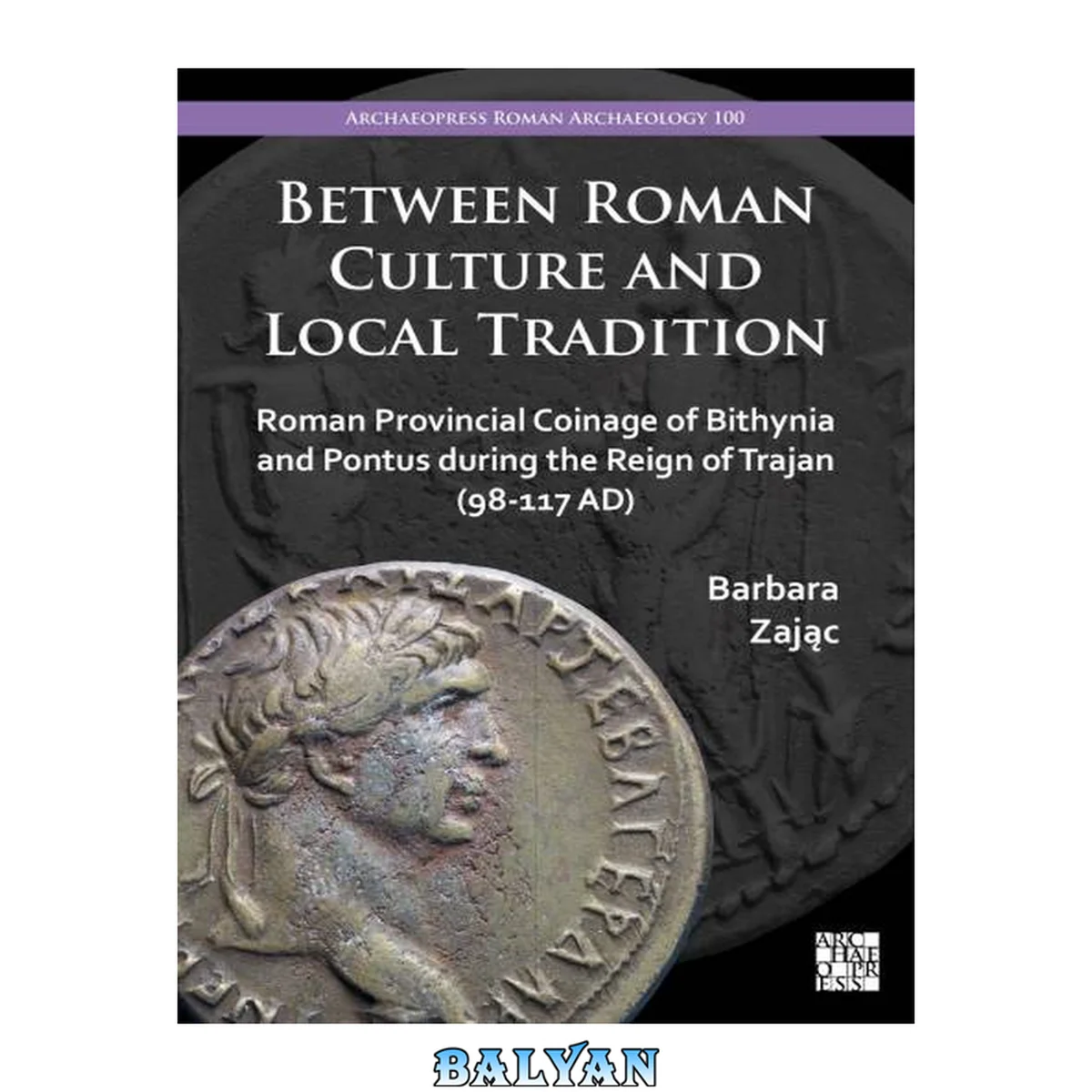
معرفی کتاب «Between Roman Culture and Local Tradition : Roman Provincial Coinage of Bithynia and Pontus During the Reign of Trajan (98-117 AD)» نوشتهٔ Barbara Zając، منتشرشده توسط نشر Archaeopress Archaeology در سال 2023. این کتاب در فرمت pdf، زبان انگلیسی ارائه شده است.
Between Roman Culture and Local Tradition presents a detailed analysis of the Roman provincial coinage of Bithynia and Pontus during the reign of Trajan (98-117), when 14 cities struck coins. The book characterises individual mints, the rhythm of monetary production, iconography and legends, and considers the attribution and dating of individual issues. Context is provided by studies on other categories of artefacts discovered in the local area, including epigraphic and material ones, such as fine art, sculptures and architectural remains. The extent of circulation is also analysed, as well as the coinage of the border centres of neighbouring provinces such as Thrace, Asia and Galatia-Cappadocia. Reference is made to historical sources, principally the correspondence of Pliny the Younger with the emperor, which can help to show the realities of life for the inhabitants of individual centres, including ongoing construction projects or local problems. Overall the book aims to reconstruct the coinage policy of individual cities and culture and religion in various centres during this period, as well as contacts and relationships among the local communities. In turn, the studies of individual cities allow for the creation of a general picture of coinage in the province. Barbara Zając completed her PhD in 2022 at the Institute of Archaeology, Jagiellonian University, Kraków, Poland. Her interests centre on ancient numismatics, in particular Roman provincial coinage. She is co-ordinator of the Preludium project, financed by the National Science Centre in Poland, entitled: Between Roman culture and Local tradition. The Monetary Policy in Bithynia and Pontus during the reign of Trajan (98-117). She has participated in excavations in Poland, Egypt and Cyprus, and currently works in the Coin Cabinet in the National Museum in Kraków, Poland. Cover 1 Title Page 3 Copyright Page 4 Contents 5 List of Maps and Tables 7 Map 1. Mints in Bithynia and Pontus (© https://rpc.ashmus.ox.ac.uk/map, Accessed: 08.01.2022). 26 Table 1a: Denominations of coins struck in the cities of Bithynia and Pontus during the reign of Trajan. 48 Table 1b: Denominations of coins without an ethnic struck in the cities of Bithynia and Pontus during the reign of Trajan. 49 Table 2a: List of iconographic types on the coins of Bithynia and Pontus during the reign of Trajan. 74 Table 2b: List of iconographic types on the coins of Bithynia and Pontus during the reign of Trajan, taking into account the general message related to individual traditions. 75 Table 3: List of iconographic types on imperial coins probably issued at the Thracian mint between AD 80–82, and on provincial coins of Bithynia and Pontus during the reigns of Domitian and Trajan. 76 Table 4: Coins without an ethnic – possible attributions 144 Table 5a: Numbers of dies used to strike the coins of individual cities in Bithynia and Pontus during the reign of Trajan (n – the number of coins; d – the number of obverse dies; r – the number of reverse dies). 170 Table 5b: Numbers of dies used to strike the coins without an ethnic in Bithynia and Pontus during the reign of Trajan (n – the number of coins; d – the number of obverse dies; r – the number of reverse dies) 170 Table 5c: Numbers of dies used to strike the pseudo-autonomous coins of individual cities in Bithynia and Pontus possibly dated to the reign of Trajan (n – the number of coins; d – the number of obverse dies; r – the number of reverse dies) 170 Table 6a: Numbers of coins, obverse and reverse dies, and the estimated numbers of issued coins in individual centres of Bithynia and Pontus during the reign of Trajan (markings from the Carter tests and formulas are left to assist easier adjustment or ve 171 Table 6b: Numbers of coins, obverse and reverse dies, and the estimated numbers of issued coins without an ethnic in Bithynia and Pontus during the reign of Trajan (markings from the Carter tests and formulas were left to assist easier adjustment or verif 173 Table 7a: Die axes of individual cities of Bithynia and Pontus during the reign of Trajan. 174 Table 7b: Die axes of coins without an ethnic of Bithynia and Pontus struck during the reign of Trajan. 175 Table 8: Countermarks on coins of Bithynia and Pontus struck during the reign of Trajan. 176 Preface 8 Acknowledgements 10 Introduction 12 The Roman Empire and Bithynia and Pontus during the Reign of Trajan 19 I.1. The Roman Empire and financial policy during the reign of Trajan 19 I.2. Roman provinces in the Roman Empire 20 I.3. Bithynia and Pontus during the reign of Trajan 22 Mints in the province of Bithynia and Pontus 26 II.1. Thrace 27 II.2. Bithynia 28 II.3. Paphlagonia 34 II.4. Pontus 38 Chronology 42 Metrology and denominations 47 IV.1. Denominations in the Roman provincial coinage 47 IV.2. Monetary systems in Bithynia and Pontus during the reign of Trajan 52 Iconography and Legends of Coins of Bithynia and Pontus during the Reign of Trajan 72 V.1. Legends of the provincial coins 72 V.2. Iconography of the provincial coins 95 V.3. Iconography of coins of Bithynia and Pontus during the reign of Trajan 99 V.4. Common motifs and prototypes of some coins of Bithynia and Pontus 136 Coins without an ethnic with uncertain attributions 143 VI.1. Group I: Coins with the name of the proconsul Gaius Julius Bassus 146 VI.2. Group II: coins with the legend ΕΙΡΗΝΗ ΣΕΒΑΣΤΗ/ΕΙΡΗΝΗ СΕΒΑСΤΗ 149 VI.3. Group III: Coins with the legend OMONOIA СΕΒΑСΤΗ/OMONOIA 150 VI.4. Group IV: Coins with the legend ΝΕΙΚΗ ϹΕΒΑϹΤΟΥ ΔΑΚ/APME 152 VI.5. Group V: Coins with the legend ΔΗΜΗΤΡΑ CEBACTH 153 VI.6. Group VI: Coins with the legend CEBACTH/ΣΕΒΑΣΤΗ 153 VI.7. Group VII: Coins with the legend CEBACTOY/ΣΕΒΑΣΤOY 154 VI.8. Group VIII: Coins with the legend ΔΙΟС 155 VI.9. Group IX: Coins with the legend KTICTHC 157 VI.10. Group X: Coins with the legend ΔΗΜΗΤΡΟϹ 158 VI.11. Group XI: Coins with the cornucopia 158 VI.12. Group XII: Coins with the serpent staff 159 Pseudo-autonomous coins of Bithynia and Pontus 161 VII.1. Amastris: Dionysus and Helios 164 VII.2. Sinope: Diogenes 165 VII.3. Amisus: Athena 166 VII.4. Byzantium: Artemis, Poseidon, Hermes, Dionysus 167 Production in the provincial centres 169 VIII.1. Production in the centres of Bithynia and Pontus during the reign of Trajan 179 VIII.2. Countermarks 189 Circulation 197 The coinage of Bithynia and Pontus and issues of the neighbouring Roman provinces 206 X.1. The coinage of Thrace 206 X.2. The coinage of Asia 208 X.3. The coinage of Galatia and Cappadocia 210 Summary 213 Plates 216 References 222 Historical Sources 222 Abbreviations 223 References 225 Legends on the coins of Bithynia and Pontus during the reign of Trajan. 260 APAMEA MYRLEA 260 NICAEA 260 PRUSA AD OLYMPUM 260 BYZANTIUM 261 CALCHEDON 261 NICOMEDIA 261 HERACLEA PONTICA 262 IULIOPOLIS 262 PRUSIAS AD HYPIUM 262 TIUM 263 ABONOTEICHOS 264 AMASTRIS 264 SINOPE 264 AMISUS 265 Coins without an ethnic with uncertain attribution 265 Roman Provincial Coinage,Bithynia,Pontus,Trajan,Coins,Numismatics Between Roman Culture and Local Tradition presents a detailed analysis of the Roman provincial coinage of Bithynia and Pontus during the reign of Trajan (98-117), when 14 cities struck coins. The book characterises individual mints, the rhythm of monetary production, iconography and legends, and considers the attribution and dating of individual issues. Context is provided by studies on other categories of artefacts discovered in the local area, including epigraphic and material ones, such as fine art, sculptures and architectural remains. The extent of circulation is also analysed, as well as the coinage of the border centres of neighbouring provinces such as Thrace, Asia and Galatia-Cappadocia. Reference is made to historical sources, principally the correspondence of Pliny the Younger with the emperor, which can help to show the realities of life for the inhabitants of individual centres, including ongoing construction projects or local problems. Overall the book aims to reconstruct the coinage policy of individual cities and culture and religion in various centres during this period, as well as contacts and relationships among the local communities. In turn, the studies of individual cities allow for the creation of a general picture of coinage in the province. Barbara Zając completed her PhD in 2022 at the Institute of Archaeology, Jagiellonian University, Kraków, Poland. Her interests centre on ancient numismatics, in particular Roman provincial coinage. She is co-ordinator of the Preludium project, financed by the National Science Centre in Poland, entitled: Between Roman culture and Local tradition. The Monetary Policy in Bithynia and Pontus during the reign of Trajan (98-117). She has participated in excavations in Poland, Egypt and Cyprus, and currently works in the Coin Cabinet in the National Museum in Kraków, Poland. Cover 1 Title Page 3 Copyright Page 4 Contents 5 List of Maps and Tables 7 Map 1. Mints in Bithynia and Pontus (© https://rpc.ashmus.ox.ac.uk/map, Accessed: 08.01.2022). 26 Table 1a: Denominations of coins struck in the cities of Bithynia and Pontus during the reign of Trajan. 48 Table 1b: Denominations of coins without an ethnic struck in the cities of Bithynia and Pontus during the reign of Trajan. 49 Table 2a: List of iconographic types on the coins of Bithynia and Pontus during the reign of Trajan. 74 Table 2b: List of iconographic types on the coins of Bithynia and Pontus during the reign of Trajan, taking into account the general message related to individual traditions. 75 Table 3: List of iconographic types on imperial coins probably issued at the Thracian mint between AD 80–82, and on provincial coins of Bithynia and Pontus during the reigns of Domitian and Trajan. 76 Table 4: Coins without an ethnic – possible attributions 144 Table 5a: Numbers of dies used to strike the coins of individual cities in Bithynia and Pontus during the reign of Trajan (n – the number of coins; d – the number of obverse dies; r – the number of reverse dies). 170 Table 5b: Numbers of dies used to strike the coins without an ethnic in Bithynia and Pontus during the reign of Trajan (n – the number of coins; d – the number of obverse dies; r – the number of reverse dies) 170 Table 5c: Numbers of dies used to strike the pseudo-autonomous coins of individual cities in Bithynia and Pontus possibly dated to the reign of Trajan (n – the number of coins; d – the number of obverse dies; r – the number of reverse dies) 170 Table 6a: Numbers of coins, obverse and reverse dies, and the estimated numbers of issued coins in individual centres of Bithynia and Pontus during the reign of Trajan (markings from the Carter tests and formulas are left to assist easier adjustment or ve 171 Table 6b: Numbers of coins, obverse and reverse dies, and the estimated numbers of issued coins without an ethnic in Bithynia and Pontus during the reign of Trajan (markings from the Carter tests and formulas were left to assist easier adjustment or verif 173 Table 7a: Die axes of individual cities of Bithynia and Pontus during the reign of Trajan. 174 Table 7b: Die axes of coins without an ethnic of Bithynia and Pontus struck during the reign of Trajan. 175 Table 8: Countermarks on coins of Bithynia and Pontus struck during the reign of Trajan. 176 Preface 8 Acknowledgements 10 Introduction 12 The Roman Empire and Bithynia and Pontus during the Reign of Trajan 19 I.1. The Roman Empire and financial policy during the reign of Trajan 19 I.2. Roman provinces in the Roman Empire 20 I.3. Bithynia and Pontus during the reign of Trajan 22 Mints in the province of Bithynia and Pontus 26 II.1. Thrace 27 II.2. Bithynia 28 II.3. Paphlagonia 34 II.4. Pontus 38 Chronology 42 Metrology and denominations 47 IV.1. Denominations in the Roman provincial coinage 47 IV.2. Monetary systems in Bithynia and Pontus during the reign of Trajan 52 Iconography and Legends of Coins of Bithynia and Pontus during the Reign of Trajan 72 V.1. Legends of the provincial coins 72 V.2. Iconography of the provincial coins 95 V.3. Iconography of coins of Bithynia and Pontus during the reign of Trajan 99 V.4. Common motifs and prototypes of some coins of Bithynia and Pontus 136 Coins without an ethnic with uncertain attributions 143 VI.1. Group I: Coins with the name of the proconsul Gaius Julius Bassus 146 VI.2. Group II: coins with the legend ΕΙΡΗΝΗ ΣΕΒΑΣΤΗ/ΕΙΡΗΝΗ СΕΒΑСΤΗ 149 VI.3. Group III: Coins with the legend OMONOIA СΕΒΑСΤΗ/OMONOIA 150 VI.4. Group IV: Coins with the legend ΝΕΙΚΗ ΣΕΒΑΣΤΟΥ ΔΑΚ/APME 152 VI.5. Group V: Coins with the legend ΔΗΜΗΤΡΑ CEBACTH 153 VI.6. Group VI: Coins with the legend CEBACTH/ΣΕΒΑΣΤΗ 153 VI.7. Group VII: Coins with the legend CEBACTOY/ΣΕΒΑΣΤOY 154 VI.8. Group VIII: Coins with the legend ΔΙΟС 155 VI.9. Group IX: Coins with the legend KTICTHC 157 VI.10. Group X: Coins with the legend ΔΗΜΗΤΡΟΣ 158 VI.11. Group XI: Coins with the cornucopia 158 VI.12. Group XII: Coins with the serpent staff 159 Pseudo-autonomous coins of Bithynia and Pontus 161 VII.1. Amastris: Dionysus and Helios 164 VII.2. Sinope: Diogenes 165 VII.3. Amisus: Athena 166 VII.4. Byzantium: Artemis, Poseidon, Hermes, Dionysus 167 Production in the provincial centres 169 VIII.1. Production in the centres of Bithynia and Pontus during the reign of Trajan 179 VIII.2. Countermarks 189 Circulation 197 The coinage of Bithynia and Pontus and issues of the neighbouring Roman provinces 206 X.1. The coinage of Thrace 206 X.2. The coinage of Asia 208 X.3. The coinage of Galatia and Cappadocia 210 Summary 213 Plates 216 References 222 Historical Sources 222 Abbreviations 223 References 225 Legends on the coins of Bithynia and Pontus during the reign of Trajan. 260 APAMEA MYRLEA 260 NICAEA 260 PRUSA AD OLYMPUM 260 BYZANTIUM 261 CALCHEDON 261 NICOMEDIA 261 HERACLEA PONTICA 262 IULIOPOLIS 262 PRUSIAS AD HYPIUM 262 TIUM 263 ABONOTEICHOS 264 AMASTRIS 264 SINOPE 264 AMISUS 265 Coins without an ethnic with uncertain attribution 265 Roman Provincial Coinage,Bithynia,Pontus,Trajan,Coins,Numismatics Between Roman Culture and Local Tradition presents adetailed analysis of the Roman provincial coinage of Bithynia andPontus during the reign of Trajan (98-117), when 14 cities struckcoins. The book characterises individual mints, the rhythm ofmonetary production, iconography and legends, and considers theattribution and dating of individual issues. Context is provided bystudies on other categories of artefacts discovered in the localarea, including epigraphic and material ones, such as fine art,sculptures and architectural remains. The extent of circulation isalso analysed, as well as the coinage of the border centres ofneighbouring provinces such as Thrace, Asia and Galatia-Cappadocia.Reference is made to historical sources, principally thecorrespondence of Pliny the Younger with the emperor, which canhelp to show the realities of life for the inhabitants ofindividual centres, including ongoing construction projects orlocal problems. Overall the book aims to reconstruct the coinagepolicy of individual cities and culture and religion in variouscentres during this period, as well as contacts and relationshipsamong the local communities. In turn, the studies of individualcities allow for the creation of a general picture of coinage inthe province
دانلود کتاب Between Roman Culture and Local Tradition : Roman Provincial Coinage of Bithynia and Pontus During the Reign of Trajan (98-117 AD)