Beginning C Sharp. 2008. From Novice to Pro
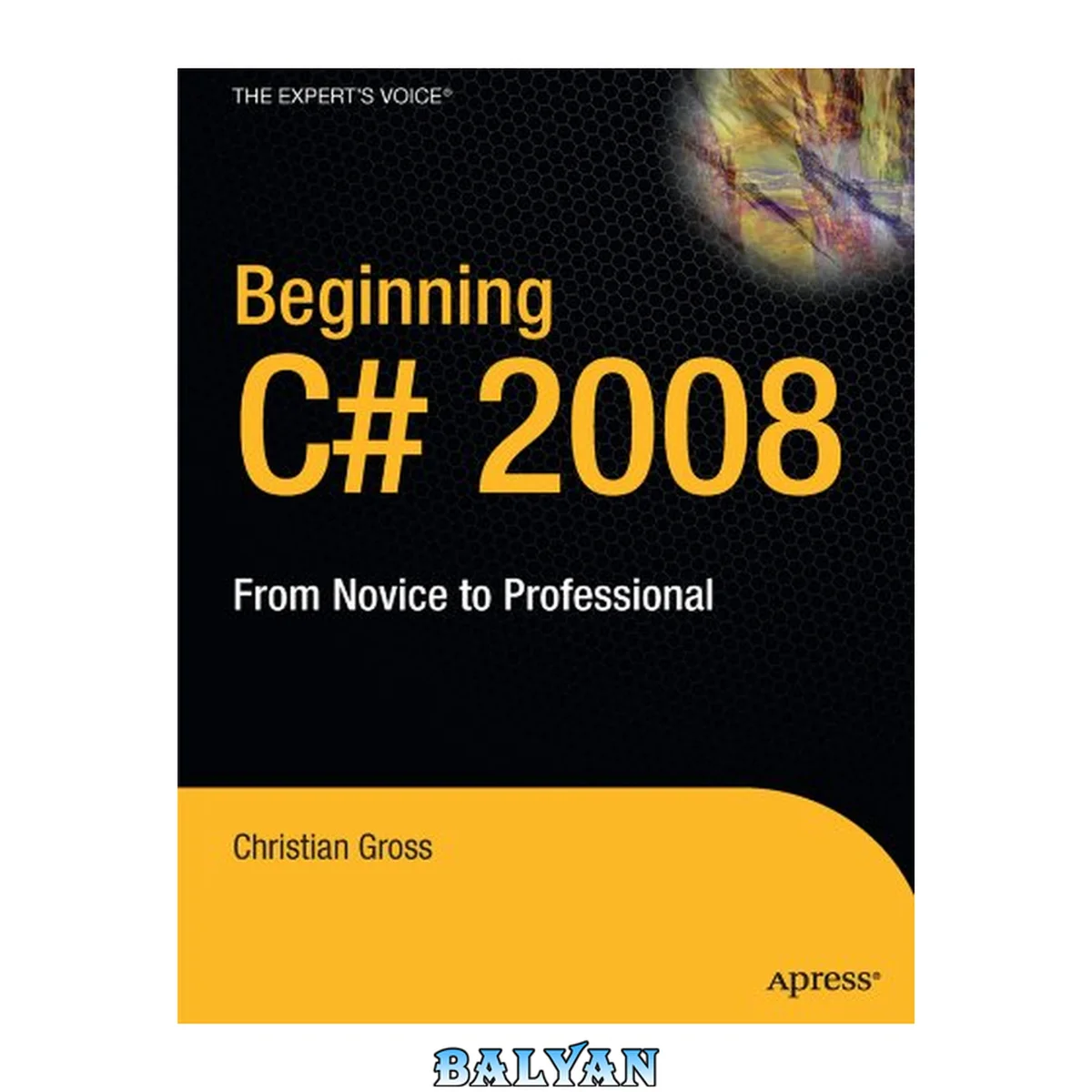
معرفی کتاب «Beginning C Sharp. 2008. From Novice to Pro» نوشتهٔ Christian Gross، منتشرشده توسط نشر Apress ; Distributed to the Book trade worldwide by Springer-Verlag New York در سال 2007. این کتاب در فرمت pdf، زبان انگلیسی ارائه شده است.
This book is for anyone who wants to write good C# 2008 code - even if you have never programmed before. Writing good code can be a challenge, there are so many options, especially in a language like C#. If you want to really get the best from a programming language you need to know which features work best in which situations and understand their strengths and weaknesses. It is this understanding that makes the difference between coding and coding well. Beginning C# 2008 has been written to teach you how to use the C# programming language to solve problems. From the earliest chapters, and from the first introductory concepts, you'll be looking at real-world programming challenges and learning how C# can be used to overcome them. As you progress through the book the problems become more involved and interesting while the solutions become correspondingly more complex and powerful as C# features interact to achieve the results that you want. By the time you've finished reading this book and worked through the sample exercises, you'll be a confident and very competent C# programmer. You will still have many explorations of the .NET Framework API to look forward to in your future career, but you will have a firm foundation to build from and you will know exactly where to go to find the things that you need to progress confidently in your projects. What you will learn - Everything to get you started with C# 2008 from scratch - from installing the tools to writing your first applications. - All the core concepts of .NET 3.5 programming: from decision trees to data structures, exceptions to lambda expressions and from objects to components. - Learn what LINQ is, why functional programming can be important, how generics make your life easier and much, much, more! Who is this book for? This book is for anyone who's just starting out to learn about C#. It doesn't assume any prior knowledge of object-oriented programming, of the .NET Framework, or of coding in general. It simply assumes that you're an intelligent person who wants to learn and starts the journey from there. About the Apress Beginning Series The Beginning series from Apress is the right choice to get the information you need to land that crucial entry-level job. These books will teach you a standard and important technology from the ground up because they are explicitly designed to take you from "novice to professional." You'll start your journey by seeing what you need to know--but without needless theory and filler. You'll build your skill set by learning how to put together real-world projects step by step. So whether your goal is your next career challenge or a new learning opportunity, the Beginning series from Apress will take you there--it is your trusted guide through unfamiliar territory! Beginning C# 2008: From Novice to Professional......Page 1 Contents at a Glance......Page 7 Contents......Page 9 About the Author......Page 19 About the Technical Reviewer......Page 21 Introduction......Page 23 Downloading and Installing the Tools......Page 25 Downloading Visual C# Express......Page 26 Installing Visual C# Express......Page 27 Creating Projects and Solutions......Page 28 Creating the Windows Application......Page 29 Renaming the Solution......Page 30 Running the Windows Application......Page 31 Making the Windows Application Say Hello......Page 33 Adding Comments to the Application......Page 36 Navigating the User Controls of the Solution......Page 37 Making the Console Application Say Hello......Page 40 Adding a Class Library Project to the Solution......Page 41 Moving Functionality......Page 42 Calling Class Library Functionality......Page 43 Using Variables and Constants......Page 45 Understanding How the .NET Framework Works......Page 47 The Important Stuff to Remember......Page 49 Some Things for You to Do......Page 50 Focusing and Organizing Your Development......Page 51 Organizing the Calculator......Page 52 Focusing the Calculator......Page 54 Implementing the Class Library......Page 56 Writing the Add() Method......Page 58 Writing Code to Test the Add() Method......Page 61 Adding a Test Project to Your Solution......Page 62 Testing Simple Addition......Page 63 Testing the Addition of Two Very Large Numbers......Page 64 Understanding Problems with Numeric Numbers......Page 66 Understanding Value and Reference Types......Page 68 Understanding the CLR Numeric Types......Page 69 Finishing the Calculator......Page 73 Some Things for You to Do......Page 74 Organizing the Translation Application......Page 77 Building the Translator Application......Page 78 Translating Hello......Page 79 Creating the Test Application......Page 80 Investigating the String Type......Page 81 The Basis of All Types: Object......Page 82 The Problem: Character-by-Character Comparison......Page 85 Trimming the Whitespace......Page 87 Which Is the Best Solution?......Page 88 Writing the Tests Before Writing the Code......Page 89 Character Mapping......Page 91 Setting Culture and Language in Windows......Page 93 Parsing and Processing Numbers......Page 94 Working with Cultures......Page 96 The Important Stuff to Remember......Page 98 Some Things for You to Do......Page 99 Understanding the Depth-First Search Algorithm......Page 101 Value Type Constraints......Page 105 The Effects of Copying Data......Page 106 Value Types That Contain Reference Types......Page 108 Value Types and Parameters......Page 109 Organizing the Search Algorithm......Page 111 Defining and Implementing the Data Structure......Page 113 Instantiating and Initializing a Node......Page 115 Examining the Problem of Referencing Using Value Types......Page 116 Switching to a Class to Define a Node......Page 118 Understanding Static Data Members and Methods......Page 120 Defining the Algorithm Test......Page 123 The Problem of Magic Data......Page 124 Getting the Found Route......Page 125 Implementing the Depth-First Search Algorithm......Page 127 The Keyhole Problem......Page 128 Using the for Loop......Page 129 Using the if Statement......Page 130 Preventing Repetition in the Route......Page 134 Running the Depth-First Search Algorithm......Page 135 The Important Stuff to Remember......Page 136 Some Things for You to Do......Page 137 Understanding Errors, Exceptions, and Exception Handling......Page 139 Running the Debugger......Page 140 Handling Exceptions......Page 141 Catching Exceptions......Page 142 Implementing Exception Handlers......Page 144 Safeguarding Against Stack Unwinding......Page 148 Using finally to Process Unfinished Tasks......Page 150 Sandboxing Your Code......Page 151 Filtering Exceptions......Page 152 Writing Defensive Code......Page 154 Using Default State......Page 157 Processing Errors That Are Warnings......Page 158 The Important Stuff to Remember......Page 159 Some Things for You to Do......Page 160 Learning the Basics of ObjectOriented Programming......Page 161 Understanding Currency Spreads......Page 162 Writing Tests for the Currency Exchange Application......Page 163 Understanding Base Classes......Page 164 Understanding Inheritance......Page 165 Using C# Properties......Page 167 Rewriting the Test Code to Use Properties......Page 168 Understanding the Problems with Properties......Page 169 Using C# Inheritance to Subclass Another Type......Page 171 Understanding Private, Protected, and Public Scope......Page 172 Using Conditional Statements......Page 174 Using Partial Classes for Verification......Page 176 Finishing the Base Class......Page 177 Adding a Constructor to ActiveCurrencyTrader......Page 178 Adding the Conversion Methods......Page 179 Adding a Constructor to HotelCurrencyTrader......Page 180 Adding the Conversion Methods to HotelCurrencyTrader......Page 181 Learning More About Preprocessor Directives, Properties, and Abstract Methods......Page 182 More Preprocessor Directive Details......Page 183 More abstract Keyword Details......Page 184 The Important Stuff to Remember......Page 186 Some Things for You to Do......Page 187 Understanding Some Basic Tax Concepts......Page 189 Organizing the Tax Application......Page 190 Programming Using Ideas......Page 191 Representing Ideas Using C# Interfaces......Page 192 Illustrating Inheritance Using a Shape, Rectangle, and Square......Page 194 Illustrating Components Using a Shape, Rectangle, and Square......Page 197 Defining the Interfaces......Page 200 Implementing a Base Class Tax Engine......Page 201 Overriding for Specialized Functionality......Page 202 Abstracting Instantiations with Factories......Page 204 Using Default Implementations......Page 205 Implementing a Base Tax Account......Page 207 Implementing a Tax Engine and Tax Account......Page 209 Assigning State When the Interface Cannot......Page 210 Implementing Ideas with Specifics......Page 211 Using the Tax Engine......Page 213 More Inheritance Details......Page 214 More Type-Casting Details......Page 220 The Important Stuff to Remember......Page 221 Some Things for You to Do......Page 222 Understanding Kernels......Page 223 Organizing the Lighting Application......Page 224 Building the Kernel......Page 225 Defining IRoom, a Placeholder Interface......Page 226 Defining the INoRemoteControlRoom Interface......Page 227 Defining the IRemoteControlRoom Interface......Page 228 Defining the ISensorRoom Interface......Page 229 Storing a Collection Using a Linked List......Page 230 Creating a Linked List......Page 232 Inserting and Removing Linked List Items......Page 233 Testing the Linked List......Page 234 Implementing Room Groupings......Page 238 Adding a Room Grouping......Page 239 Finding a Room Grouping......Page 241 Performing Operations on a Group......Page 245 Defining the Kernel As an Interface Instead of a Class......Page 246 Defining Some Rooms......Page 248 Instantiating PublicRoom and PrivateRoom......Page 249 Object Initialization with Nested Data Types......Page 251 Some Things for You to Do......Page 253 Managing Collections......Page 255 A Simple Collection Example......Page 256 The Problem of Mixed Types......Page 258 The Problem of Value Types......Page 259 Managing a Collection After C# 2.0......Page 260 The Case of the Code That Feels Wrong......Page 261 Using Delegates......Page 264 Declaring the Delegate and Using Extension Methods......Page 266 Implementing the Delegate......Page 267 Using Anonymous Delegates......Page 269 Multicasting with Delegates......Page 270 Using Lambda Expressions......Page 271 Understanding Lambda Expressions......Page 273 Implementing the Algorithm Using Lambda Expressions......Page 274 Using a Plain-Vanilla List......Page 276 Using a Key/Value Pair List......Page 277 Using a Queue......Page 278 Some Things for You to Do......Page 279 Organizing the Lottery-Prediction System......Page 281 Reading Data from the Console......Page 282 Piping Data......Page 283 Assembling the Pieces Using an Echo Program......Page 284 Reading and Writing to a Stream......Page 285 Implementing Stream Reading and Writing......Page 289 Implementing the TextProcessor Application......Page 294 Deciphering the Format......Page 297 Fixing the Stream......Page 299 Piping Binary Data......Page 302 Defining the Interfaces and Implementing the Shell......Page 304 Defining the Type......Page 307 Converting a Text Stream into a Binary Stream......Page 308 Converting a Binary Stream into a Text Stream......Page 309 Performing Custom Serialization......Page 311 Separating Data Objects from Action Objects......Page 312 Implementing GetHashCode()......Page 313 Implementing Equals()......Page 316 Some Things for You to Do......Page 318 Why Use .NET Generics?......Page 319 The Theory of a Server-Side Spreadsheet......Page 322 Designing the Architecture......Page 325 Defining the Debug Interface......Page 326 Defining the IWorksheetBase and IWorksheet Interfaces......Page 327 Defining the IWorkbook Interface......Page 331 Implementing the Server Spreadsheet......Page 335 Using Lambda Expressions in the Spreadsheet......Page 340 Assigning State Without Knowing the Type......Page 344 Overriding the ToString() Functionality......Page 346 Iterating Data Using Enumerators......Page 347 Calculating an Average......Page 348 Understanding Why the Calculation Worked......Page 350 The Important Stuff to Remember......Page 351 Some Things for You to Do......Page 352 Convention over Configuration......Page 353 Decoupling Using a Convention Architecture......Page 355 Setting Up the Dynamic Loading Projects......Page 356 Signing an Assembly......Page 358 Setting the Output Path......Page 359 Creating an XML-Based Configuration File......Page 360 Reading a Configuration File......Page 362 Dynamically Instantiating a Type......Page 363 Using Singletons......Page 365 Using the Instantiated Type......Page 366 Enhancing the Configuration File......Page 367 Marshaling the Configuration File Data......Page 368 Reading the Enhanced Configuration File......Page 370 Loading a Strongly Named Assembly......Page 372 Relocating a Strongly Named Assembly to the GAC......Page 373 Understanding Version Numbers......Page 375 Versioning Assemblies......Page 376 Adding an Assembly Redirection to a Configuration File......Page 377 Implementing a Convention-Based Architecture......Page 378 Dynamically Loading Base Class or Interface Types......Page 380 The Important Stuff to Remember......Page 381 Some Things for You to Do......Page 382 Understanding Multitasking......Page 383 Time Slicing......Page 384 Creating a New Thread......Page 387 Waiting for the Thread to End......Page 388 Implementing a ThreadStart Delegate......Page 389 Using a Thread Parameter......Page 390 Synchronizing Between Threads......Page 391 Using Exclusive Locks......Page 393 Synchronizing with Cloning......Page 395 How Not to Deadlock Your Code (Mostly)......Page 396 Implementing a Reader/Writer Threaded Architecture......Page 400 Using a Hidden Producer/Consumer Implementation......Page 404 Implementing a Generic Producer/Consumer Architecture......Page 406 Using an Asynchronous Approach......Page 408 The Important Stuff to Remember......Page 410 Some Things for You to Do......Page 411 Relational Database Tables......Page 413 Database Relations......Page 415 Accessing Relational Databases......Page 418 Designing a Database Using Visual C# Express......Page 419 Configuring the Data Source......Page 420 Adding the Tables......Page 423 Persons Table......Page 425 Winners Table......Page 426 Adding Table Data......Page 427 Deleting Data from the Database......Page 430 Recapping ADO.NET Usage......Page 431 Building Relations Between Tables......Page 432 Using the Generated Code......Page 436 Some Things for You to Do......Page 438 Finding the Frequency of Winning Numbers......Page 439 Extending the Lottery-Prediction System......Page 440 Implementing a Frequency Solution......Page 443 Borrowing Code to Solve Another Problem......Page 445 Using LINQ......Page 446 Learning More LINQ Tricks......Page 449 Selecting and Altering Data......Page 452 Selecting with Anonymous Types......Page 454 Sorting the Results......Page 455 Splitting Results into Groups......Page 457 Performing Set Operations......Page 458 Using LINQ in Other Contexts......Page 460 Some Things for You to Do......Page 462 Why Functional Programming?......Page 463 The Essence of Functional Programming......Page 465 An Academic Example......Page 466 A Practical Example: Calculating Sales Tax......Page 468 Pure Functions......Page 469 Using Immutable Types......Page 470 Manipulating Immutable Types......Page 472 Function Evaluation......Page 474 Recursion......Page 476 Some Things for You to Do......Page 477 Addition......Page 479 Bitwise Operators......Page 480 Increment and Decrement......Page 482 Overloading the Operators......Page 484 The goto Statement......Page 486 Using the type Constraint......Page 487 Using the class Constraint......Page 489 Nullable Types......Page 490 Partial Classes and Methods......Page 492 Some Things for You to Do......Page 494 Index......Page 495 This book is for anyone who wants to write good C# 2008 code—even if you have never programmed before. Writing good code can be a challenge. There are so many options, especially in a language like C#. If you want to really get the best from a programming language, you need to know which features work best in which situations and understand their strengths and weaknesses. It is this understanding that makes the difference between coding and coding well. Beginning C# 2008 has been written to teach you how to use the C# programming language to solve problems. From the earliest chapters, and from the first introductory concepts, you'll be looking at real-world programming challenges and learning how C# can be used to overcome them. As you progress through the book, the problems become more involved and interesting, while the solutions become correspondingly more complex and powerful as C# features interact to achieve the results that you want. By the time you've finished reading this book and worked through the sample exercises, you'll be a confident and very competent C# programmer. You will still have many explorations of the.NET Framework API to look forward to in your future career, but you will have a firm foundation to build from and you will know exactly where to go to find the things that you need to progress confidently in your projects. Christian Gross is dedicated to helping his readers understand every detail of Beginning C# 2008. You can contact him via Skype (christianhgross) if you have bought this book and have a question about something he discusses. If Christian is available when you contact him, he will even try to answer you right away! An introduction to C# 2008 for novice programmers looking to take their skills to the next level examines the latest changes in programming development, as well as how to use the new framework effectively, with coverage of .NET fundamentals, string manipulations, C# exception handling, configuration files and XML processing, generics and threads, C# databases, LINQ, and other essential topics. Original. (Beginner/Intermediate)
دانلود کتاب Beginning C Sharp. 2008. From Novice to Pro