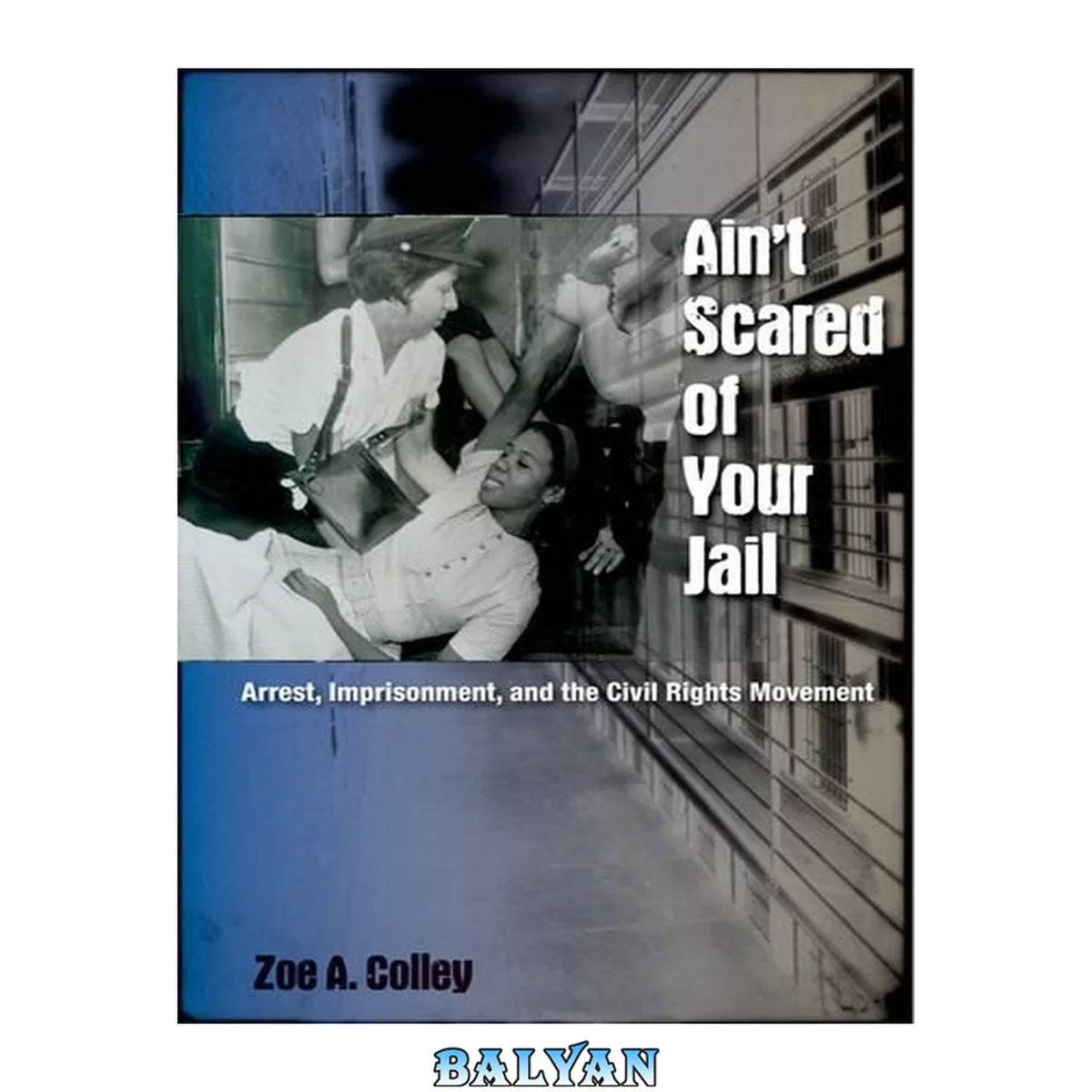
معرفی کتاب «Ain't Scared of Your Jail: Arrest, Imprisonment, and the Civil Rights Movement (New Perspectives on the History of the South)» نوشتهٔ Zoe A. Colley، منتشرشده توسط نشر University Press of Florida در سال 2012. این کتاب در فرمت pdf، زبان انگلیسی ارائه شده است.
An Exploration Of The Impact On Imprisonment Of Individuals Involved In The Civil Rights Movement As A Whole. An American Negro Gandhi? -- Jail-no-bail! -- From Sit-ins To Jail-ins -- The Middle Of The Iceberg -- This Lousy Hole -- You Can't Jail The Revolution. Zoe A. Colley. Includes Bibliographical References And Index. Examines the history of the civil rights movement and the criminal justice system beyond the court rooms and into the arrests, jail cells, and prisons that were the locus of grassroots protests and organizing.Robert Cassanello, coeditor of Migration and the Transformation of the Southern Workplace since 1945 Beyond Dr. Martin Luther King Jr.s Letter from Birmingham City Jail, there has been little discussion on the incarceration experiences of civil rights activists. In this book, Zoe Colley does what no historian has done before by following civil rights activists inside the southern jails and prisons to explore their treatment and the different responses that civil rights organizations had to mass arrest and imprisonment. Imprisonment became a way to expose the evils of segregation and highlighted to the rest of American society the injustice of southern racism. Protestors shifted from seeing jail as something to be avoided to seeing it as a way to further the cause. Colley examines the many factors that shaped how an individual interpreted their race, gender, age, class, or whether one was from the North or the South. While some found imprisonment to be an energizing or inspiring experience and celebrated jail-going as liberating and honorable, others struggled to find a positive value. By drawing together the narratives of many individuals and organizations, Colley paints a clearer picture how the incarceration of civil rights activists helped shape the course of the movement. She places imprisonment at the forefront of civil rights history and shows how these new attitudes toward arrest continue to impact contemporary society and shape strategies for civil disobedience. Zoe A. Colley is lecturer in American history at the University of Dundee. A volume in the series New Perspectives on the History of the South, edited by John David Smith During the 1950s, 1960s, and 1970s, thousands of people were incarcerated in southern jails as a result of their involvement with the civil rights movement. This book follows those activists inside the jail cell to explore the trials and tribulations of life as a civil rights prisoner. It highlights the conditions inside southern jails, activists’ interactions with “ordinary” prisoners, and the importance of race and gender in shaping the prisoners’ treatment. It also reveals how, beyond the jail cell, the movement sought to counter such repression via an ideology that embraced imprisonment as a mark of honor and a statement of resistance, while also seeking to fill the jails and thereby place financial pressure upon local government; this was encapsulated in the term “jail-no-bail.” Organizations and individuals regularly testified to the importance of incarceration as a form of induction into the movement. However, after 1963, as activists faced increasingly serious charges and served longer sentences, many struggled to maintain their commitment to the philosophy behind jail-no-bail. Beneath movement rhetoric, activists found that the earlier exuberance for jail sentences did not fit with the conditions under which they worked. Ain’t Scared of Your Jail concludes by examining the shift toward black power in the post-1965 era and demonstrates how activists, now freed from an earlier focus upon integration and respectability, began to challenge mainstream definitions of criminality to claim that black prisoners were not so much criminals as victims of a racist social structure
Imprisonment became a badge of honor for many protestors during the civil rights movement. With the popularization of expressions such as "jail-no-bail" and "jail-in," civil rights activists sought to transform arrest and imprisonment from something to be feared to a platform for the cause.
Beyond Dr. Martin Luther King Jr.'s "Letters from the Birmingham Jail," there has been little discussion on the incarceration experiences of civil rights activists. In her debut book, Zoe Colley does what no historian has done before by following civil rights activists inside the southern jails and prisons to explore their treatment and the different responses that civil rights organizations had to mass arrest and imprisonment.
Colley focuses on the shift in philosophical and strategic responses of civil rights protestors from seeing jail as something to be avoided to seeing it as a way to further the cause. Imprisonment became a way to expose the evils of segregation, and highlighted to the rest of American society the injustice of southern racism.
By drawing together the narratives of many individuals and organizations, Colley paints a clearer picture how the incarceration of civil rights activists helped shape the course of the movement. She places imprisonment at the forefront of civil rights history and shows how these new attitudes toward arrest continue to impact contemporary society and shape strategies for civil disobedience "Beyond Dr. Martin Luther King Jr.'s "Letters from the Birmingham Jail," there has been little discussion on the incarceration experiences of civil rights activists. In her debut book, Zoe Colley does what no historian has done before by following civil rights activists inside the southern jails and prisons to explore their treatment and the different responses that civil rights organizations had to mass arrest and imprisonment. Colley focuses on the shift in philosophical and strategic responses of civil rights protestors from seeing jail as something to be avoided to seeing it as a way to further the cause. Imprisonment became a way to expose the evils of segregation, and highlighted to the rest of American society the injustice of southern racism. By drawing together the narratives of many individuals and organizations, Colley paints a clearer picture of how the incarceration of civil rights activists helped shape the course of the movement. She places imprisonment at the forefront of civil rights history and shows how these new attitudes toward arrest continue to impact contemporary society and shape strategies for civil disobedience."--Publisher's website Cover 1 Contents 8 Acknowledgments 10 Introduction 12 1. An American Negro Gandhi? 21 2. Jail-No-Bail! 35 3. From Sit-Ins to Jail-Ins 54 4. The Middle of the Iceberg 74 5. This Lousy Hole 96 6. You Can’t Jail the Revolution 113 Conclusion 127 Notes 132 Bibliography 148 Index 166 A 166 B 166 C 167 D 167 F 167 G 167 H 167 I 167 J 167 K 168 L 168 M 168 N 168 O 168 P 168 R 168 S 168 T 169 W 169 Y 169