Ain't No Makin' It : Aspirations and Attainment in a Low-Income Neighborhood, Third Edition
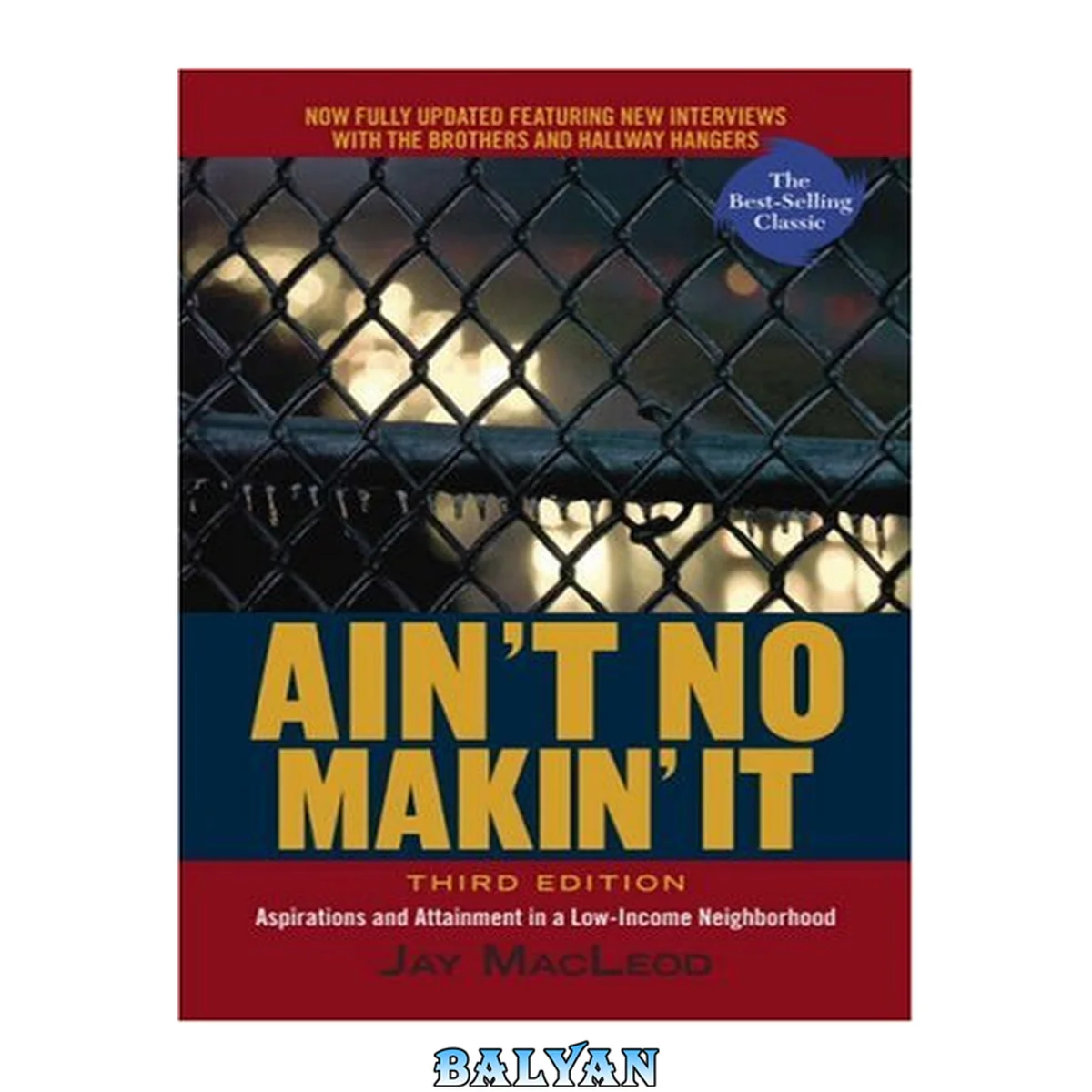
معرفی کتاب «Ain't No Makin' It : Aspirations and Attainment in a Low-Income Neighborhood, Third Edition» نوشتهٔ Jay Macleod، منتشرشده توسط نشر Routledge در سال 2008. این کتاب در فرمت pdf، زبان انگلیسی ارائه شده است.
This classic text addresses one of the most important issues in modern social theory and policy: how social inequality is reproduced from one generation to the next. With the original 1987 publication of Ain’t No Makin’ It Jay MacLeod brought us to the Clarendon Heights housing project where we met the “Brothers” and the “Hallway Hangers.” Their story of poverty, race, and defeatism moved readers and challenged ethnic stereotypes. MacLeod’s return eight years later, and the resulting 1995 revision, revealed little improvement in the lives of these men as they struggled in the labor market and crime-ridden underground economy. The third edition of this classic ethnography of social reproduction brings the story of inequality and social mobility into today’s dialogue. Now fully updated with thirteen new interviews from the original Hallway Hangers and Brothers, as well as new theoretical analysis and comparison to the original conclusions, Ain’t No Makin’ It remains an admired and invaluable text. Contents Part One: The Hallway Hangers and the Brothers as Teenagers 1. Social Immobility in the Land of Opportunity 2. Social Reproduction in Theoretical Perspective 3. Teenagers in Clarendon Heights: The Hallway Hangers and the Brothers 4. The Influence of the Family 5. The World of Work: Aspirations of the Hangers and Brothers 6. School: Preparing for the Competition 7. Leveled Aspirations: Social Reproduction Takes Its Toll 8. Reproduction Theory Reconsidered Part Two: Eight Years Later: Low Income, Low Outcome 9. The Hallway Hangers: Dealing in Despair 10. The Brothers: Dreams Deferred 11. Conclusion: Outclassed and Outcast(e) Part Three: Ain’t No Makin’ It? 12. The Hallway Hangers: Fighting for a Foothold at Forty 13. The Brothers: Barely Making It 14. Making Sense of the Stories, by Katherine McClelland and David Karen CONTENTS......Page 8 Preface......Page 12 Acknowledgments......Page 14 PART ONE: THE HALLWAY HANGERS AND THE BROTHERS AS TEENAGERS......Page 16 1. SOCIAL IMMOBILITY IN THE LAND OF OPPORTUNITY......Page 18 2. SOCIAL REPRODUCTION IN THEORETICAL PERSPECTIVE......Page 26 Samuel Bowles and Herbert Gintis: Schooled by Social Class......Page 27 Pierre Bourdieu: Cultural Capital and Habitus......Page 28 Basil Bernstein and Shirley Brice Heath: Linguistic Cultural Capital......Page 31 Paul Willis: The Lads and the Ear'oles......Page 33 Henry Giroux: Student Resistance to School......Page 35 Social Reproduction in Clarendon Heights......Page 37 Notes......Page 38 The Hallway Hangers: "You Gotta Be Bad"......Page 40 The Brothers: Conspicuous by Their Conventionality......Page 60 Notes......Page 65 The Hallway Hangers' Households......Page 66 The Brothers' Families......Page 69 Notes......Page 76 The Hallway Hangers: Keeping a Lid on Hope......Page 77 The Brothers: Ready at the Starting Line......Page 90 Notes......Page 98 6. SCHOOL: PREPARING FOR THE COMPETITION......Page 99 The Brothers: Conformity and Compliance......Page 104 The Hallway Hangers: Teacher's Nightmare......Page 108 The Underlying Logic of Student Behavior......Page 113 Notes......Page 126 7. LEVELED ASPIRATIONS: SOCIAL REPRODUCTION TAKES ITS TOLL......Page 128 The Hallway Hangers: Internalizing Probabilities, Rescuing Self-Esteem......Page 129 The Brothers: Internalizing Failure, Shorn of Self-Esteem......Page 141 The Sources of Variation......Page 144 Notes......Page 150 Building on Bourdieu......Page 152 From Ethnography to Theory......Page 155 Individuals in the Social Landscape......Page 161 Cultural Autonomy within Structural Constraints......Page 164 Notes......Page 168 PART TWO: EIGHT YEARS LATER: LOW INCOME, LOW OUTCOME......Page 170 9. THE HALLWAY HANGERS: DEALING IN DESPAIR......Page 172 On the Job......Page 177 Working the Street......Page 187 Producing Themselves......Page 199 Notes......Page 211 Shortchanged on the Labor Market......Page 213 Sold on School......Page 228 Aspiration and Outcome: What Went Wrong?......Page 234 Groping for the Good Life......Page 248 Notes......Page 254 11. CONCLUSION: OUTCLASSED AND OUTCAST(E)......Page 256 Poverty: A Class Issue......Page 258 Racial Domination: Invidious but Invisible......Page 260 Race Versus Class: Can They Be Untangled?......Page 264 Structure Versus Agency: "No One to Blame but Me"......Page 267 What Is to Be Done?......Page 276 Class Dismissed......Page 282 Notes......Page 285 PART THREE: AIN'T NO MAKIN' IT? THE MEN AT MIDLIFE......Page 288 12. THE HALLWAY HANGERS: WEEBLE, WOBBLE, BUT WE DON'T FALL DOWN......Page 292 Frankie: Connected......Page 293 Jinx: Stuck Around......Page 307 Shorty: All Bull Work......Page 315 Steve: My Life Sucks......Page 326 Stoney: Saved by the Drum......Page 332 Chris: Back Down at the Bottom......Page 343 Slick: Head Up High......Page 350 13. THE BROTHERS: FINALLY FINDING A FOOTHOLD......Page 365 Mokey: Manager......Page 366 Super: Hustler......Page 375 Mike: Buyer and Broker......Page 385 Juan: Mechanic......Page 391 James: Programmer......Page 401 Introduction......Page 422 Analysis......Page 424 So ... Have They Made It?......Page 427 Capital on the Labor Market......Page 433 The Path to Down and Out: Drugs, Alcohol, and Crime......Page 442 Race and Racism......Page 446 Family: Settling Down and Moving Out......Page 450 The Meaning of (Im)Mobility......Page 454 Class Consciousness?......Page 460 Seeking Redemption......Page 463 The Next Generation......Page 466 Conclusion......Page 472 Notes......Page 476 Afterword: Freddie's Final Say......Page 480 Fieldwork: Doubts, Dilemmas, and Discoveries......Page 482 Second Harvest: Notes on the 1991 Field Experience......Page 503 Confessions: Clarendon Heights Revisited......Page 511 Notes......Page 519 The Hallway Hangers......Page 520 The Brothers......Page 523 Bibliography......Page 526 About the Book......Page 536 About the Authors......Page 538 A......Page 540 B......Page 541 C......Page 542 D......Page 543 E......Page 544 H......Page 545 K......Page 546 M......Page 547 P......Page 548 R......Page 549 S......Page 550 U......Page 551 Z......Page 552 "This classic text addresses one of the most important issues in modern social theory and policy: how social inequality is reproduced from one generation to the next. With the original 1987 publication of Ain?t No Makin? It Jay MacLeod brought us to the Clarendon Heights housing project where we met the `Brothers? and the `Hallway Hangers.? Their story of poverty, race, and defeatism moved readers and challenged ethnic stereotypes. MacLeod?s return eight years later, and the resulting 1995 revision, revealed little improvement in the lives of these men as they struggled in the labor market and crime-ridden underground economy. The third edition of this classic ethnography of social reproduction brings the story of inequality and social mobility into today?s dialogue. Now fully updated with thirteen new interviews from the original Hallway Hangers and Brothers, as well as new theoretical analysis and comparison to the original conclusions, Ain?t No Makin? It remains an admired and invaluable text. Contents Part One: The Hallway Hangers and the Brothers as Teenagers 1. Social Immobility in the Land of Opportunity 2. Social Reproduction in Theoretical Perspective 3. Teenagers in Clarendon Heights: The Hallway Hangers and the Brothers 4. The Influence of the Family 5. The World of Work: Aspirations of the Hangers and Brothers 6. School: Preparing for the Competition 7. Leveled Aspirations: Social Reproduction Takes Its Toll 8. Reproduction Theory ReconsideredPart Two: Eight Years Later: Low Income, Low Outcome 9. The Hallway Hangers: Dealing in Despair 10. The Brothers: Dreams Deferred 11. Conclusion: Outclassed and Outcast(e)Part Three: Ain?t No Makin? It? 12. The Hallway Hangers: Fighting for a Foothold at Forty 13. The Brothers: Barely Making It 14. Making Sense of the Stories, by Katherine McClelland and David Karen"--Provided by publisher The author immersed himself in the teenage underworld of Clarendon Heights. The Hallway Hangers, one of the neighborhood cliques, appear as cynical self-destructive hoodlums. The other group, the Brothers, take the American Dream to heart and aspire to middle-class respectability. The twist is that the Hallway Hangers are mostly white; the Brothers are almost all black. Comparing the two groups, MacLeod provides a provocative account of how poverty is perpetuated from one generation to the next. This edition retains the vivid accounts of friendships, families, school, and work that made the first edition so popular. The ethnography resonates with feeling and vivid dialogue. But the book also addressed one of the most important issues in modern social theory and policy: how social inequality is reproduced from one generation to the next. MacLeod links individual lives with social theory to forge a powerful argument about how inequality is created, sustained, and accepted in the United States. Jay McLeod brought us to the Clarendon Heights public housing development and introduced us to Jinx and Mokey and their teenage friends in 1987 with the first edition of "Ain't No Makin' It." The dreams of one peer group and the defeatism of the other moved readers, challenged ethnic stereotypes, and suggested how poverty is perpetuated. Eight years later MacLeod returned to Clarendon Heights, and the 1995 revision revealed how the young men struggled in the labor market and crime-ridden underground economy. This third edition chronicles their lives into middle age. Having renewed relationships with the men, MacLeod allows them to speak for themselves in thirteen new interviews that are by turns heartbreaking and uplifting. "Ain't No Makin' It" remains an admired and invaluable testament to how social inequality is reproduced from one generation to the next. -- From publisher's description Social immobility in the land of opportunity Social reproduction in theoretical perspective Teenagers in Clarendon Heights : the Hallway Hangers and the Brothers The influence of the family The world of work : aspirations of the Hangers and Brothers School : preparing for the competition Leveled aspirations : social reproduction takes its toll Reproduction theory reconsidered The Hallway Hangers : dealing in despair The Brothers : dreams deferred Conclusion : outclassed and outcast(e) The Hallway Hangers : "weeble, wobble, but we don't fall down" The Brothers : finally finding a foothold Title TK. Author Jay MacLeod 's classic ethnography--a defining work on the cycle of social reproduction and inequality as lived through the young men from the Clarendon Heights housing project--now includes a third section that continues the lives of the original Brothers and Hallway Hangers through new interviews and analysis
دانلود کتاب Ain't No Makin' It : Aspirations and Attainment in a Low-Income Neighborhood, Third Edition