Affective and emotional aspects of human-computer interaction : game-based and innovative learning approaches : [Interdisciplinary Workshop "Affective and Emotional Aspects of Human-Computer Interaction: Emphasis on Game-Based and Innovative Learning Appr
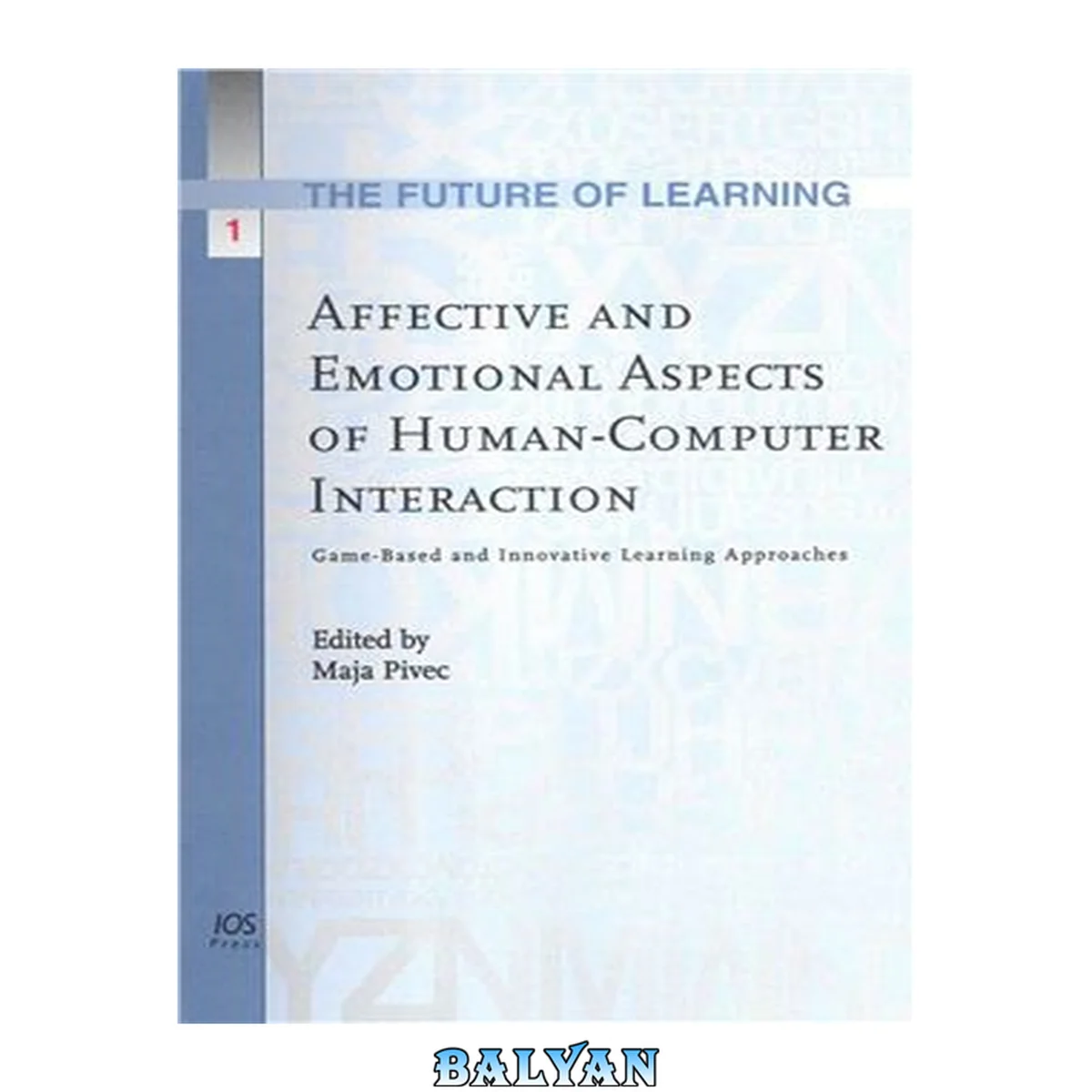
معرفی کتاب «Affective and emotional aspects of human-computer interaction : game-based and innovative learning approaches : [Interdisciplinary Workshop "Affective and Emotional Aspects of Human-Computer Interaction: Emphasis on Game-Based and Innovative Learning Appr» نوشتهٔ Maja Pivec; Interdisciplinary Workshop "Affective and Emotional Aspects of Human-Computer Interaction: Emphasis on Game-Based and Innovative Learning Approaches"، منتشرشده توسط نشر IOS Press در سال 2006. این کتاب در 333 صفحه، فرمت pdf، زبان انگلیسی ارائه شده است.
Издательство IOS Press, 2006. — 333 p.The aim of the interdisciplinary workshop Affective and Emotional Aspects of Human- Computer Interaction: Emphasis on Game-Based and Innovative Learning Approaches is to define new research directions related to affective and emotional approaches to computer-supported learning and human-computer interactions. The workshop is a unique opportunity to bring together, on the one hand, scientists and research contributions from psychology, educational sciences, cognitive sciences, various aspects of communication and human computer interaction, interface design and computer science and, on the other hand, educators and the game industry. The intensive exchange of information from various research fields should open the gates for evolutionary change and new research directions in technology-supported learning.Part of the research presented at the ESF workshop is published in this book. For the purpose of this book publication, an additional call for chapters was issued to the international research community, so as to obtain contributions worldwide that reflect the current research in this field. Gathered and reviewed, eighteen selected contributions are grouped into three topics: Game-based Learning, Motivation and Learning, and Emotions and Emotional Agents.To decide how to categorize the contributions was a very difficult task, hence all the contributions explore the learning process as an emotional and personal experience that is addictive and motivates the learner to proactive behavior. The major topics such as emotions, motivation, games and game-experience, though in different equivalents and various priorities, are present in all of the contributions, thus offering a variety of possible solutions for contribution classification. However, I leave the challenge to organize the contributions differently for the next publication. **Game-Based Learning**Affective Gaming: Advancing the Argument for Game-Based Learning Didactic Analysis of Digital Games and Game-Based Learning Immersive Environments: What Can We Learn from Commercial Computer Games? What Is a Game Ego? (or How the Embodied Mind Plays a Role in Computer Game Environments) Multiple Motivations Framework An Instructional Design/Development Model for the Creation of Game-Like Learning Environments: The FIDGE Model Learning when Using Commercial Computer Games as Simulations: A Case Study Using a Simulation Game Serious Games and ‘Simulation Based E-Learning’ for Infrastructure Management **Motivation and Learning**Learning and Motivation with Virtual Tutors. Does It Matter if the Tutor Is Visible on the Net? Achievement Motivation, Performance Structure, and Adaptive Hypertext Learning An Interactive Dictionary of Concepts: An Exploratory Platform for Enhancing Communication Between the Concepts Which Form and Inform Us Human-Computer Interaction: Sharing of Intergenerational Wisdom and Cross-Cultural Knowledge Designing the Stimulation Aspect of Hedonic Quality – An Exploratory Study **Emotions and Emotional Agents** On the Role of Self Esteem, Empathy and Narrative in the Development of Intelligent Learning Environments Empathic Characters in Computer-Based Personal and Social Education Using Machine-Learning Techniques to Recognize Emotions for On-Line Learning Systems A Framework for Emotional Agents as Tutoring Entities A Haptic Computing Logic – Agent Planning, Models, and Virtual Trees ESF SCSS Exploratory Workshop on Affective and Emotional Aspects of Human-Computer Interaction: Emphasis on Game-Based and Innovative Learning Approaches Издательство IOS Press, 2006. — 333 p. The aim of the interdisciplinary workshop Affective and Emotional Aspects of Human- Computer Interaction: Emphasis on Game-Based and Innovative Learning Approaches is to define new research directions related to affective and emotional approaches to computer-supported learning and human-computer interactions. The workshop is a unique opportunity to bring together, on the one hand, scientists and research contributions from psychology, educational sciences, cognitive sciences, various aspects of communication and human computer interaction, interface design and computer science and, on the other hand, educators and the game industry. The intensive exchange of information from various research fields should open the gates for evolutionary change and new research directions in technology-supported learning. Part of the research presented at the ESF workshop is published in this book. For the purpose of this book publication, an additional call for chapters was issued to the international research community, so as to obtain contributions worldwide that reflect the current research in this field. Gathered and reviewed, eighteen selected contributions are grouped into three topics: Game-based Learning, Motivation and Learning, and Emotions and Emotional Agents. To decide how to categorize the contributions was a very difficult task, hence all the contributions explore the learning process as an emotional and personal experience that is addictive and motivates the learner to proactive behavior. The major topics such as emotions, motivation, games and game-experience, though in different equivalents and various priorities, are present in all of the contributions, thus offering a variety of possible solutions for contribution classification. However, I leave the challenge to organize the contributions differently for the next publication. Game-Based Learning Affective Gaming: Advancing the Argument for Game-Based Learning Didactic Analysis of Digital Games and Game-Based Learning Immersive Environments: What Can We Learn from Commercial Computer Games? What Is a Game Ego? (or How the Embodied Mind Plays a Role in Computer Game Environments) Multiple Motivations Framework An Instructional Design/Development Model for the Creation of Game-Like Learning Environments: The FIDGE Model Learning when Using Commercial Computer Games as Simulations: A Case Study Using a Simulation Game Serious Games and ‘Simulation Based E-Learning’ for Infrastructure Management Motivation and Learning Learning and Motivation with Virtual Tutors. Does It Matter if the Tutor Is Visible on the Net? Achievement Motivation, Performance Structure, and Adaptive Hypertext Learning An Interactive Dictionary of Concepts: An Exploratory Platform for Enhancing Communication Between the Concepts Which Form and Inform Us Human-Computer Interaction: Sharing of Intergenerational Wisdom and Cross-Cultural Knowledge Designing the Stimulation Aspect of Hedonic Quality – An Exploratory Study Emotions and Emotional Agents On the Role of Self Esteem, Empathy and Narrative in the Development of Intelligent Learning Environments Empathic Characters in Computer-Based Personal and Social Education Using Machine-Learning Techniques to Recognize Emotions for On-Line Learning Systems A Framework for Emotional Agents as Tutoring Entities A Haptic Computing Logic – Agent Planning, Models, and Virtual Trees ESF SCSS Exploratory Workshop on Affective and Emotional Aspects of Human-Computer Interaction: Emphasis on Game-Based and Innovative Learning Approaches The learning process can be seen as an emotional and personal experience that is addictive and motivates learners to proactive behavior. Divided in three parts, this title discusses major topics such as: emotions, motivation, games, and game-experience.
دانلود کتاب Affective and emotional aspects of human-computer interaction : game-based and innovative learning approaches : [Interdisciplinary Workshop "Affective and Emotional Aspects of Human-Computer Interaction: Emphasis on Game-Based and Innovative Learning Appr