Abstraction in medieval art : beyond the ornament
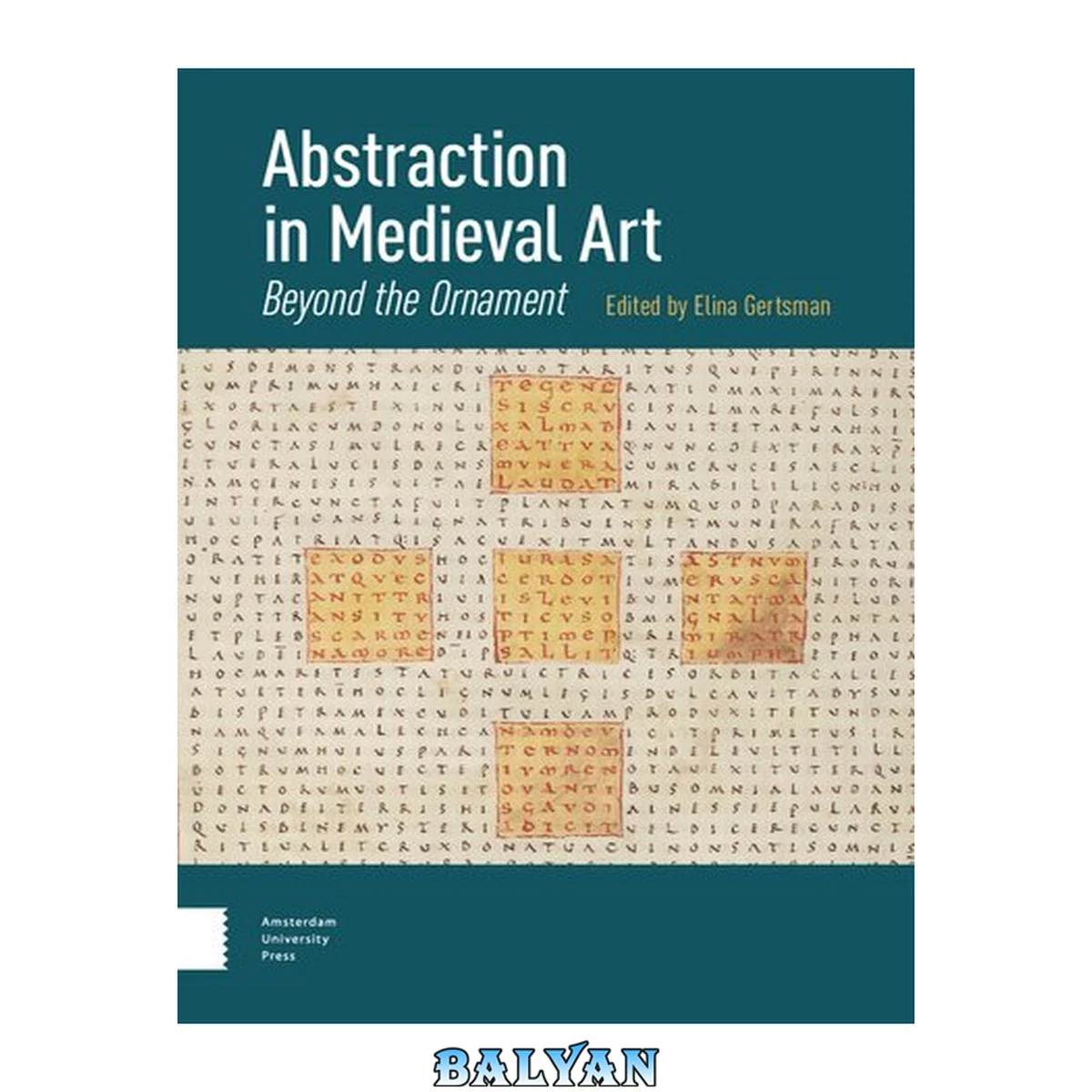
معرفی کتاب «Abstraction in medieval art : beyond the ornament» نوشتهٔ 坂野永理، 池田庸子، 品川恭子، 坂井美恵子 و Elina Gertsman (Editor)، منتشرشده توسط نشر Amsterdam University Press در سال 2021. این کتاب در فرمت pdf، زبان انگلیسی ارائه شده است.
"Abstraction haunts medieval art, both withdrawing figuration and suggesting elusive presence. How does it make or destroy meaning in the process? Does it suggest the failure of figuration, the faltering of iconography? Does medieval abstraction function because it is imperfect, incomplete, and uncorrected-and therefore cognitively, visually demanding? Is it, conversely, precisely about perfection? To what extent is the abstract predicated on theorization of the unrepresentable and imperceptible? Does medieval abstraction pit aesthetics against metaphysics, or does it enrich it, or frame it, or both? Essays in this collection explore these and other questions that coalesce around three broad themes: medieval abstraction as the untethering of the image from what it purports to represent; abstraction as a vehicle for signification; and abstraction as a form of figuration. Contributors approach the concept of medieval abstraction from a multitude of perspectives-formal, semiotic, iconographic, material, phenomenological, epistemological"--Page 4 of cover Cover 1 Table of Contents 6 Acknowledgments 8 Preface: Withdrawal and Presence 18 Elina Gertsman 18 Part I: Abstraction / Aporia / Unknowability 32 1. Colour as Subject 34 Vincent Debiais 34 2. Abstraction’s Gothic Grounds1 56 Aden Kumler 56 3. Abstraction in the Kennicott Bible 90 Adam S. Cohen and Linda Safran 90 4. Back-to-Front: Abstraction and Figuration in Bosch’s Visions of the Hereafter 116 Robert Mills 116 Part II: Abstraction / Figuration / Signification 140 5. The Painted Logos: Abstraction as Exegesis in the Ashburnham Pentateuch 142 Danny Smith 142 6. The Sign within the Form, the Form without the Sign: Monograms and Pseudo-Monograms as Abstractions in Mozarabic Antiphonaries 168 Benjamin C. Tilghman 168 7. Ornament and Abstraction: A New Approach to Understanding Ornamented Writing in the Making of Illuminated Manuscripts around 1000 192 Gia Toussaint 192 8. The Double-Sided Image: Abstraction and Figuration in Early Medieval Painting1 214 Nancy Thebaut 214 Part III: Abstraction / Epistemology / Perception 244 9. Birds of Defiance: Jewelled Resistance to Modern Abstractions 246 Danielle B. Joyner 246 10. Early Romanesque Abstraction and the ‘Unconditionally Two-dimensional Surface’ 268 Megan C. McNamee 268 11. Functional Abstraction in Medieval Anatomical Diagrams 286 Taylor McCall 286 12. Imaging Perfection(s) in Hebrew Illuminated Manuscripts 310 Julie A. Harris 310 13. Response: Astral Abstraction 330 Herbert L. Kessler 330 14. Coda: Carolingian Art As Conceptual Art? 356 Charlotte Denoël 356 Index 382 Illustrations 10 Figure 0-1. Matzah, the Hispano-Moresque Haggadah, 1275-1324. London, British Library, Or. 2737, fol. 22r. Photo: The British Library. 19 Figure 0-2. ‘Matzah’, the Hispano-Moresque Haggadah, 1275-1324. London, British Library, Or. 2737, fol. 21v. Photo: The British Library. 20 Figure 1-1. Silos Beatus, 1091-1109. London, British Library, Add. 11695, fol. 125v. Photo: The British Library. 36 Figure 1-2. Urgell Beatus, c. 975. Seu d’Urgell, Museo Diocesano, ms. 501, fol. 123v. Previously reproduced in Francisco Prado-Vilar, “Silentium: El silentio cósmico como imagen en la Edad Media y la Modernidad,” Revista de poética medieval 27 (2013): 21- 37 Figure 1-3. Cologne Gospels, c. 1030. New York, Morgan Library, ms. 651, fols. 8v-9r. 39 Figure 1-4. St. Vitus Sacramentary, c. 1050. Freiburg, Universitätsbibliothek, cod. 360a, fol. 20r. 41 Figure 1-5. Biblical narratives on the vault, c. 1100. Saint-Savin-sur-Gartempe, abbey church, nave. Photo: Vincent Debiais. 44 Figure 1-6. Gospels of St Andrew of Cologne, end of the 10th century. Darmstadt, Hessisches Landesmuseum, Inv. Nr. KG 54: 213a, b, fol. 126v. Previously reproduced in Herbert Kessler, Seeing Medieval Art (Broadview Press, 2005), cover. 48 Figure 2-1. Guillaume de Digulleville, Pèlerinage de l’âme, c. 1404-1405. Paris, Bibliothèque nationale de France, MS fr. 829, fol. 219v, detail. Photo courtesy of the Bibliothèque nationale de France. 58 Figure 2-2. Vincent of Beauvais, Speculum historiale, 1346. Lyon, BM, MS fr. 182 (110), fol. 233r. Photo: IRHT, courtesy of the IRHT and the Bibliothèque municipale de Lyon. 60 Figure 2-3. Guillaume de Digulleville, Pèlerinage de l’âme, c. 1404-1405. Paris, Bibliothèque nationale de France, MS fr. 829, fol. 39r. Photo courtesy of the Bibliothèque nationale de France. 61 Figure 2-4. Guillaume de Digulleville, Pèlerinage de l’âme, c. 1404-1405. Paris, Bibliothèque nationale de France, MS fr. 829, fol. 10v. Photo courtesy of the Bibliothèque nationale de France. 62 Figure 2-5. Guillaume de Digulleville, Pèlerinage de l’âme, c. 1404-1405. Paris, Bibliothèque nationale de France, MS fr. 829, fol. 39r. Photo courtesy of the Bibliothèque nationale de France. 63 Figure 2-6. Grandes Chroniques de France, after 1380. London, British Library, Royal MS 20.C.VII, fol. 107v, detail. Photo courtesy of the British Library Board. 65 Figure 2-7. Guillaume de Digulleville, Pèlerinage de l’âme, c. 1390-1401. Paris, Bibliothèque nationale de France, MS fr. 12465, fol. 147v, detail. Photo courtesy of the Bibliothèque nationale de France. 67 Figure 3-1. Front (right) and rear (left) bindings with abstract ornament in relief, the Kennicott Bible, 1476. Oxford, Bodleian Lib., MS. Kenn. 1. Photo © The Bodleian Libraries, The University of Oxford. 91 Figure 3-2. Front (right) and rear (left) pastedowns, the Kennicott Bible, 1476. Oxford, Bodleian Lib., MS. Kenn. 1. Photo © The Bodleian Libraries, The University of Oxford. 93 Figure 3-3. Joseph Ibn Hayyim, abstract ornament, the Kennicott Bible, 1476. Oxford, Bodleian Lib., MS. Kenn. 1, fols. 119v (strapwork panel at end of Deuteronomy) and 120r (carpet page with interlace frame for bleed-through of first page with Temple impl 93 Figure 3-4. Joseph Ibn Hayyim, abstract ornament, the Kennicott Bible, 1476. Oxford, Bodleian Lib., MS. Kenn. 1, fols. 121v (bleed-through of carpet page with Temple implements) and 122r (carpet page with dragons in spandrels). Photo © The Bodleian Librar 94 Figure 3-5. Joseph Ibn Hayyim, abstract ornament, the Kennicott Bible, 1476. Oxford, Bodleian Lib., MS. Kenn. 1, fols. 122v (interlaced six-pointed star in interlace roundel) and 123r (carpet page with gold on blue strapwork forming eight-pointed stars). 94 Figure 3-6. Joseph Ibn Hayyim, abstract ornament, the Kennicott Bible, 1476. Oxford, Bodleian Lib., MS. Kenn. 1, fols. 317v–318r, carpet pages with micrographic interlace composed of verses from Psalms. Photo © The Bodleian Libraries, The University of Ox 95 Figure 3-7. Joseph Ibn Hayyim, abstract ornament, the Kennicott Bible, 1476. Oxford, Bodleian Lib., MS. Kenn. 1, fols. 352r (left; strapwork panel at end of Chronicles) and, on the reverse (right), fol. 352v (carpet page preceding Psalms on fol. 353r). Ph 95 Figure 4-1. Hieronymus Bosch, Visions of the Hereafter, c. 1505-1515, featuring from left to right The Fall of the Damned, The River to Hell (or Purgatory), The Garden of Eden, and The Ascent of the Blessed. Oil on oak panel, each panel approx. 89 × 40 cm 117 Figure 4-2. Hieronymus Bosch, images on reverse of Visions of the Hereafter panels, c. 1505-1515. Source: Bosch Research and Conservation Project, http://boschproject.org. 118 Figure 4-3. Jan Provoost, exterior wings from Triptych with the Virgin and Child, John the Evangelist, and Mary Magdalene, c. 1520-1525. Oil on panel, 44.3 × 30.5 cm. The Hague, Mauritshuis. 119 Figure 4-4. Workshop of Hieronymus Bosch, exterior wings of Job Triptych, c. 1510-1520. Oil on oak panel, left wing 98.1 × 30.5 cm, right wing 97.8 × 30. 2 cm. Bruges, Stad Brugge, Groeningemuseum (on loan from Church of Saint James the Greater, Hoeke, Da 120 Figure 4-5. Hieronymus Bosch, detail of reverse of The Ascent of the Blessed panel from Visions of the Hereafter. Source: Bosch Research and Conservation Project, http://boschproject.org. 123 Figure 4-6. Hieronymus Bosch, detail of The Ascent of the Blessed panel from Visions of the Hereafter. Source: Bosch Research and Conservation Project, http://boschproject.org. 128 Figure 5-1. Creation, Ashburnham Pentateuch, 6th century, with 9th-century repainting. Paris, Bibliothèque nationale de France, MS nouv. acq. lat. 2334, fol. 1v. Photo courtesy of the Bibliothèque nationale de France. 143 Figure 5-2. God the Son, Ashburnham Pentateuch. Paris, Bibliothèque nationale de France, MS nouv. acq. lat. 2334, fol. 1v, detail. Photo courtesy of the Bibliothèque nationale de France. 144 Figure 5-3. Barnett Newman, Onement 1, 1948. Oil on canvas and oil on masking tape on canvas. 27 1/4 x 16 1/4” (69.2 x 41.2 cm). 390.1992. Museum of Modern Art, New York, Gift of Annalee Newman. © 2018 Barnett and Annalee Newman Foundation / Artists Right 146 Figure 5-4. God the Son, Ashburnham Pentateuch. Paris, Bibliothèque nationale de France, MS nouv. acq. lat. 2334, fol. 65v, detail. Photo courtesy of the Bibliothèque nationale de France. 149 Figure 5-5. Evangelistenblatt (Evangelists), Aachen Gospels, 9th century. Aachen, Cathedral Treasury, Aachen Gospels, fol. 14v. © Domkapitel Aachen, photo: Ann Münchow. 154 Figure 5-6. Ascension, Tiberius Psalter, c. 1075-1150. London, British Library, Cotton MS Tiberius C VI, fol. 15r. Photo: British Library, London, UK©British Library Board. All Rights Reserved/Bridgeman Images. 157 Figure 5-7. God in a white cloud with red rays, Ashburnham Pentateuch. Paris, Bibliothèque nationale de France, MS nouv. acq. lat. 2334, fol. 76r, detail. Photo courtesy of the Bibliothèque nationale de France. 158 Figure 6-1. Vespertinum Monogram, Silos Apocalypse, 11th century, Santo Domingo de Silos, Spain. London, British Library, Add MS 11695, fol. 4r. Creative Commons CC0 1.0. 169 Figure 6-2. Vespertinum Monogram, León Antiphonary, early 10th century, León, Spain. Fol. 232r, MS. 8, Archivo de la Catedral de León. Creative Commons 4.0, CC-BY. 171 Figure 6-3. Alpha and Maiestas Domini, St. Gregory’s Moralia in Job, early 10th century, León, Spain. Fols. 1v-2r, MS 80, Biblioteca Nacional de España, Madrid. Creative Commons, CC-BY-NC-SA. 173 Figure 6-4. Colophon and Omega, St. Gregory’s Moralia in Job, early 10th century, León, Spain. Fols. 500v-501r, MS 80, Biblioteca Nacional de España, Madrid. Creative Commons, CC-BY-NC-SA. 173 Figure 6-5. Vespertinum Monograms. a.) With St. Andrew, León Antiphonary, early 10th century, León, Spain. Archivo de la Catedral de León, MS. 8, fol. 39v. CC-BY; b) León Antiphonary, early 10th century, León, Spain. Archivo de la Catedral de León, MS. 8, 176 Figure 6-6. Vespertinum Monogram, Antiphonal of the Roman Liturgy 11th century, Santo Domingo de Silos, Spain. London, British Library, Add MS 30850, fol. 206v. © British Library Board. 178 Figure 6-7. Jasper Johns, Alphabet, 1959. paper on hardboard; 30.5 × 26.7 cm; ref. no. 2015.121. Art Institute of Chicago. © 2020 Jasper Johns / Licensed by VAGA at Artists Rights Society (ARS), NY. 180 Figure 6-8. Decorated Letters and Vespertinum Monogram, Antiphonal of the Roman Liturgy, 11th century, Santo Domingo de Silos, Spain. London, British Library, Add MS 30850, fol. 6r. Creative Commons CC0 1.0. 182 Figure 7-1. St. John (left) and In principio, the first words of the gospel of John (right), Reichenauer Perikopenbuch, beginning of the 11th century. Wolfenbüttel, Herzog August Bibliothek, Cod. Guelf. 84.5 Aug. 2°, fol. 4v and 5r. Photo: courtesy Herzog 195 Figure 7-2. Donation scene with crowning of St. Wenceslas, Wenceslas’s vita, before 1006. Wolfenbüttel, Herzog August Bibliothek, Cod. Guelf. 11.2 Aug. 4°, fol. 18v. Photo: courtesy Herzog August Bibliothek. 197 Figure 7-3 a/b. Ob honorem Sancti Martini, written as an ornamental letter maze; original (left) and overlay with word patterns highlighted (right), Codex Albeldense, dated 976. Madrid, Biblioteca Real Monasterio San Lorenzo et de El Escorial, MS D. I. 2. 201 Figure 7-4 a/b. Maurelli Abbatis Librum, written as an ornamental letter maze; original (left) and overlay with word patterns highlighted (right), Codex Albeldense, dated 976. Madrid, Biblioteca Real Monasterio San Lorenzo et de El Escorial, MS D. I. 2., 203 Figure 7-5. Vigila illuminates the codex, Codex Albeldense, dated 976. Madrid, Biblioteca Real Monasterio San Lorenzo et de El Escorial, MS D. I. 2., fol. 22v. Photo: courtesy Patrimonio Nacional. 204 Figure 7-6. Codex and lector, Codex Albeldense, dated 976. Madrid, Biblioteca Real Monasterio San Lorenzo et de El Escorial, MS D. I. 2., fol. 20v. Photo: courtesy Patrimonio Nacional. 205 Figure 8-1. Monochrome painting and visible contours of verso image (evangelist portrait), Gospel book with lections, mid- to late 11th century, Echternach. London, British Library, MS Egerton 608, fol. 87r. By permission of The British Library. 215 Figure 8-2. Striped painting, Gospel book with lections, mid- to late 11th century, Echternach. London, British Library, MS Egerton 608, fol. 59r. By permission of The British Library. 216 Figure 8-3. Author portrait of the Evangelist Luke, Gospel book with lections, mid- to late 11th century, Echternach. London, British Library, MS Egerton 608, fol. 87v. By permission of The British Library. 217 Figure 8-4 Monochrome painting and visible contours of verso image (Maiestas domini), Codex Aureus of Echternach, c. 1040, Echternach. Nürnberg, Germanisches Nationalmuseum, Hs. 156 142, fol. 2r. Image courtesy of the Germanisches Nationalmuseum. 220 Figure 8-5. Monochrome painting and visible contours of verso image (Maiestas domini), Gospel book with lections, mid- to late 11th century, Echternach. London, British Library, MS Egerton 608, fol. 1r. By permission of The British Library. 221 Figure 8-6. ‘Curtain’ page with lions, Codex Aureus of Echternach, c. 1040, Echternach. Nürnberg, Germanisches Nationalmuseum, Hs. 156 142, fols. 75v-76r. Image courtesy of the Germanisches Nationalmuseum. 222 Figure 8-7. ‘Curtain’ page and visible contours of verso image (Maiestas domini), Gospels with canon tables, chapter lists, and lections, mid- to late 11th century, Echternach. London, British Library, MS Harley 2821, fol. 1r. By permission of The British 223 Figure 8-8. Maiestas domini, Gospel book with lections, mid- to late 11th century, Echternach. London, British Library, MS Egerton 608, fol. 1v. By permission of The British Library. 224 Figure 9-1. Eagle/Osprey with Fish Brooch, second half of the 6th century. Gold, silver, garnet, glass, 1.9 x 3.8 x 0.9 cm. New York City, Metropolitan Museum of Art, Gift of J. Pierpont Morgan, 17.192.176. Photo: The Metropolitan Museum of Art. 247 Figure 9-2. Raptor Brooch, c. 500-600. Gold, garnet, glass, pearl, 2.1 x 3.3 x 0.8 cm. New York City, Metropolitan Museum of Art, Gift of J. Pierpont Morgan, 17.191.165. Photo: The Metropolitan Museum of Art. 252 Figure 10-1. Charles the Bald enthroned, Codex aureus of Charles the Bald (or ‘of Saint Emmeram’), 879. Munich, Bayerische Staatsbibliothek, Clm 14000, fol. 5v. Photo courtesy of the Bayerische Staatsbibliothek. 270 Figure 10-2. Henry II enthroned, Sacramentary of Henry II, c. 1002-1007. Munich, Bayerische Staatsbibliothek, Clm 4456, fol. 11v. Photo courtesy of the Bayerische Staatsbibliothek. 271 Figure 10-3. A three-dimensional geometrical proof ‘dissolved’ into two-dimensional surfaces, Calcidius’s Commentary on the Timaeus of Plato with the ‘Brussels gloss’, late 10th century, Koninklijke Bibliotheek van België, ms. 9625-26, fol. 13r, detail. P 276 Figure 10-4. A picture of a cube added beside a verbal description of a cube, Boethius’s On Arithmetic, 10th century. Paris, Bibliothèque nationale de France, MS lat. 6401, fol. 133v, detail. Photo courtesy of the Bibliothèque nationale de France. 277 Figure 11-1. Arteries (L) and Bones (R), c. 1200, England. Cambridge, Gonville and Caius College MS 190/223, fols. 2v-3r. Courtesy of the Master and Fellows of Gonville and Caius College. 287 Figure 11-2. Male Reproductive System (L) and Stomach and Internal Organs (R), c. 1200, England. Cambridge, Gonville and Caius College MS 190/223, fols. 4v-5r. Courtesy of the Master and Fellows of Gonville and Caius College. 288 Figure 11-3. Female Reproductive System (L) and Brain and Ocular System (R), c. 1200, England. Cambridge, Gonville and Caius College MS 190/223, fols. 5v-6r. Courtesy of the Master and Fellows of Gonville and Caius College. 289 Figure 11-4. Initial with Womb, Bartholomaeus Anglicus, De Proprietatibus rerum (in Mantuan), 1300-1309, Mantua, Italy. London, British Library, Additional MS 8785, fol. 55v. By permission of the British Library Board. 296 Figure 11-5. Female Corpse with Seven-Celled Uterus, Guido da Vigevano, Liber notabilium Philippi septimi [sexti], Francorum regis, 1345, Paris (?). Chantilly, Bibliothèque du Château, MS 0334 (0569), fol. 281v. Wellcome Collection, CC BY 4.0. 299 Figure 11-6. Diagrams of the Muscles, Foetal Positions in the Womb, Male Reproductive System, and Female Reproductive System (L) and ‘Disease Woman’ (R), The Wellcome Apocalypse, c. 1420, Germany (?).London, Wellcome Library, MS 49, fols. 37v-38r. Wellcom 301 Figure 12-1. Joshua Ibn Gaon, Carpet page with interlaced grid design and Hebrew inscription containing Psalm 19:8-9, 1306?. Oxford, Bodleian Library, MS. Kenn. 2, fol. 14r. Photo © The Bodleian Libraries, The University of Oxford. 311 Figure 12-2. Joshua Ibn Gaon, Carpet page with interlaced grid design and Hebrew inscription containing Deuteronomy 6:24-25, 1306?. Oxford, Bodleian Library, MS. Kenn. 2., fol. 14v. Photo © The Bodleian Libraries, The University of Oxford. 312 Figure 12-3. Joshua Ibn Gaon, Carpet page with interlaced grid design, 1306?. Oxford, Bodleian Library, MS. Kenn. 2, fol. 15r. Photo © The Bodleian Libraries, The University of Oxford. 313 Figure 12-4. Joshua Ibn Gaon, Carpet page with interlaced grid design and verse count in Hebrew, 1306?. Oxford, Bodleian Library, MS. Kenn. 2, fol. 117v. Photo © The Bodleian Libraries, The University of Oxford. 314 Figure 12-5. Figure 12-5. Joshua Ibn Gaon, Carpet page with interlaced grid design, 1301-1302. Paris, Bibliothéque Nationale, Hébreu 21, fol. 265r. Photo courtesy of the Bibliothèque nationale de France. 315 Figure 12-6. Joseph Ibn Hayyim, The ‘Red Heifer’ in margin of bible text, The Kennicott Bible, 1476. Oxford, Bodleian Lib., MS Kenn. 1, fol. 88v. Photo © The Bodleian Libraries, The University of Oxford. 317 Figure 13-1. Central disk of creation cupola (det.), second quarter of 13th century, Venice, San Marco, mosaic. Photo: Beat Brenk. 331 Figure 13-2. Creation cupola, second quarter of 13th century, Venice, San Marco, atrium, mosaic. Photo: Branislav Slantchev. 331 Figure 13-3. Entrance to Treasury, second quarter of 13th century, Venice, San Marco, mosaic. Photo: Herbert Kessler. 334 Figure 13-4. Expulsion and Work (det.), second quarter of 13th century, Venice, San Marco, mosaic. Photo: Beat Brenk. 336 Figure 13-5. Pier supporting central dome, (lost) face, first half of 13th century, Venice, San Marco. Photo: Venice, Archivio Fotografico della Procuratoria di San Marco. 338 Figure 13-6. Pacificus of Verona, Horologium nocturnum, 13th century. Venice, Biblioteca Marciana, MS Lat. VIII 22 [2760], fol. 1r. Photo: Venice, Biblioteca Marciana. 343 Figure 13-7. Burial scene (det.), Psalter, 14th century. Besançon, Bibliothèque municipal, Ms. 140, fol. 190r. 346 Figure 14-1. Christ in Majesty, the Godescalc Evangeliary, 781-783, Court of Charles the Great. Paris, Bibliothèque nationale de France, NAL 1203, fol. 3r. Photo courtesy of the Bibliothèque nationale de France. 357 Figure 14-2. Figure II from Hrabanus Maurus, In Praise of the Holy Cross, 825-826/840-850, Fulda. Vaticano, Biblioteca Apostolica Vaticana, Vat. Reg. Lat. 124, fol. 9v. Previously reproduced in Charlotte Denoël, Make it New. Conversations avec l’art médié 363 Figure 14-3. Figure 11 from Hrabanus Maurus, In Praise of the Holy Cross, 847, Mainz. Paris, Bibliothèque nationale de France, latin 2422, fol. 13v. Photo courtesy of the Bibliothèque nationale de France. 365 Figure 14-4. Sol Le Witt, Four Basic Kinds of Straight Lines and All Their Combinations in Fifteen Parts, 1969. Black ink, paper, 20.3 x 20.3 cm. Paris, collection MJS. © Sol Lewitt c/o Pictoright Amsterdam 2020. 367 Figure 14-5. Frank Stella, Die Fahne Hoch!, 1959. 308.6 cm × 185.4 cm and the medium: enamel paint on canvas. New York, Whitney Museum of American Art. Previously reproduced in Charlotte Denoël, Make it New. Conversations avec l’art médiéval. Carte blanch 368 Figure 14-6. Franz Erhard Walther, Körper und Raum, 1967. Pencil, watercolor, paper, 29.6 x 21 cm. Fulda, FEW Foundation. Previously reproduced in Charlotte Denoël, Make it New. Conversations avec l’art médiéval. Carte blanche à Jan Dibbets (Paris: BnF, 2 369
دانلود کتاب Abstraction in medieval art : beyond the ornament