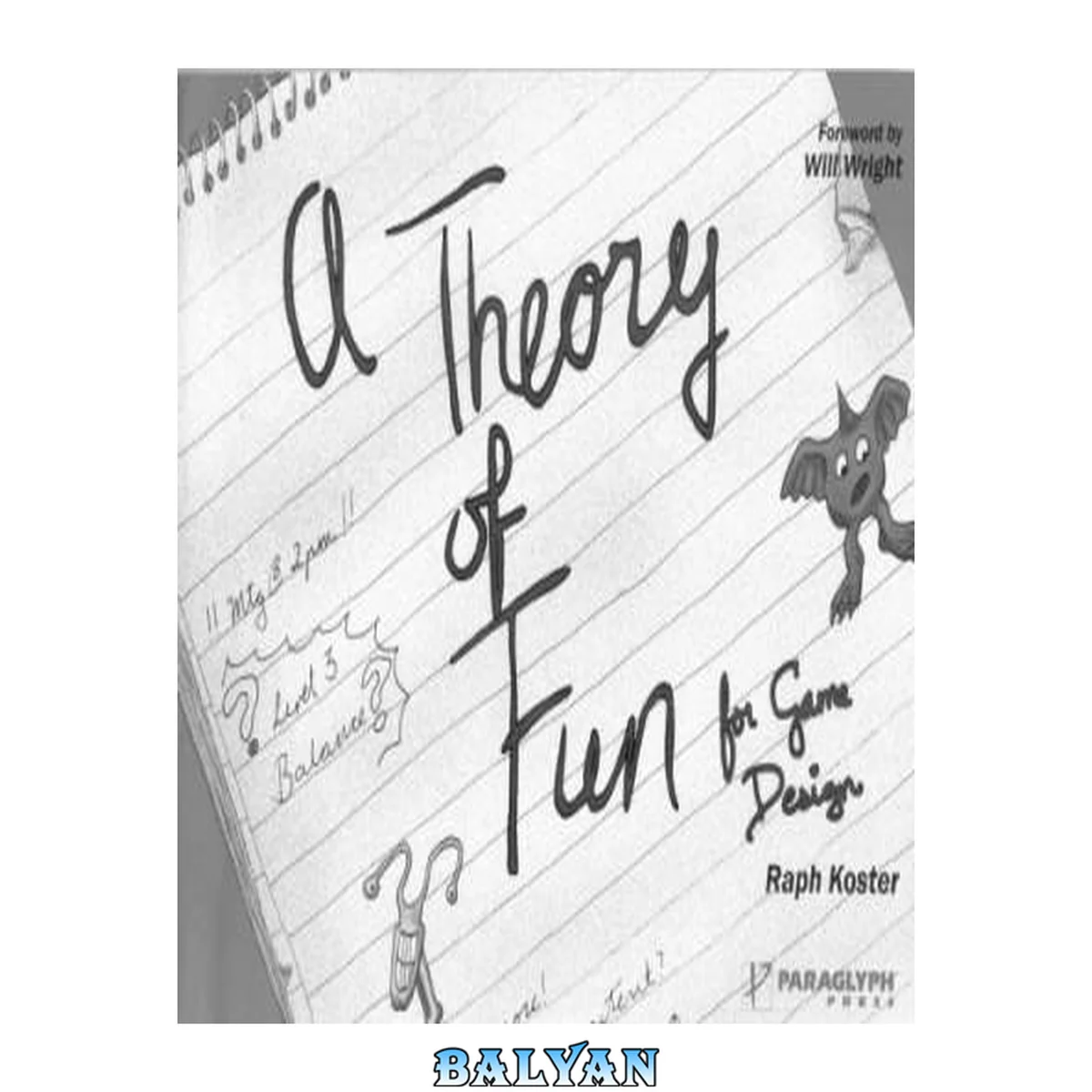
معرفی کتاب «A Theory Of Fun For Game Design» نوشتهٔ Raph Koster، منتشرشده توسط نشر "O'Reilly Media در سال 2004. این کتاب در فرمت pdf، زبان انگلیسی ارائه شده است.
Authored by Raph Koster, Chief Creative Officer of Sony Online Entertainment, this brilliantly illustrated book is a storyboard filled with inspirational ideas for all designers. As Will Wright (co-creator of SimCity 2000 and SimCopter) states in his foreword, "Raph forages across wide intellectual landscapes and then returns to share what he’s discovered with the rest of us.... He has filtered out a treasure trove of useful and relevant nuggets from a career’s worth of his own research." A Theory of Fun for Game Design features a novel way of showing interactive designers how to improve their designs to incorporate the highest degree of fun. This book will truly inspire and challenge game designers, as well as artists and designers from all segments of the industry. The unique format of A Theory of Fun, with engaging text and thought-provoking illustrations, will ensure that this book becomes a classic text for designers. Already endorsed by major players in the gaming world – such as BoingBoing, Noah Falstein, and Henry Jenkins of MIT – A Theory of Fun covers such essential topics as: • Why some games are fun and others boring • Why making a game too hard—or too easy—is a mistake • Why games have to balance deprivation and overload, order and chaos, silence and noise • The difference between designing content and creating an experience • Why both adults and children like to play games • How playing a game and learning are connected • The ethics of entertainment 001.jpg......Page 1 002.JPG......Page 2 003.jpg......Page 3 004.jpg......Page 4 005.jpg......Page 5 006.jpg......Page 6 007.jpg......Page 7 008.jpg......Page 8 009.jpg......Page 9 010.jpg......Page 10 011.jpg......Page 11 012.jpg......Page 12 013.jpg......Page 13 014.jpg......Page 14 015.jpg......Page 15 016.jpg......Page 16 017.jpg......Page 17 018.jpg......Page 18 019.jpg......Page 19 020.jpg......Page 20 021.jpg......Page 21 022.jpg......Page 22 023.jpg......Page 23 024.jpg......Page 24 025.jpg......Page 25 026.jpg......Page 26 027.jpg......Page 27 028.jpg......Page 28 029.jpg......Page 29 030.jpg......Page 30 031.jpg......Page 31 032.jpg......Page 32 033.jpg......Page 33 034.jpg......Page 34 035.jpg......Page 35 036.jpg......Page 36 037.jpg......Page 37 038.jpg......Page 38 039.jpg......Page 39 040.jpg......Page 40 041.jpg......Page 41 042.jpg......Page 42 043.jpg......Page 43 044.jpg......Page 44 045.jpg......Page 45 046.jpg......Page 46 047.jpg......Page 47 048.jpg......Page 48 049.jpg......Page 49 050.jpg......Page 50 051.jpg......Page 51 052.jpg......Page 52 053.jpg......Page 53 054.jpg......Page 54 055.jpg......Page 55 056.jpg......Page 56 057.jpg......Page 57 058.jpg......Page 58 059.jpg......Page 59 060.jpg......Page 60 061.jpg......Page 61 062.jpg......Page 62 063.jpg......Page 63 064.jpg......Page 64 065.jpg......Page 65 066.jpg......Page 66 067.jpg......Page 67 068.jpg......Page 68 069.jpg......Page 69 070.jpg......Page 70 071.jpg......Page 71 072.jpg......Page 72 073.jpg......Page 73 074.jpg......Page 74 075.jpg......Page 75 076.jpg......Page 76 077.jpg......Page 77 078.jpg......Page 78 079.jpg......Page 79 080.jpg......Page 80 081.jpg......Page 81 082.jpg......Page 82 083.jpg......Page 83 084.jpg......Page 84 085.jpg......Page 85 086.jpg......Page 86 087.jpg......Page 87 088.jpg......Page 88 089.jpg......Page 89 090.jpg......Page 90 091.jpg......Page 91 092.jpg......Page 92 093.jpg......Page 93 094.jpg......Page 94 095.jpg......Page 95 096.jpg......Page 96 097.jpg......Page 97 098.jpg......Page 98 099.jpg......Page 99 100.jpg......Page 100 101.jpg......Page 101 102.jpg......Page 102 103.jpg......Page 103 104.jpg......Page 104 105.jpg......Page 105 106.jpg......Page 106 107.jpg......Page 107 108.jpg......Page 108 109.jpg......Page 109 110.jpg......Page 110 111.jpg......Page 111 112.jpg......Page 112 113.jpg......Page 113 114.jpg......Page 114 115.jpg......Page 115 116.jpg......Page 116 117.jpg......Page 117 118.jpg......Page 118 119.jpg......Page 119 120.jpg......Page 120 121.jpg......Page 121 122.jpg......Page 122 123.jpg......Page 123 124.jpg......Page 124 125.jpg......Page 125 126.jpg......Page 126 127.jpg......Page 127 128.jpg......Page 128 129.jpg......Page 129 130.jpg......Page 130 131.jpg......Page 131 132.jpg......Page 132 133.jpg......Page 133 134.jpg......Page 134 135.jpg......Page 135 136.jpg......Page 136 137.jpg......Page 137 138.jpg......Page 138 139.jpg......Page 139 140.jpg......Page 140 141.jpg......Page 141 142.jpg......Page 142 143.jpg......Page 143 144.jpg......Page 144 145.jpg......Page 145 146.jpg......Page 146 147.jpg......Page 147 148.jpg......Page 148 149.jpg......Page 149 150.jpg......Page 150 151.jpg......Page 151 152.jpg......Page 152 153.jpg......Page 153 154.jpg......Page 154 155.jpg......Page 155 156.jpg......Page 156 157.jpg......Page 157 158.jpg......Page 158 159.jpg......Page 159 160.jpg......Page 160 161.jpg......Page 161 162.jpg......Page 162 163.jpg......Page 163 164.jpg......Page 164 165.jpg......Page 165 166.jpg......Page 166 167.jpg......Page 167 168.jpg......Page 168 169.jpg......Page 169 170.jpg......Page 170 171.jpg......Page 171 172.jpg......Page 172 173.jpg......Page 173 174.jpg......Page 174 175.jpg......Page 175 176.jpg......Page 176 177.jpg......Page 177 178.jpg......Page 178 179.jpg......Page 179 180.jpg......Page 180 181.jpg......Page 181 182.jpg......Page 182 183.jpg......Page 183 184.jpg......Page 184 185.jpg......Page 185 186.jpg......Page 186 187.jpg......Page 187 188.jpg......Page 188 189.jpg......Page 189 190.jpg......Page 190 191.jpg......Page 191 192.jpg......Page 192 193.jpg......Page 193 194.jpg......Page 194 195.jpg......Page 195 196.jpg......Page 196 197.jpg......Page 197 198.jpg......Page 198 199.jpg......Page 199 200.jpg......Page 200 201.jpg......Page 201 202.jpg......Page 202 203.jpg......Page 203 204.jpg......Page 204 205.jpg......Page 205 206.jpg......Page 206 207.jpg......Page 207 208.jpg......Page 208 209.jpg......Page 209 210.jpg......Page 210 211.jpg......Page 211 212.jpg......Page 212 213.jpg......Page 213 214.jpg......Page 214 215.jpg......Page 215 216.jpg......Page 216 217.jpg......Page 217 218.jpg......Page 218 219.jpg......Page 219 220.jpg......Page 220 221.jpg......Page 221 222.jpg......Page 222 223.jpg......Page 223 224.jpg......Page 224 225.jpg......Page 225 226.jpg......Page 226 227.jpg......Page 227 228.jpg......Page 228 229.jpg......Page 229 230.jpg......Page 230 231.jpg......Page 231 232.jpg......Page 232 233.jpg......Page 233 234.jpg......Page 234 235.jpg......Page 235 236.jpg......Page 236 237.jpg......Page 237 238.jpg......Page 238 239.jpg......Page 239 240.jpg......Page 240 241.jpg......Page 241 242.jpg......Page 242 243.jpg......Page 243 244.jpg......Page 244 245.jpg......Page 245 246.jpg......Page 246 247.jpg......Page 247 248.jpg......Page 248 249.jpg......Page 249 250.jpg......Page 250 251.jpg......Page 251 252.jpg......Page 252 253.jpg......Page 253 254.jpg......Page 254 255.jpg......Page 255 封底.jpg......Page 256
A Theory of Fun for Game Design is not your typical how-to book. It features a novel way of teaching interactive designers how to create and improve their designs to incorporate the highest degree of fun. As the book shows, designing for fun is all about making interactive products like games highly entertaining, engaging, and addictive. The book's unique approach of providing a highly visual storyboard approach combined with a narrative on the art and practice of designing for fun is sure to be a hit with game and interactive designers, At first glance A Theory of Fun for Game Design is a book that will truly inspire and challenge game designers to think in new was; however, its universal message will influence designers from all walks of life. This book captures the real essence of what drives us to seek out products and experiences that are truly fun and entertaining. The author masterfully presents his engaging theory by showing readers how many designs are lacking because they are predictable and not engaging enough. He then explains how great designers use different types of elements in new ways to make designs more fun and compelling. Anyone who is interested in design will enjoy how the book works on two levels—as a quick inspiration guide to game design, or as an informative discussion that details the insightful thinking from a great mind in the game industry.
A Theory of Fun for Game Design is not your typical how-to book. It features a novel way of teaching interactive designers how to create and improve their designs to incorporate the highest degree of fun. As the book shows, designing for fun is all about making interactive products like games highly entertaining, engaging, and addictive. The book's unique approach of providing a highly visual storyboard approach combined with a narrative on the art and practice of designing for fun is sure to be a hit with game and interactive designers. At first glance A Theory of Fun for Game Design is a book that will truly inspire and challenge game designers to think in new ways; however, its universal message will influence designers from all walks of life. This book captures the real essence of what drives us to seek out products and experiences that are truly fun and entertaining. The author masterfully presents his engaging theory by showing readers how many designs are lacking because they are predictable and not engaging enough. He then explains how great designers use different types of elements in new ways to make designs more fun and compelling. Anyone who is interested in design will enjoy how the book works on two levels--as a quick inspiration guide to game design, or as an informative discussion that details the insightful thinking from a great mind in the game industry. It's about - What fun is - Why some games are fun and some games are boring - How different people respond to different kinds of fun - What makes a game fun or not - How games fit into the wider human culture - Whether games can be art - What degree of social responsibility game makers need to have - How games can develop At its core, though, it is about why games matter. "If you are interested in game structure and design you'll really enjoy how A Theory of Fun works on two levels - as a quick inspiration guide for game designers, and as a thought-provoking discussion on how we learn, why we play games, and how learning and playing are connected."--Jacket Discusses the essential elements in creating a successful game, how playing games and learning are connected, and what makes a game boring or fun.