A History of Western Society, Volume 1
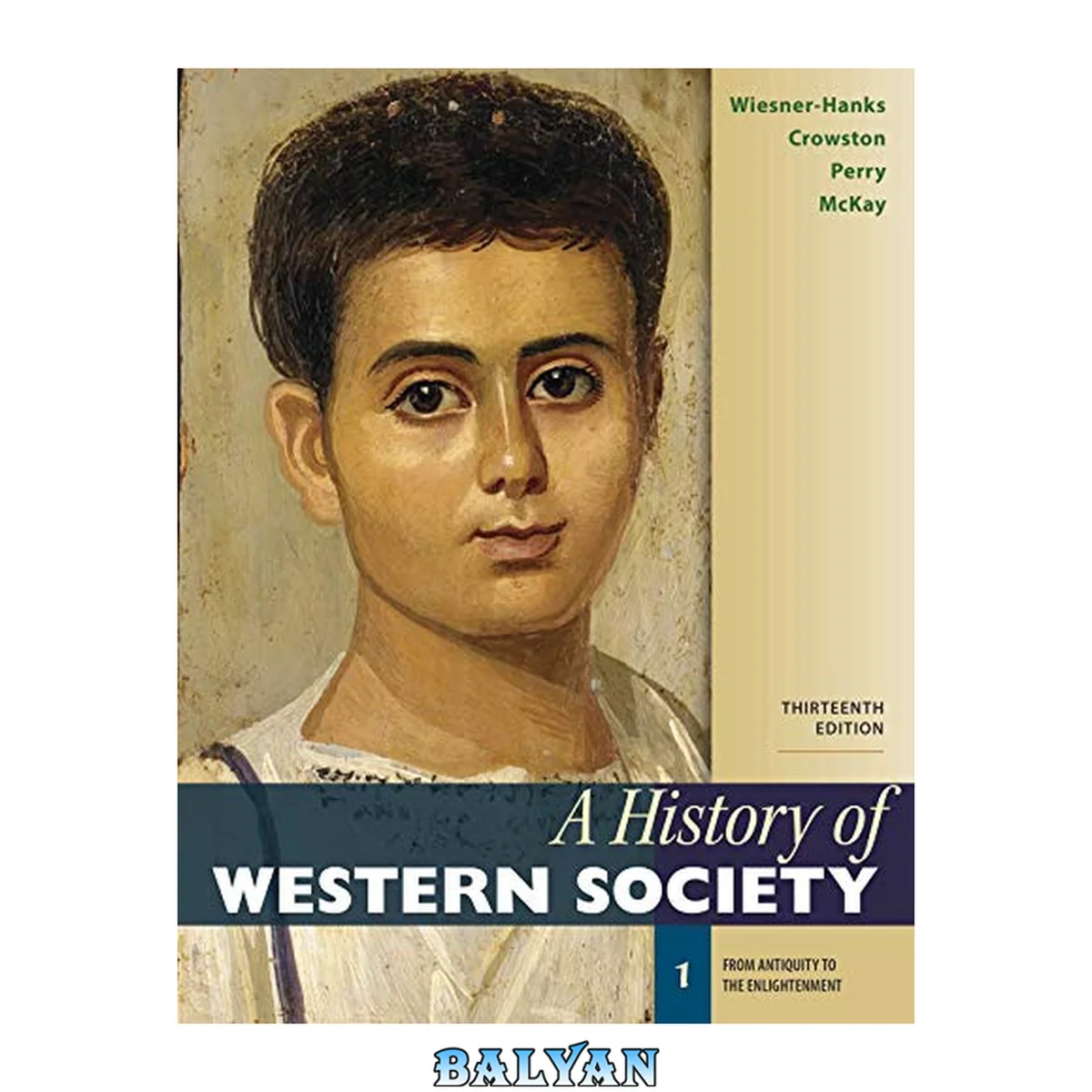
معرفی کتاب «A History of Western Society, Volume 1» نوشتهٔ Merry E. Wiesner-Hanks، Clare Haru Crowston، Joe Perry و John P. McKay، منتشرشده توسط نشر Bedford/St. Martin's در سال 2019. این کتاب در 20 صفحه، فرمت pdf، زبان انگلیسی ارائه شده است. «A History of Western Society, Volume 1» در دستهٔ تاریخ جهان قرار دارد.
Praised by instructors and students alike for its readability and attention to everyday life, the thirteenth edition of A History of Western Society includes a greater variety of tools to engage today's students and save instructors time. This edition features an enhanced primary source program, a question-driven narrative, five chapters devoted to the lives of ordinary people that make the past real and relevant, and the best and latest scholarship throughout. Available for free when packaged with the print book, the popular digital assignment options for this text bring skill building and assessment to a highly effective level. The active learning options come in LaunchPad , which combines an accessible e-book with LearningCurve, an adaptive and automatically graded learning tool that―when assigned―helps ensure students read the book; the complete companion reader with quizzes on each source; and many other study and assessment tools. For instructors who want the easiest and most affordable way to ensure students come to class prepared, Achieve Read & Practice pairs LearningCurve adaptive quizzing and our mobile, accessible Value Edition e-book, in one easy-to-use product. About this Book Cover Page Inside Front Cover About the Cover Image Europe Map World Map Title Page Copyright Page Preface: Why This Book This Way Versions and Supplements Brief Contents Contents Maps, Figures, and Tables Special Features Half Title Page Chapter 1 Origins, To 1200 B.C.E. What do we mean by “the West” and “Western civilization”? Describing the West What Is Civilization? How did early human societies create new technologies and cultural forms? From the First Hominids to the Paleolithic Era Evaluating Visual Evidence: Paleolithic Venus Figures Domestication Implications of Agriculture Trade and Cross-Cultural Connections What kind of civilization did the Sumerians build in Mesopotamia? Environment and Mesopotamian Development The Invention of Writing and the First Schools Religion in Mesopotamia Sumerian Politics and Society How did the Akkadian and Old Babylonian empires develop in Mesopotamia? The Akkadians and the Babylonians Thinking Like a Historian: Addressing the Gods Life Under Hammurabi Evaluating Written Evidence: Hammurabi’s Code on Marriage and Divorce Cultural Exchange in the Fertile Crescent Viewpoints: Faulty Merchandise in Babylon and Egypt How did the Egyptians establish a prosperous and long-lasting society? The Nile and the God-King Egyptian Religion Egyptian Society and Work Egyptian Family Life The Hyksos and New Kingdom Revival Individuals in Society: Hatshepsut and Nefertiti Conflict and Cooperation with the Hittites Looking Back / Looking Ahead 1 Review & Explore Identify Key Terms Review the Main Ideas Suggested Resources Chapter 2 Small Kingdoms and Mighty Empires in the Near East, 1200–510 B.C.E. How did iron technology shape new states after 1200 B.C.E.? Iron Technology The Decline of Egypt and the Emergence of Kush Individuals in Society: King Taharqa of Kush and Egypt The Rise of Phoenicia How did the Hebrews create an enduring religious tradition? The Hebrew State The Jewish Religion Thinking Like a Historian: The Moral Life Viewpoints: Rulers and Divine Favor: Views of Cyrus the Great Hebrew Family and Society Evaluating Written Evidence: A Jewish Family Contract How did the Assyrians and Neo-Babylonians gain and lose power? Assyria’s Long Road to Power Evaluating Visual Evidence: Assyrians Besiege a City Assyrian Rule and Culture The Neo-Babylonian Empire How did the Persians conquer and rule their extensive empire? Consolidation of the Persian Empire Persian Religion Persian Art and Culture Looking Back / Looking Ahead 2 Review & Explore Identify Key Terms Review the Main Ideas Suggested Resources Chapter 3 The Development of Greek Society and Culture, ca. 3000–338 B.C.E. How did the geography of Greece shape its earliest kingdoms? Geography and Settlement The Minoans The Mycenaeans Homer, Hesiod, and the Epic Evaluating Written Evidence: Homer’s Iliad What was the role of the polis in Greek society? Organization of the Polis Governing Structures Overseas Expansion The Growth of Sparta The Evolution of Athens How did the wars of the classical period shape Greek history? The Persian Wars Growth of the Athenian Empire The Peloponnesian War The Struggle for Dominance Philip II and Macedonian Supremacy What ancient Greek ideas and ideals have had a lasting influence? Athenian Arts in the Age of Pericles Evaluating Visual Evidence: The Acropolis of Athens Viewpoints: Greek Playwrights on Families, Fate, and Choice Individuals in Society: Aristophanes Households and Work Gender and Sexuality Thinking Like a Historian: Gender Roles in Classical Athens Public and Personal Religion The Flowering of Philosophy Looking Back / Looking Ahead 3 Review & Explore Identify Key Terms Review the Main Ideas Suggested Resources Chapter 4 Life in the Hellenistic World, 338–30 B.C.E. How and why did Alexander the Great create an empire, and how did it evolve? Military Campaigns Viewpoints: Greek Historians on Alexander the Great The Political Legacy How did Greek ideas and traditions spread to create a Hellenized society? Urban Life Evaluating Visual Evidence: Bactrian Disk with Religious Figures Greeks in Hellenistic Cities Greeks and Non-Greeks What characterized the Hellenistic economy? Rural Life Production of Goods Commerce How did religion, philosophy, and the arts reflect and shape Hellenistic life? Religion and Magic Evaluating Written Evidence: A Hellenistic Spell of Attraction Hellenism and the Jews Philosophy and the People Art and Drama How did science and medicine serve the needs of Hellenistic society? Science Individuals in Society: Archimedes, Scientist and Inventor Medicine Thinking Like a Historian: Hellenistic Medicine Looking Back / Looking Ahead 4 Review & Explore Identify Key Terms Review the Main Ideas Suggested Resources Chapter 5 The Rise of Rome, ca. 1000–27 B.C.E. How did the Romans become the dominant power in Italy? The Geography of Italy The Etruscans The Founding of Rome The Roman Conquest of Italy Evaluating Visual Evidence: The Temple of Hercules Victor What were the key institutions of the Roman Republic? The Roman State Social Conflict in Rome How did the Romans build a Mediterranean empire? The Punic Wars Rome Turns East How did expansion affect Roman society and culture? Roman Families Viewpoints: Praise of Good Women in the Eulogy for Murdia and the Turia Inscription New Social Customs and Greek Influence Opposing Views: Cato the Elder and Scipio Aemilianus What led to the fall of the Roman Republic? The Countryside and Land Reforms Thinking Like a Historian: Land Ownership and Social Conflict in the Late Republic Political Violence Civil War and the Rise of Julius Caesar Individuals in Society: Queen Cleopatra Evaluating Written Evidence: Cicero and the Plot to Kill Caesar Looking Back / Looking Ahead 5 Review & Explore Identify Key Terms Review the Main Ideas Suggested Resources Chapter 6 The Roman Empire, 27 B.C.E.–284 C.E. How did Augustus and Roman elites create a foundation for the Roman Empire? Augustus and His Allies Thinking Like a Historian: Army and Empire Roman Expansion Evaluating Visual Evidence: Ara Pacis Augustae Viewpoints: The Pax Romana Latin Literature Evaluating Written Evidence: Ovid, The Art of Love Marriage and Morality How did the Roman state develop after Augustus? The Julio-Claudians and the Flavians Individuals in Society: Pliny the Elder The Nerva-Antonine Dynasty What was life like in the city of Rome and in the provinces? Life in Imperial Rome Approaches to Urban Problems Popular Entertainment Prosperity in the Roman Provinces Trade and Commerce How did Christianity grow into a major religious movement? Factors Behind the Rise of Christianity The Life and Teachings of Jesus The Spread of Christianity The Growing Acceptance and Evolution of Christianity What political and economic problems did Rome face in the third century C.E.? Civil Wars and Military Commanders Turmoil in Economic Life Looking Back / Looking Ahead 6 Review & Explore Identify Key Terms Review the Main Ideas Suggested Resources Chapter 7 Late Antiquity, 250–600 How did Diocletian and Constantine try to reform the empire? Political Measures Economic Issues The Acceptance of Christianity How did the Christian Church become a major force in the Mediterranean and Europe? The Church and Its Leaders The Development of Christian Monasticism Monastery Life Christianity and Classical Culture Christian Notions of Gender and Sexuality Saint Augustine on Human Nature, Will, and Sin What were the key characteristics of barbarian society? Viewpoints: Roman and Byzantine Views of Barbarians Village and Family Life Tribes and Hierarchies Customary and Written Law Thinking Like a Historian: Slavery in Roman and Germanic Society Celtic and Germanic Religion How did the barbarian migrations shape Europe? Celtic and Germanic People in Gaul and Britain Visigoths and Huns Evaluating Visual Evidence: Battle Between Romans and Goths Germanic Kingdoms and the End of the Roman Empire How did the church convert barbarian peoples to Christianity? Missionaries’ Actions The Process of Conversion Evaluating Written Evidence: Gregory of Tours on the Veneration of Relics How did the Byzantine Empire preserve the legacy of Rome? Sources of Byzantine Strength The Law Code of Justinian Byzantine Learning and Science Individuals in Society: Theodora of Constantinople The Orthodox Church Looking Back / Looking Ahead 7 Review & Explore Identify Key Terms Review the Main Ideas Suggested Resources Chapter 8 Europe in the Early Middle Ages, 600–1000 What were the origins of Islam, and what impact did it have on Europe as it spread? The Culture of the Arabian Peninsula The Prophet Muhammad The Teachings and Expansion of Islam Sunni and Shi’a Divisions Life in Muslim Spain Viewpoints: The Muslim Conquest of Spain Muslim-Christian Relations Cross-Cultural Influences in Science and Medicine How did the Franks build and govern a European empire? The Merovingians The Rise of the Carolingians The Warrior-Ruler Charlemagne Carolingian Government and Society Evaluating Visual Evidence: Charlemagne and His Second Wife Hildegard The Imperial Coronation of Charlemagne What were the significant intellectual and cultural developments in Charlemagne’s era? The Carolingian Renaissance Northumbrian Learning and Writing Individuals in Society: The Venerable Bede Evaluating Written Evidence: The Death of Beowulf How did the ninth-century invasions and migrations shape Europe? Vikings in Western Europe Thinking Like a Historian: Vikings Tell Their Own Story Slavs and Vikings in Eastern Europe Magyars and Muslims How and why did Europe become politically and economically decentralized in this period? Decentralization and the Origins of “Feudalism” Manorialism, Serfdom, and the Slave Trade Looking Back / Looking Ahead 8 Review & Explore Identify Key Terms Review the Main Ideas Suggested Resources Chapter 9 State and Church in the High Middle Ages, 1000–1300 How did monarchs try to centralize political power? England France Viewpoints: Oaths of Fealty Central Europe Italy The Iberian Peninsula How did the administration of law evolve in this period? Local Laws and Royal Courts The Magna Carta Law in Everyday Life What were the political and social roles of nobles? Origins and Status of the Nobility Evaluating Visual Evidence: Saint Maurice, Ideal Knight Training, Marriage, and Inheritance Power and Responsibility How did the papacy reform the church, and what were the reactions to these efforts? The Gregorian Reforms Emperor Versus Pope Criticism and Heresy The Popes and Church Law Evaluating Written Evidence: Pope Boniface VIII, Unam Sanctam What roles did monks, nuns, and friars play in medieval society? Monastic Revival Life in Convents and Monasteries Individuals in Society: Hildegard of Bingen The Friars What were the causes, course, and consequences of the Crusades and the broader expansion of Christianity? Background and Motives of the Crusades The Course of the Crusades Thinking Like a Historian: Christian and Muslim Views of the Crusades Consequences of the Crusades The Expansion of Christianity Christendom Looking Back / Looking Ahead 9 Review & Explore Identify Key Terms Review the Main Ideas Suggested Resources Chapter 10 Life in Villages and Cities of the High Middle Ages, 1000–1300 What was village life like in medieval Europe? Slavery, Serfdom, and Upward Mobility The Manor Thinking Like a Historian: Social and Economic Relations in Medieval English Villages Work Home Life Childbirth and Childhood How did religion shape everyday life in the High Middle Ages? Christian Life in Medieval Villages Saints and Sacraments Muslims and Jews Rituals of Marriage and Birth Death and the Afterlife What led to Europe’s economic growth and reurbanization? The Rise of Towns Merchant and Craft Guilds Evaluating Written Evidence: Apprenticeship Contract for a Money-Changer The Revival of Long-Distance Trade Business Procedures The Commercial Revolution What was life like in medieval cities? City Life Servants and the Poor Popular Entertainment How did universities serve the needs of medieval society? Origins Legal and Medical Training Evaluating Visual Evidence: Healthy Living Theology and Philosophy Individuals in Society: Abelard and Heloise University Students How did literature and architecture express medieval values? Vernacular Literature and Drama Viewpoints: Male and Female Troubadours Churches and Cathedrals Looking Back / Looking Ahead 10 Review & Explore Identify Key Terms Review the Main Ideas Suggested Resources Chapter 11 The Later Middle Ages, 1300–1450 How did climate change shape the late Middle Ages? Climate Change and Famine Social Consequences How did the plague affect European society? Pathology Spread of the Disease Care of the Sick Viewpoints: Italian and English Views of the Plague Economic, Religious, and Cultural Effects Evaluating Visual Evidence: Dance of Death What were the causes, course, and consequences of the Hundred Years’ War? Causes English Successes Joan of Arc and France’s Victory Evaluating Written Evidence: The Trial of Joan of Arc Aftermath Why did the church come under increasing criticism? The Babylonian Captivity and Great Schism Critiques, Divisions, and Councils Lay Piety and Mysticism Individuals in Society: Meister Eckhart What explains the social unrest of the late Middle Ages? Peasant Revolts Thinking Like a Historian: Popular Revolts in the Late Middle Ages Urban Conflicts Sex in the City Fur-Collar Crime Ethnic Tensions and Restrictions Literacy and Vernacular Literature Looking Back / Looking Ahead 11 Review & Explore Identify Key Terms Review the Main Ideas Suggested Resources Chapter 12 European Society in the Age of the Renaissance, 1350–1550 How did political and economic developments in Italy shape the Renaissance? Trade and Prosperity Communes and Republics of Northern Italy City-States and the Balance of Power Viewpoints: Venice Versus Florence What new ideas were associated with the Renaissance? Humanism Individuals in Society: Leonardo da Vinci Education Thinking Like a Historian: Humanist Learning Political Thought Christian Humanism Evaluating Written Evidence: Thomas More, Utopia The Printed Word How did art reflect new Renaissance ideals? Patronage and Power Changing Artistic Styles The Renaissance Artist What were the key social hierarchies in Renaissance Europe? Race and Slavery Wealth and the Nobility Gender Roles How did nation-states develop in this period? France England Spain Evaluating Visual Evidence: A Gold Coin of Ferdinand and Isabella Looking Back / Looking Ahead 12 Review & Explore Identify Key Terms Review the Main Ideas Suggested Resources Chapter 13 Reformations and Religious Wars, 1500–1600 What were the central ideas of the reformers, and why were they appealing to different social groups? The Christian Church in the Early Sixteenth Century Martin Luther Protestant Thought Evaluating Written Evidence: Martin Luther, On Christian Liberty The Appeal of Protestant Ideas Evaluating Visual Evidence: Lucas Cranach’s The True Church and the False Church, ca. 1546 The Radical Reformation and the German Peasants’ War Individuals in Society: Anna Jansz of Rotterdam Marriage, Sexuality, and the Role of Women How did the political situation in Germany shape the course of the Reformation? The Rise of the Habsburg Dynasty Religious Wars in Switzerland and Germany How did Protestant ideas and institutions spread beyond German-speaking lands? Scandinavia Henry VIII and the Reformation in England Upholding Protestantism in England Calvinism Thinking Like a Historian: Social Discipline in the Reformation Viewpoints: Catholic and Calvinist Churches The Reformation in Eastern Europe What reforms did the Catholic Church make, and how did it respond to Protestant reform movements? Papal Reform and the Council of Trent New and Reformed Religious Orders What were the causes and consequences of religious violence, including riots, wars, and witch-hunts? French Religious Wars The Netherlands Under Charles V The Great European Witch-Hunt Looking Back / Looking Ahead 13 Review & Explore Identify Key Terms Review the Main Ideas Suggested Resources Chapter 14 European Exploration and Conquest, 1450–1650 What was the Afro-Eurasian trading world before Columbus? The Trade World of the Indian Ocean The Trading States of Africa The Middle East Genoese and Venetian Middlemen How and why did Europeans undertake ambitious voyages of expansion? Causes of European Expansion Technology and the Rise of Exploration The Portuguese Overseas Empire Spain’s Voyages to the Americas Evaluating Written Evidence: Columbus Describes His First Voyage Spain “Discovers” the Pacific Early Exploration by Northern European Powers What was the impact of European conquest on the New World? Conquest of the Aztec Empire Thinking Like a Historian: Who Was Doña Marina? The Fall of the Incas Portuguese Brazil Colonial Empires of England and France Colonial Administration How did Europe and the world change after Columbus? Economic Exploitation of the Indigenous Population Society in the Colonies The Columbian Exchange and Population Loss Sugar and Slavery Spanish Silver and Its Economic Effects The Birth of the Global Economy Individuals in Society: Catarina de San Juan How did expansion change European attitudes and beliefs? Religious Conversion Viewpoints: Aztec and Spanish Views on Christian Conversion in New Spain European Debates About Indigenous Peoples New Ideas About Race Evaluating Visual Evidence: Depictions of Africans in European Portraiture Michel de Montaigne and Cultural Curiosity William Shakespeare and His Influence Looking Back / Looking Ahead 14 Review & Explore Identify Key Terms Review the Main Ideas Suggested Resources Chapter 15 Absolutism and Constitutionalism, ca. 1589–1725 What made the seventeenth century an “age of crisis” and achievement? The Social Order and Peasant Life Economic Crisis and Popular Revolts The Thirty Years’ War State-Building and the Growth of Armies Baroque Art and Music Why did France rise and Spain fall during the late seventeenth century? The Foundations of French Absolutism Louis XIV and Absolutism Thinking Like a Historian: What Was Absolutism? Life at Versailles Louis XIV’s Wars The French Economic Policy of Mercantilism The Decline of Absolutist Spain in the Seventeenth Century What explains the rise of absolutism in Prussia and Austria? The Return of Serfdom The Austrian Habsburgs Prussia in the Seventeenth Century The Consolidation of Prussian Absolutism What were the distinctive features of Russian and Ottoman absolutism? Mongol Rule in Russia and the Rise of Moscow Building the Russian Empire The Reforms of Peter the Great Evaluating Written Evidence: Peter the Great and Foreign Experts The Ottoman Empire Individuals in Society: Hürrem Why and how did the constitutional state triumph in the Dutch Republic and England? Religious Divides and Civil War Viewpoints: Stuart Claims to Absolutism and the Parliamentary Response The Puritan Protectorate The Restoration of the English Monarchy Constitutional Monarchy The Dutch Republic in the Seventeenth Century Evaluating Visual Evidence: Gonzales Coques, The Young Scholar and His Wife, 1640 Looking Back / Looking Ahead 15 Review & Explore Identify Key Terms Review the Main Ideas Suggested Resources Chapter 16 Toward a New Worldview, 1540–1789 What revolutionary discoveries were made in the sixteenth and seventeenth centuries? Contributions from the Muslim World Scientific Thought to 1500 The Copernican Hypothesis Brahe, Kepler, and Galileo: Proving Copernicus Right Evaluating Written Evidence: Galileo Galilei, The Sidereal Messenger Newton’s Synthesis Natural History and Empire Magic and Alchemy What intellectual and social changes occurred as a result of the Scientific Revolution? The Methods of Science: Bacon and Descartes Medicine, the Body, and Chemistry Evaluating Visual Evidence: Frontispiece to on the Structure of the Human Body Science and Religion Science and Society How did the Enlightenment emerge, and what were major currents of Enlightenment thought? The Early Enlightenment The Influence of the Philosophes Thinking Like a Historian: The Enlightenment Debate on Religious Tolerance Enlightenment Movements Across Europe How did the Enlightenment change social ideas and practices? Global Contacts Enlightenment Debates About Race Women and the Enlightenment Viewpoints: Rousseau and Wollstonecraft Debate Women’s Equality Urban Culture and Life in the Public Sphere What impact did new ways of thinking have on politics? Frederick the Great of Prussia Catherine the Great of Russia The Austrian Habsburgs Jewish Life and the Limits of Enlightened Absolutism Individuals in Society: Moses Mendelssohn and the Jewish Enlightenment Looking Back / Looking Ahead 16 Review & Explore Identify Key Terms Review the Main Ideas Suggested Resources Glossary Notes Index Timeline: A History of Western Society: A Brief Overview About the Authors Inside Back Cover Back Cover
دانلود کتاب A History of Western Society, Volume 1