A Game Design Vocabulary: Exploring the Foundational Principles Behind Good Game Design (Game Design/Usability)
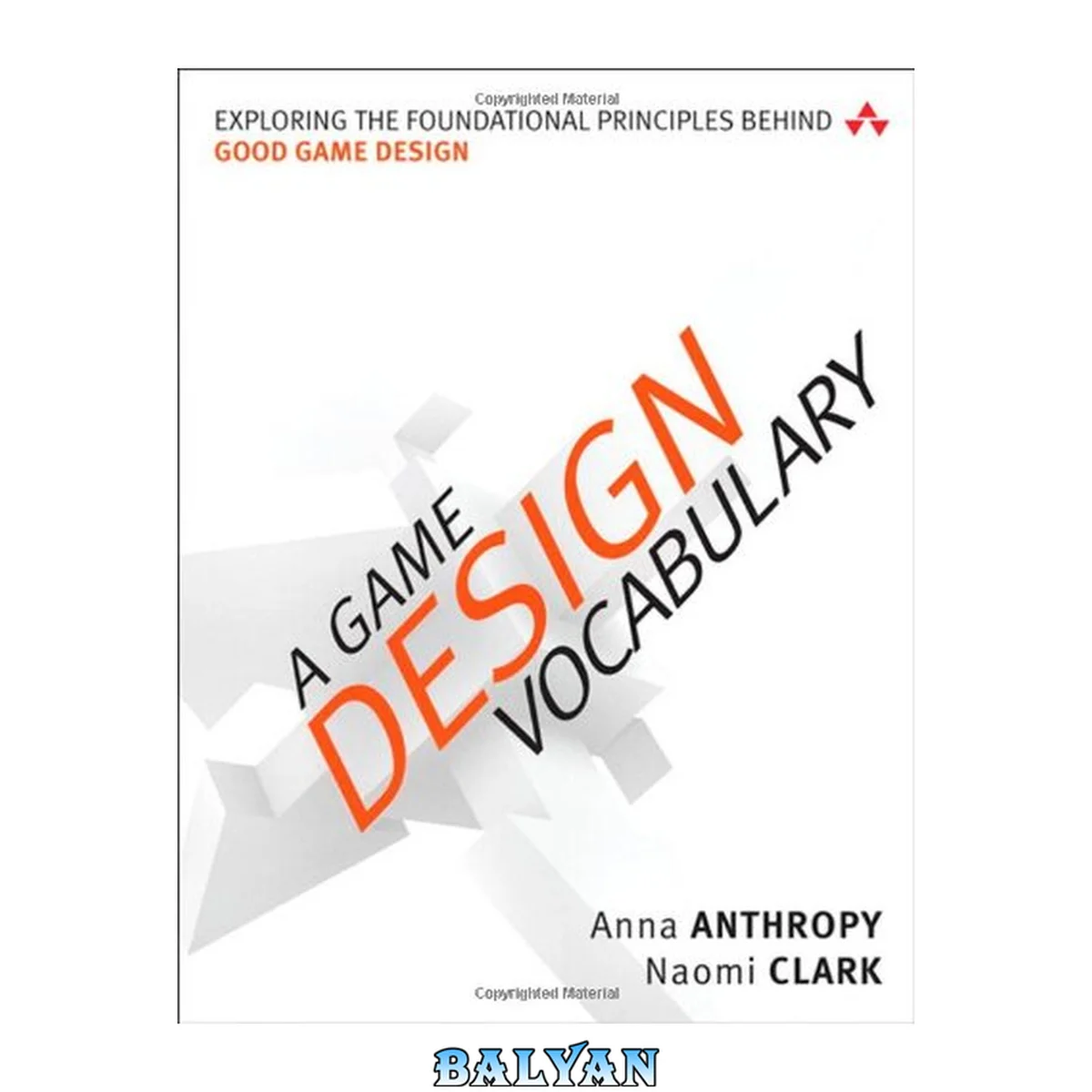
معرفی کتاب «A Game Design Vocabulary: Exploring the Foundational Principles Behind Good Game Design (Game Design/Usability)» نوشتهٔ Rebecca Skinner و Naomi Clark & Anna Anthropy [Naomi Clark]، منتشرشده توسط نشر Addison-Wesley Professional در سال 2014. این کتاب در فرمت pdf، زبان انگلیسی ارائه شده است.
**Master the Principles and Vocabulary of Game Design** **Why arenвЂTMt videogames getting better?** Why does it feel like weвЂTMre playing the same games, over and over again? Why arenвЂTMt games helping us transform our lives, like great music, books, and movies do? **The problem is language.** We still donвЂTMt know how to talk about game design. We canвЂTMt share our visions. We forget what works (and doesnвЂTMt). We donвЂTMt learn from history. ItвЂTMs too hard to improve. **The breakthrough starts here.** A Game Design Vocabulary gives us the complete game design framework we desperately need—whether we create games, study them, review them, or build businesses on them. **Craft amazing experiences.** Anna Anthropy and Naomi Clark share foundational principles, examples, and exercises that help you create great player experiences…complement intuition with design discipline…and craft games that succeed brilliantly on every level. - Liberate yourself from stale clichГ©s and genres - Tell great stories: go way beyond cutscenes and text dumps - Control the crucial relationships between game “verbs” and “objects” - Wield the full power of development, conflict, climax, and resolution - Shape scenes, pacing, and player choices - Deepen context via art, animation, music, and sound - Help players discover, understand, engage, and “talk back” to you - Effectively use resistance and difficulty: the “push and pull” of games - Design holistically: integrate visuals, audio, and controls - Communicate a design vision everyone can understand Contents 12 Part I: Elements of Vocabulary 20 1 Language 22 Signs Versus Design 23 Failures of Language 26 A Voice Needs Words 28 A Beginning 29 2 Verbs and Objects 32 Rules 33 Creating Choices 35 Explaining with Context 40 Objects 41 The Physical Layer 44 Character Development 49 Elegance 51 Real Talk 53 Review 55 Discussion Activities 56 Group Activity 57 3 Scenes 58 Rules in Scenes 59 Shaping and Pacing 69 Layering Objects 75 Moments of Inversion 79 Chance 80 Real Talk 83 Review 90 Discussion Activities 90 Group Activity 92 4 Context 96 First Impressions 97 Recurring Motifs 101 Character Design 102 Animation 105 Scene Composition 108 Camera 113 Sound 115 Real Talk 118 Review 122 Discussion Activities 123 Group Activity 123 Part II: Conversations 126 5 Creating Dialogue 128 Players 129 Creating Conversation 130 Iterating to Fun and Beyond 132 Your Conversation 134 6 Resistance 136 Push and Pull 137 Flow 138 Alternatives to Flow 148 Opening Up Space 151 Opening Up Purpose 153 The Pull of Rewards 156 Time and Punishment 160 Scoring and Reflection 166 Review 169 Discussion Activities 171 Group Activity 172 7 Storytelling 174 Pattern Recognition 175 Authored Stories 178 Interpreted Stories 191 Open Stories 200 Review 206 Discussion Activities 207 Group Activity 208 A Further Playing 210 Achievement Unlocked (John Cooney, 2008) 211 American Dream (Stephen Lavelle, Terry Cavanagh, Tom Morgan-Jones, and Jasper Byrne, 2011) 211 Analogue: A Hate Story (Christine Love, 2012) 212 The Banner Saga (Stoic, 2014) 212 Candy Box (aniwey, 2013) 213 Consensual Torture Simulator (Merritt Kopas, 2013) 213 Corrypt (Michael Brough, 2012) 214 Crypt of the Necrodancer (Ryan Clark, 2013) 215 Dwarf Fortress (Tarn Adams, 2006) 215 English Country Tune (Stephen Lavelle, 2011) 216 Even Cowgirls Bleed (Christine Love, 2013) 216 Gone Home (The Fullbright Company, 2013) 217 Mighty Jill Off (Anna Anthropy, 2008) 217 NetHack (NetHack Dev Team, 1987) 218 Papers, Please (Lucas Pope, 2013) 218 Persist (AdventureIslands, 2013) 219 QWOP (Bennett Foddy, 2008) and GIRP (Bennett Foddy, 2011) 220 Spelunky (Derek Yu, 2008) 220 Triple Town (Spry Fox, 2011) 221 Index 222 A 222 B 222 C 222 D 224 E 224 F 224 G 224 H 225 I 225 J 225 K 225 L 225 M 225 N 226 O 226 P 226 Q 226 R 226 S 227 T 229 U 230 V 230 W 230 X 230 Y 230 Z 230 www.it-ebooks.info Master the Principles and Vocabulary of Game Design Why aren’t videogames getting better? Why does it feel like we’re playing the same games, over and over again? Why aren’t games helping us transform our lives, like great music, books, and movies do? The problem is language. We still don’t know how to talk about game design. We can’t share our visions. We forget what works (and doesn’t). We don’t learn from history. It’s too hard to improve. The breakthrough starts here. A Game Design Vocabulary gives us the complete game design framework we desperately need—whether we create games, study them, review them, or build businesses on them. Craft amazing experiences. Anna Anthropy and Naomi Clark share foundational principles, examples, and exercises that help you create great player experiences...complement intuition with design discipline...and craft games that succeed brilliantly on every level. Liberate yourself from stale clichés and genres Tell great stories: go way beyond cutscenes and text dumps Control the crucial relationships between game “verbs” and “objects” Wield the full power of development, conflict, climax, and resolution Shape scenes, pacing, and player choices Deepen context via art, animation, music, and sound Help players discover, understand, engage, and “talk back” to you Effectively use resistance and difficulty: the “push and pull” of games Design holistically: integrate visuals, audio, and controls Communicate a design vision everyone can understand Annotation Master the Principles and Vocabulary of Game DesignWhy aren't videogames getting better? Why does it feel like we're playing the same games, over and over again? Why aren't games helping us transform our lives, like great music, books, and movies do?The problem is language. We still don't know how to talk about game design. We can't share our visions. We forget what works (and doesn't). We don't learn from history. It's too hard to improve. The breakthrough starts here. A Game Design Vocabulary gives us the complete game design framework we desperately need--whether we create games, study them, review them, or build businesses on them. Craft amazing experiences. Anna Anthropy and Naomi Clark share foundational principles, examples, and exercises that help you create great player experiences ... complement intuition with design discipline ... and craft games that succeed brilliantly on every level. Liberate yourself from stale clichés and genresTell great stories: go way beyond cutscenes and text dumpsControl the crucial relationships between game "verbs" and "objects"Wield the full power of development, conflict, climax, and resolutionShape scenes, pacing, and player choicesDeepen context via art, animation, music, and soundHelp players discover, understand, engage, and "talk back" to youEffectively use resistance and difficulty: the "push and pull" of gamesDesign holistically: integrate visuals, audio, and controlsCommunicate a design vision everyone can understand
دانلود کتاب A Game Design Vocabulary: Exploring the Foundational Principles Behind Good Game Design (Game Design/Usability)