A First Course in Topology: Continuity and Dimension (Student Mathematical Library) (Student Mathematical Library, 31)
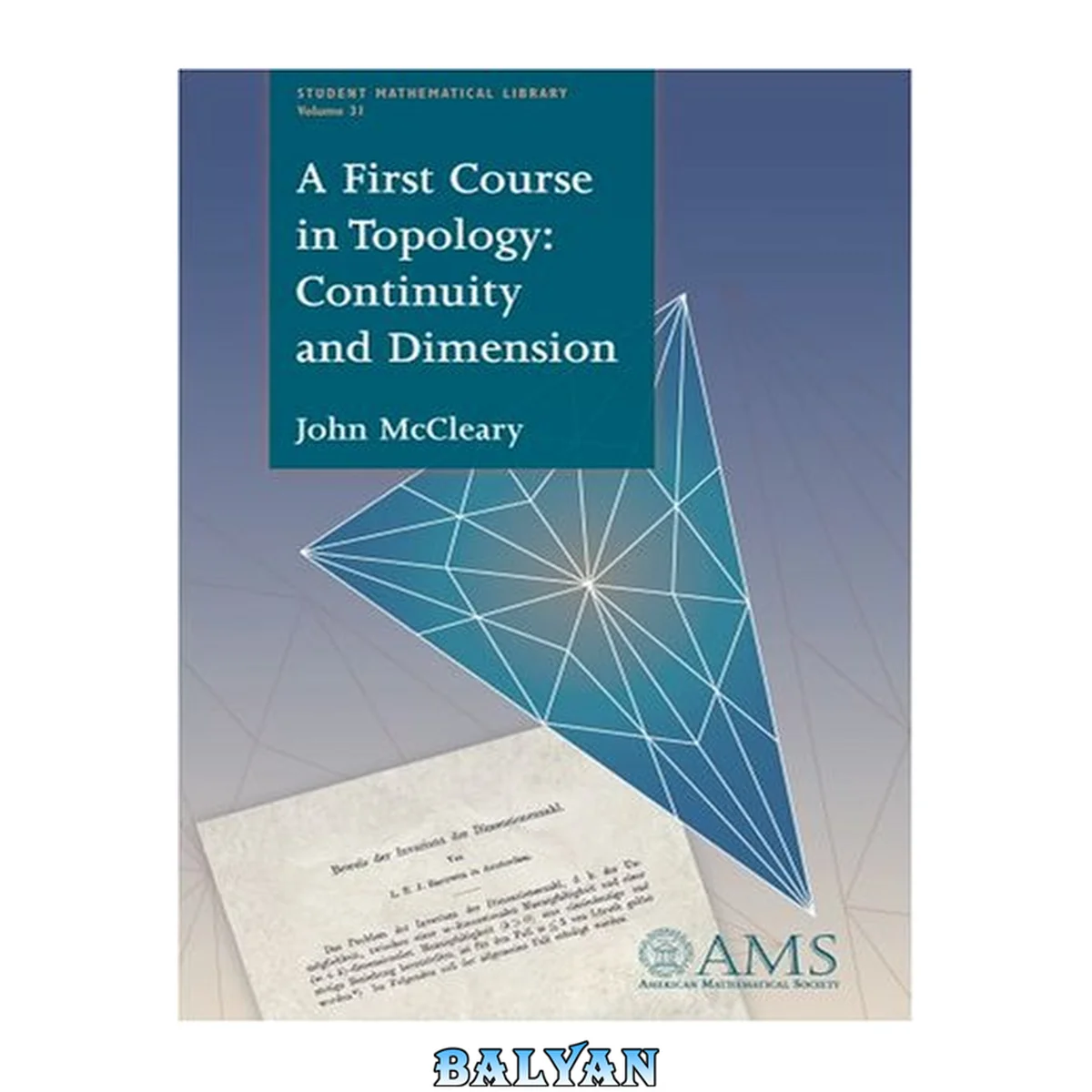
معرفی کتاب «A First Course in Topology: Continuity and Dimension (Student Mathematical Library) (Student Mathematical Library, 31)» نوشتهٔ Clarissa Wild و John McCleary، منتشرشده توسط نشر American Mathematical Society در سال 2006. این کتاب در فرمت pdf، زبان انگلیسی ارائه شده است.
How Many Dimensions Does Our Universe Require For A Comprehensive Physical Description? In 1905, Poincare Argued Philosophically About The Necessity Of The Three Familiar Dimensions, While Recent Research Is Based On 11 Dimensions Or Even 23 Dimensions. The Notion Of Dimension Itself Presented A Basic Problem To The Pioneers Of Topology. Cantor Asked If Dimension Was A Topological Feature Of Euclidean Space. To Answer This Question, Some Important Topological Ideas Were Introduced By Brouwer, Giving Shape To A Subject Whose Development Dominated The Twentieth Century. The Basic Notions In Topology Are Varied And A Comprehensive Grounding In Point-set Topology, The Definition And Use Of The Fundamental Group, And The Beginnings Of Homology Theory Requires Considerable Time. The Goal Of This Book Is A Focused Introduction Through These Classical Topics, Aiming Throughout At The Classical Result Of The Invariance Of Dimension. This Text Is Based On The Author's Course Given At Vassar College And Is Intended For Advanced Undergraduate Students. It Is Suitable For A Semester-long Course On Topology For Students Who Have Studied Real Analysis And Linear Algebra. It Is Also A Good Choice For A Capstone Course, Senior Seminar, Or Independent Study.--publisher's Website. Introduction -- Ch. 1. A Little Set Theory -- Equivalence Relations -- The Schröder-berrnstein Theorem -- The Problem Of Invariance Of Dimension -- Ch. 2. Metric And Topological Spaces -- Continuity -- Ch. 3. Geometric Notions -- Ch. 4. Building New Spaces From Old -- Subspaces -- Products -- Quotients -- Ch. 5. Connectedness -- Path-connectedness -- Ch. 6. Compactness -- Ch. 7. Homotopy And The Fundamental Group -- Ch. 8. Computations And Covering Spaces -- Ch. 9. The Jordan Curve Theorem -- Gratings And Arcs -- The Index Of A Point Not On A Jordan Curve -- A Proof Of The Jordan Curve Theorem -- Ch. 10. Simplicial Complexes -- Simplicial Mappings And Barycentric Subdivision -- Ch. 11. Homology -- Homology And Simplicial Mappings -- Topological Invariance -- Where From Here? -- Bibliography -- Notation Index -- Subject Index. John Mccleary. Includes Bibliographical (p. 201-205) References And Indexes. How many dimensions does our universe require for a comprehensive physical description? In 1905, Poincaré argued philosophically about the necessity of the three familiar dimensions, while recent research is based on 11 dimensions or even 23 dimensions. The notion of dimension itself presented a basic problem to the pioneers of topology. Cantor asked if dimension was a topological feature of Euclidean space. To answer this question, some important topological ideas were introduced by Brouwer, giving shape to a subject whose development dominated the twentieth century. The basic notions in topology are varied and a comprehensive grounding in point-set topology, the definition and use of the fundamental group, and the beginnings of homology theory requires considerable time. The goal of this book is a focused introduction through these classical topics, aiming throughout at the classical result of the Invariance of Dimension. This text is based on the author's course given at Vassar College and is intended for advanced undergraduate students. It is suitable for a semester-long course on topology for students who have studied real analysis and linear algebra. It is also a good choice for a capstone course, senior seminar, or independent study.
دانلود کتاب A First Course in Topology: Continuity and Dimension (Student Mathematical Library) (Student Mathematical Library, 31)